Barley, Wheat, Turbid Mash
Malt & Grain
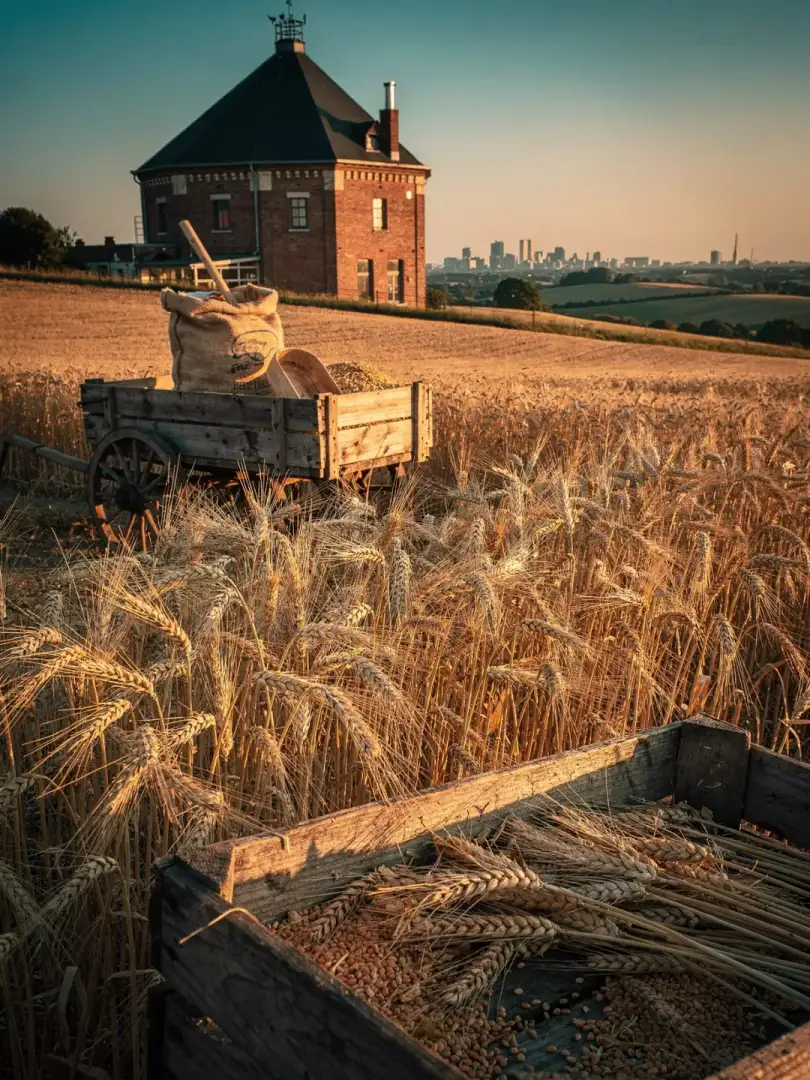
What grain is Lambic brewed from? From barley malt and unmalted wheat, traditionally about one-third wheat. Unmalted means the grain was never germinated, so its starch remains raw within it.
Barley malt is produced at the malthouse. There, the barley is soaked, allowed to sprout, and then dried on the kiln. In the pale beers of Brussels, the kilning stays gentle, with the color falling within the style guideline for Gueuze between 10 and 12 EBC — a pale gold to amber hue.
The malted portion supplies the enzymes, proteins that break down starch into sugar during mashing. The raw wheat contributes additional starch and protein. That's why Lambic brewers use the turbid mash method: the mash is heated in stages with hot water, drawing off cloudy wort along the way and boiling it separately.
This leaves behind long sugar chains that normal fermentation can't break down. The wild yeast in the cask feeds on these leftover sugars for years, so the brew is never fully fermented out right away.
In fruit Lambic, fruit joins the grain. The classic fruit for Kriek is the Schaarbeekse Kriek, a sour cherry from the Brussels district of Schaerbeek. Cherries add extra sugar, acidity, and aroma to the cask, and the yeast ferments them too. At Cantillon, according to the brewery, the cherries go into casks with young Lambic, and fermentation then needs several more months. A Kriek is therefore never quick to make, and each vintage tastes different depending on that year's harvest.