Koelschip & Cask
Yeast & Fermentation
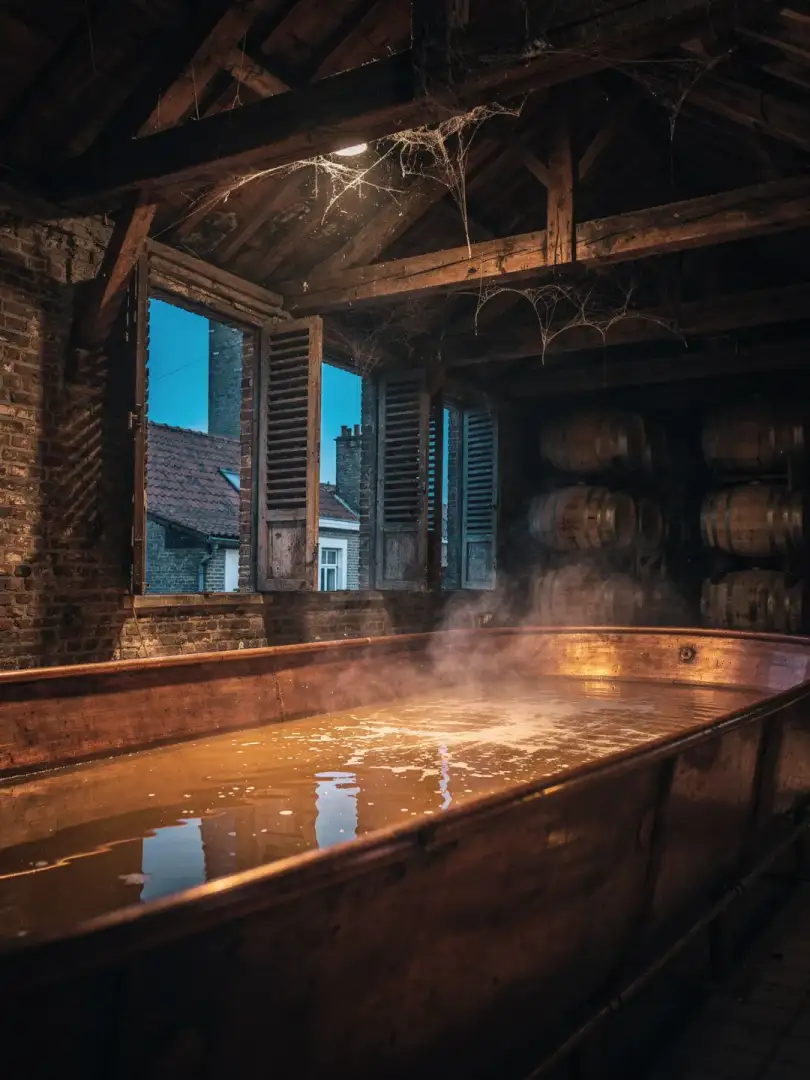
What does spontaneous fermentation mean? The brewer adds no yeast; the microorganisms come from the air and from the wood. After brewing, the wort flows into the koelschip, the shallow cooling pan beneath the roof, and absorbs overnight whatever is floating in the Brussels air.
In the cask, different microbes take over one after another. First, yeasts of the genus Saccharomyces get to work, followed later by lactic acid bacteria and the wild yeast Brettanomyces bruxellensis. Its species name references Brussels, where it was first found in Lambic. It produces aromas of hay, leather, and horse blanket that connoisseurs prize.
Lambic matures for one to three years in wooden casks, at the temperature of the cool room. The blender mixes Gueuze from young, medium-aged, and old Lambic. It's then bottled and left to continue fermenting there, which produces the carbonation. The young portions supply sugar for this second fermentation, while the old ones contribute aroma and depth.
Faro is the sweet variation: Lambic sweetened with rock candy sugar. Kriek is made when sour cherries go into the cask and ferment. Both are old Brussels drinking customs that are becoming rarer today.
Brasserie de la Senne works differently. Their beers undergo top fermentation, meaning the yeast collects at the top and ferments at room temperature, using cultivated yeast and a controlled process rather than spontaneous fermentation. The temperature in the fermentation cellar can be controlled this way, and the yeast delivers the same aromas in every batch. With Lambic, by contrast, every batch is a little different, depending on the season and the night.