Gueuze, Kriek, Faro
Beer Styles
What's the difference between Lambic, Gueuze, and Kriek? Lambic is the base beer, spontaneously fermented straight from the cask, usually flat and very tart. Gueuze is a blend of young and old Lambic that undergoes bottle conditioning, which gives it its sparkle. According to the brewery, Cantillon also offers Faro, the sweetened variety once popular in Brussels cafés. Kriek is Lambic brewed with sour cherries.
What does Gueuze taste like? Dry and sour, somewhat like cider with lemon peel, along with notes of hay, leather, and fruit. The acidity is noticeable, but it doesn't taste like vinegar. How much alcohol does Gueuze have? The style guideline specifies 5 to 8% ABV, with most bottles falling in the middle of that range.
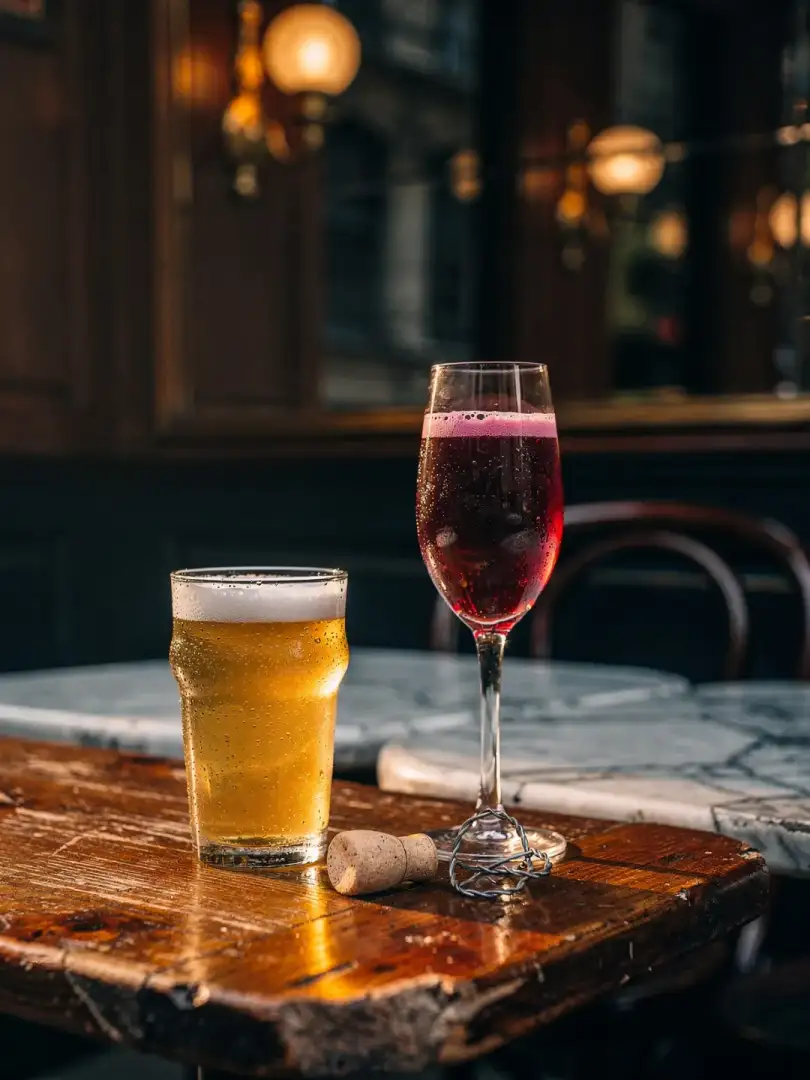
Kriek smells of cherry pit and marzipan. The original is tart, with the fruit staying in the background. Sweeter Kriek varieties for the mass market also exist, but they have little in common with the sour cask-aged beer. The color ranges from pink to deep red.
Taras Boulba from Brasserie de la Senne belongs to none of the three styles. It's a pale, top-fermented, dry beer with pronounced hop bitterness and, according to the brewery, 4.5% ABV, with no acidity to speak of. It shows that Brussels can also do fresh, modern craft brewing.
The difference with the neighboring region: if you're talking about the Pajottenland, you're talking about Lambic as a country beer. Brussels is the city where it gets blended, poured, and celebrated.
GueuzeSpontaneous fermentation
- Original gravity
- 10–13.3 °P
- Alcohol
- 5–8 % vol
- Bitterness
- 0–10 IBU
- Colour
- 10–12 EBC
Dry, sour, sparkling; hay, citrus, and leather, with a fine white foam.