Unmalted Wheat
Malt & Grain
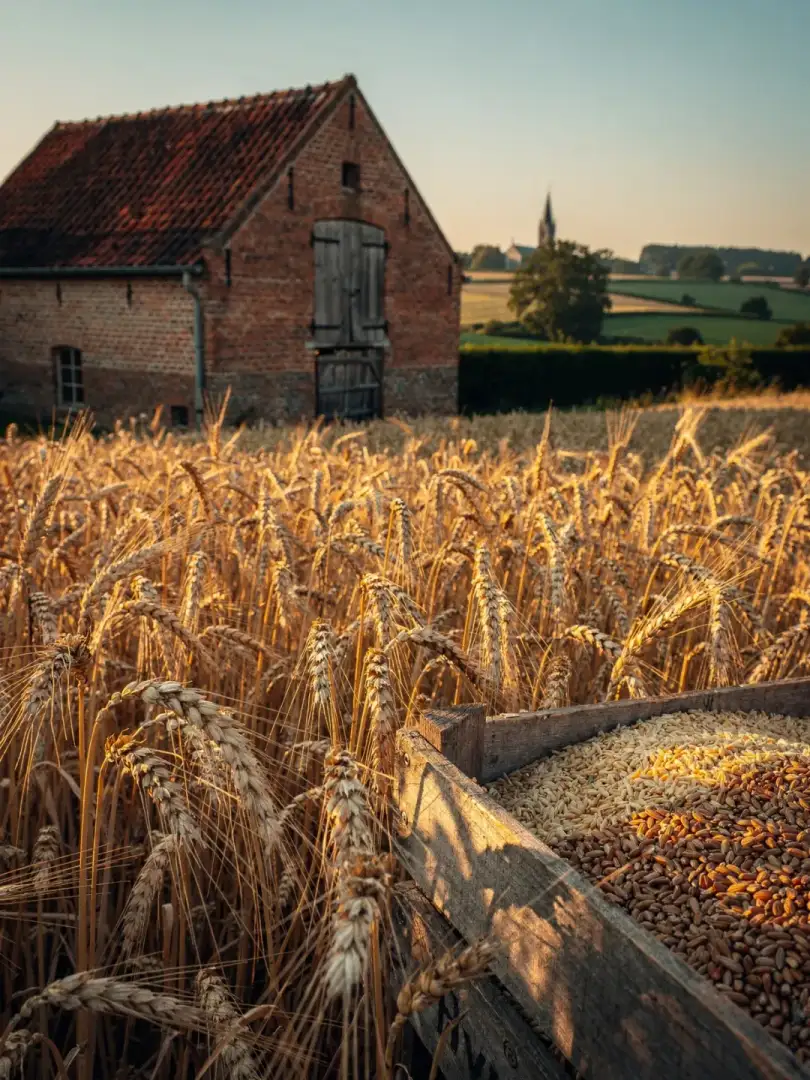
Alongside barley malt, Lambic's mash includes unmalted wheat. This is raw wheat that has never been allowed to germinate. It contributes a great deal of starch, which the microbes feed on for months and years, and the beer stays pale with barely any malt flavor.
During mashing, grist and hot water are combined so the starch converts into fermentable sugar. For Lambic, brewers use turbid mashing: a portion of the cloudy mash is repeatedly drawn off, boiled, and returned hot. This gives the wort a high content of dextrins, long sugar chains that ordinary brewer's yeast leaves untouched but which serve as food for the microbes in the barrels.
The numbers show the range. According to the BJCP style guidelines, Lambic sits at roughly 10 to 13.3 degrees Plato original gravity, meaning the sugar content of the wort before fermentation, and at 5 to 6.5 percent alcohol. It's a beer of middling strength that only develops its true character through aging.
Does Germany's Reinheitsgebot apply to Lambic? No. Wheat, fruit, or sugar are permitted in Belgium, and since the 1987 ruling of the European Court of Justice, a beer lawfully made there may also be sold as beer in Germany.
Recipes vary from house to house, whether at Lindemans in Vlezenbeek, Timmermans in Itterbeek, or Girardin in Sint-Ulriks-Kapelle. The basic pattern of barley malt and unmalted wheat remains the common thread across the Pajottenland and the Senne Valley.