Ries Wheat
Malt & Grain
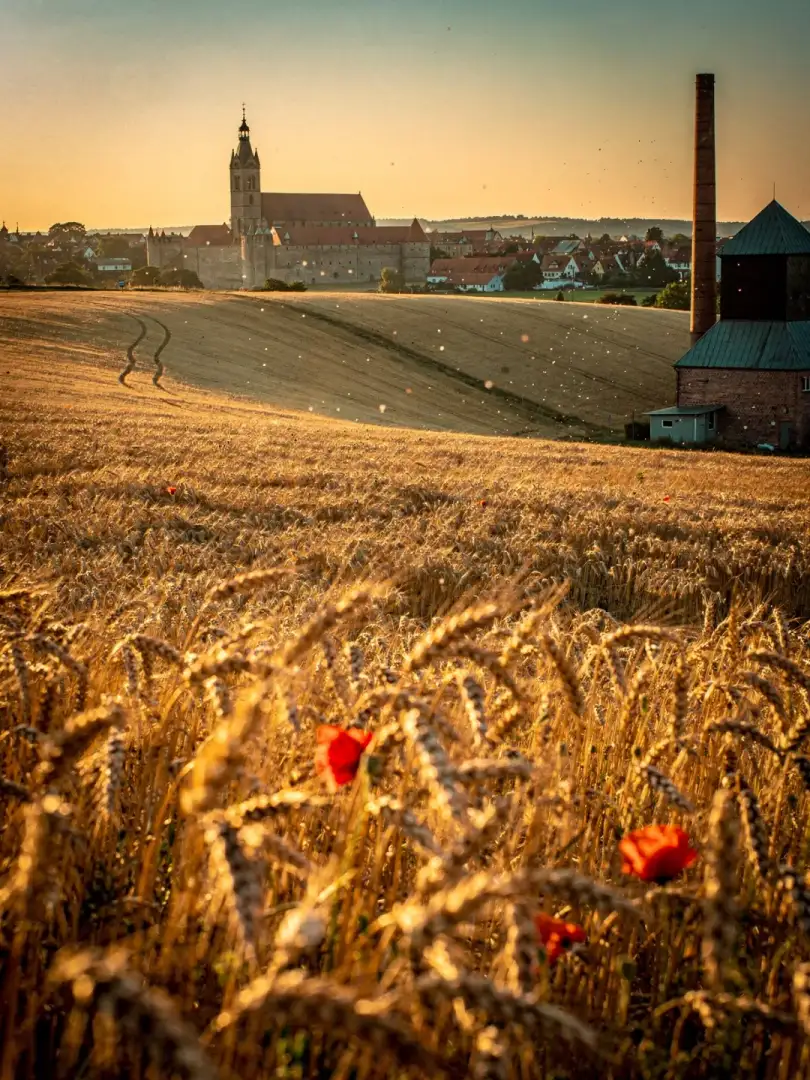
In the Nördlinger Ries, grain grows in fertile soil, and that shows in the beer. For its Rieser Weizenbier, the Ankerbrauerei, according to its own promotional material, named two regional maltings: Schneider-Landenberger in Nördlingen and Dürrwanger in Wechingen. Both source wheat and brewing barley from farmers in the surrounding area. So anyone buying this beer gets grain from close by.
Malting means germinating grain and then drying it so that enzymes form to enable sugar production. The drying step is called kilning. For pale malt it happens gently, for dark malt with more heat, and this determines the color. A Helles needs a pale barley malt, while Weißbier needs a large proportion of wheat malt alongside it.
For Weißbier, a common industry rule is that at least half the grain bill consists of wheat malt. No legal requirement for this is documented, however. Wheat brings more protein into the beer, which produces the lush, long-lasting foam. Wheat malt has no husks, which often makes lautering — separating the wort from the spent grain — more difficult.
Historically, wheat beer was an exception in Bavaria. The Reinheitsgebot of 1516 only provided for barley, and Weißbier long remained in the hands of a privileged few, until the duke claimed the monopoly for himself. In Bavaria, it still holds true today that even top-fermented beers must be made without sugar. So when you hear “wheat malt,” think of pure malt and nothing else.
For a Helles in Augsburg, however, pale barley malt alone suffices. Breweries generally don't publish their exact grain bills, so precise proportions can't be given here. What's clear is only the basic distinction: barley provides the base, wheat the character.