Cool, Slow, Unfiltered
Yeast & Fermentation
What does bottom-fermented mean for Kellerbier? The yeast works at cool temperatures and sinks to the bottom of the fermentation tank once fermentation is done. It converts the sugar in the wort into alcohol and carbon dioxide, and because it works slowly, the beer stays clean and settled in flavor.
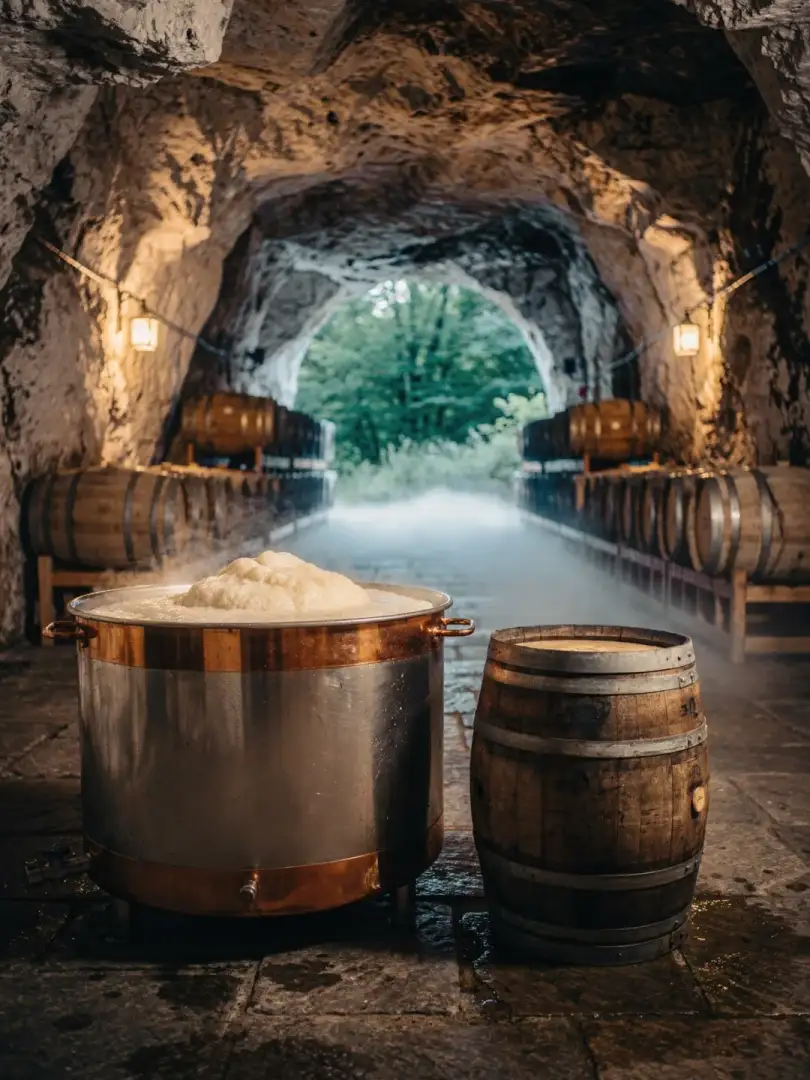
Maturation follows next. The young beer rests for weeks in a cold space, a process called lagering, from the German word Lager meaning stock or storage. In Franconian Switzerland, that meant, for generations, the rock cellar: a tunnel cut into the stone that stays cool even at the height of summer.
With Kellerbier, the journey doesn't end at the filter. The beer goes into the cask naturally cloudy, with yeast and fine protein particles still in it, and Franconian Switzerland happily drinks it that way. It tastes fuller and a touch more bready than a clear Helles, though it doesn't keep as long.
Anyone who's had a Seidla straight from the cask knows the difference from bottled beer. The carbonation is gentler, the foam creamier, and a whiff of yeast rises as it's poured. That's not a flaw — it's exactly the point.
How long a batch rests in the cellar is up to each brewery. Some settle for a few weeks, others let the tank rest longer. What matters is that the temperature stays constant, since fluctuations throw off both the yeast and the aromas. Inside the rock, the temperature barely shifts at all, and that's the real advantage over any metal tank standing out in the open.