Yeast Bank, Scent of Banana
Yeast & Fermentation
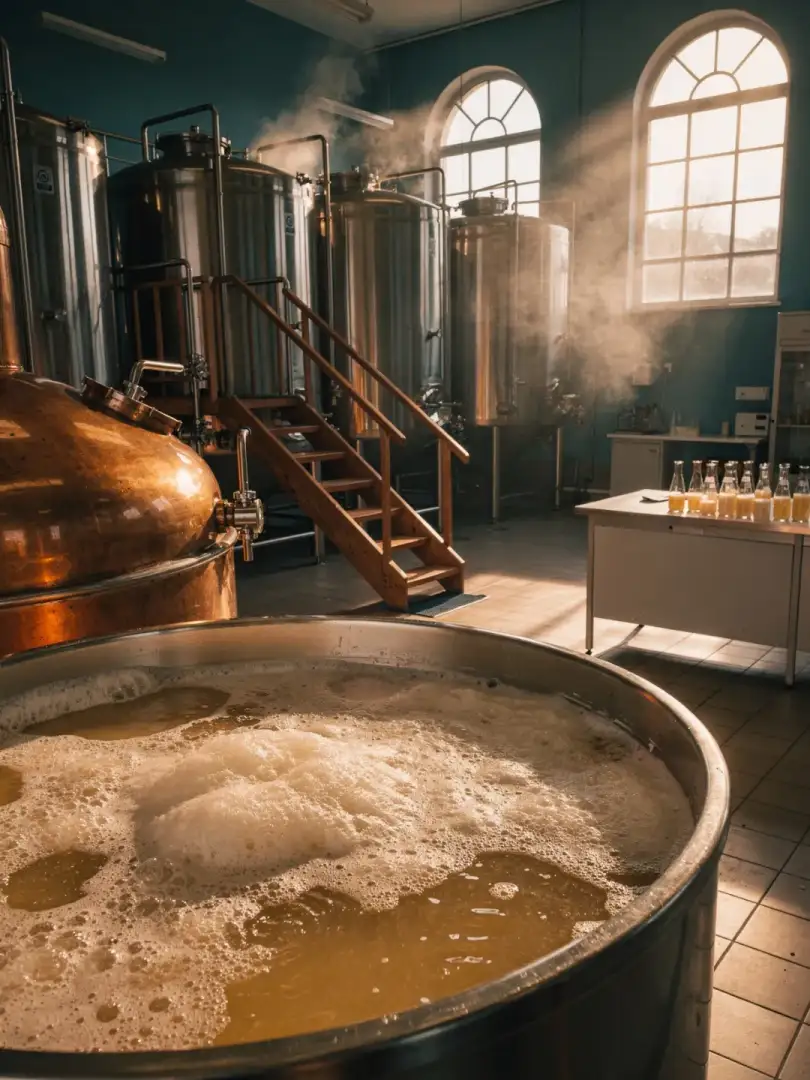
Why does Hefeweizen smell of banana and clove? It comes down to the top-fermenting yeast, which works at warm temperatures and produces aroma compounds as it goes. The banana scent comes from an ester, the clove note from a phenol—both byproducts of fermentation. Brewers control this through yeast strain, temperature, and wort composition.
Top-fermenting means the yeast floats on top of the beer rather than settling at the bottom. It ferments noticeably warmer than lager, roughly around 20°C, while a lager ferments at about 8 to 12°C. That's why Weißbier matures faster and carries more fruit, but keeps less well.
On the Weihenstephaner Berg, yeast itself became an object of research. The Hefebank Weihenstephan was founded in 1940 by Professor Weinfurtner. He isolated yeast cells and described them in detail, and over the decades, strains from breweries all over the world were added to the collection.
Today the yeast bank maintains around 100 different strains and supplies them to customers worldwide. It has since separated from the university and relocated as an independent GmbH to Au in der Hallertau, according to trade media. A yeast bank is a kind of archive: pure cultures are preserved so that a beer still tastes the same years later.
At many breweries, Weißbier undergoes a secondary fermentation in the bottle after primary fermentation, which accounts for its haze. The yeast stays in the glass, giving Hefeweizen a round, slightly creamy character. Its filtered counterpart is called Kristallweizen and has less body, though the fermentation process is the same.