Hefeweizen and Its Relatives
Beer Styles
What is a Hefeweizen? It's a top-fermented Weißbier made with at least half wheat malt (the industry rule of thumb), served with its yeast still in the glass. In Bavaria it's called Weißbier; elsewhere, Weizen. Freising is the textbook example: the Staatsbrauerei shows the style in its classic form.
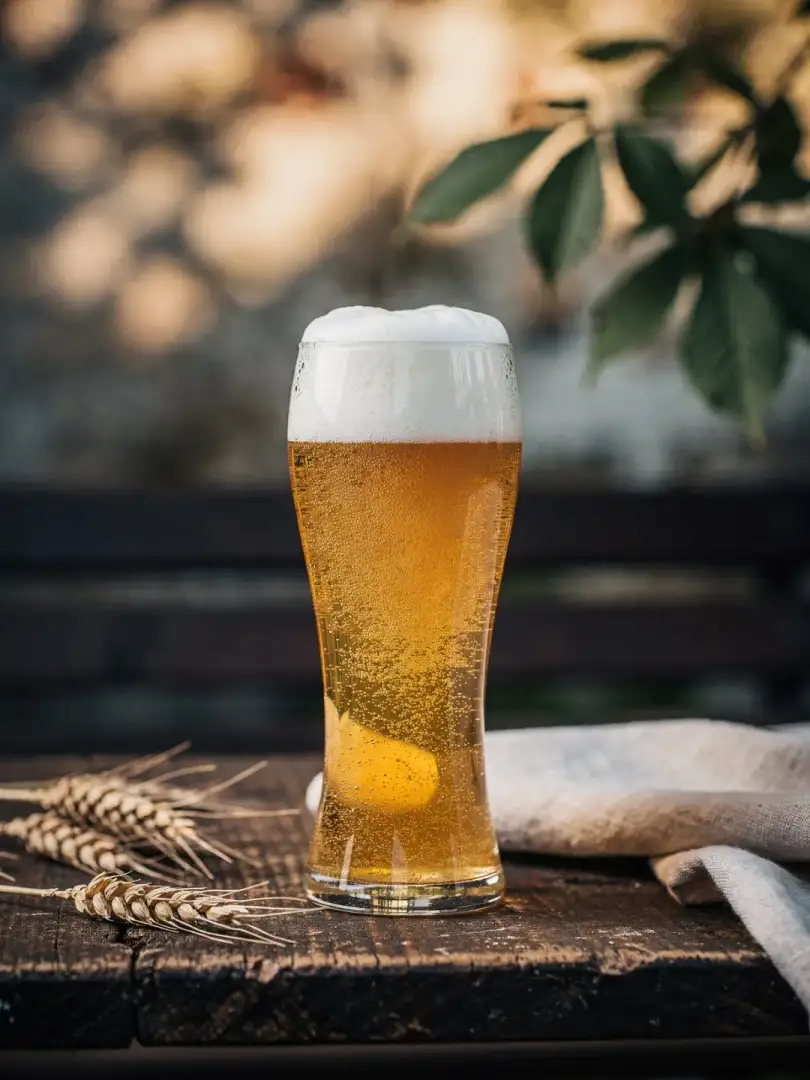
The pale Weißbier is golden, hazy, with a dense head, and smells of banana and clove. At 4.3 to 5.6 percent ABV, it's not a heavy beer and is barely bitter. Its counterpart, Kristallweizen, is the filtered version and comes across clearer and leaner.
Dark Weißbier, also called dunkles Weizen, is brewed with roasted malts. It tastes of bread crust, caramel, and dark banana, while staying just as mildly hopped. The difference from the pale version lies in the malt, not the yeast.
Weizenbock is the strong version, with a higher original gravity—more dissolved sugar in the wort—and noticeably more alcohol. Vitus is a well-known Weizenbock from the Staatsbrauerei. Korbinian, named after the monastery's founder, is by contrast a dark Doppelbock, a bottom-fermented strong beer and not a Weißbier.
The region's beers make for good comparison: the Staatsbrauerei's Hefeweißbier and Vitus show the pale and strong sides, while the Hofbrauhaus Freising's Kellerbier represents the bottom-fermented counterpart. What sets Weißbier apart from a lager is mainly the yeast. A Helles is bottom-fermented, clear, malty, and smooth; a Weißbier is top-fermented, hazy, and fruity. Both come from Bavaria, yet they taste so different that they seem like relatives with entirely different temperaments.
Pale Weißbier (Hefeweizen)top-fermented
- Original gravity
- 11–13.1 °P
- Alcohol
- 4.3–5.6 % vol
- Bitterness
- 8–15 IBU
- Colour
- 4–12 EBC
Golden, hazy, dense foam, banana and clove, barely bitter.