Tilted Into the Glass
Tasting
What does a Hefeweizen from Freising taste like? Soft and fresh, with banana, clove, and a hint of bread crust, plus a fine yeasty note. It's barely bitter; carbonation and foam carry the flavor. Anyone who usually drinks Pils will notice the difference right away. A dark Weißbier adds roasted malt, while a Weizenbock brings dried fruit and a noticeable warmth. How strong a beer actually is is printed on the label; style guideline figures are only rough indicators.
Three examples worth comparing: the Hefeweißbier from Staatsbrauerei Weihenstephan as the classic pale Weißbier, the Weizenbock Vitus from the same brewery as the strong version, and the Kellerbier 1160 from Hofbrauhaus Freising as the bottom-fermented counterpart—naturally cloudy and unfiltered, brewed, according to the brewery, to mark its 850th anniversary.
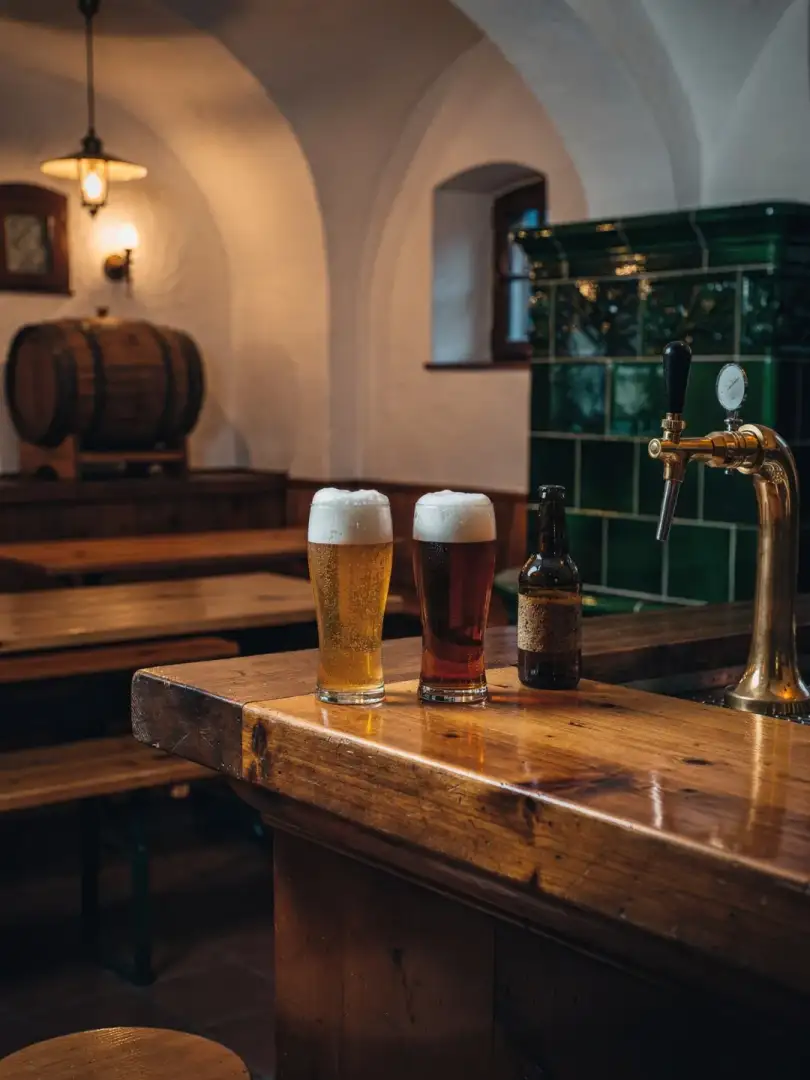
The Weißbier glass is tall and slender, narrow at the bottom and flared at the top. This shape gives the foam room and concentrates the aroma. A typical size is 0.5 liters, and the glass is rinsed with cold water before pouring so the foam doesn't build up too much.
When pouring, the glass is tilted and the beer is let to run slowly down the side. Toward the end, the glass is straightened up. The remaining beer in the bottle, along with the yeast, is swirled before being poured in, so the yeast ends up in the beer rather than settling at the bottom.
Serving temperature is around 6 to 8°C, warmer than for a Pils, so the fruity aromas can come through. Too cold, and all you taste is carbonation. The beer should be allowed to warm up a bit in the glass—then it reveals more of what the yeast has made from the wheat.