Two Kilns
Malt & Grain
In the Hallertau there are two kilns, and both belong to beer. In one, malt is dried; in the other, hops. Anyone who wants to understand the region should know the difference.
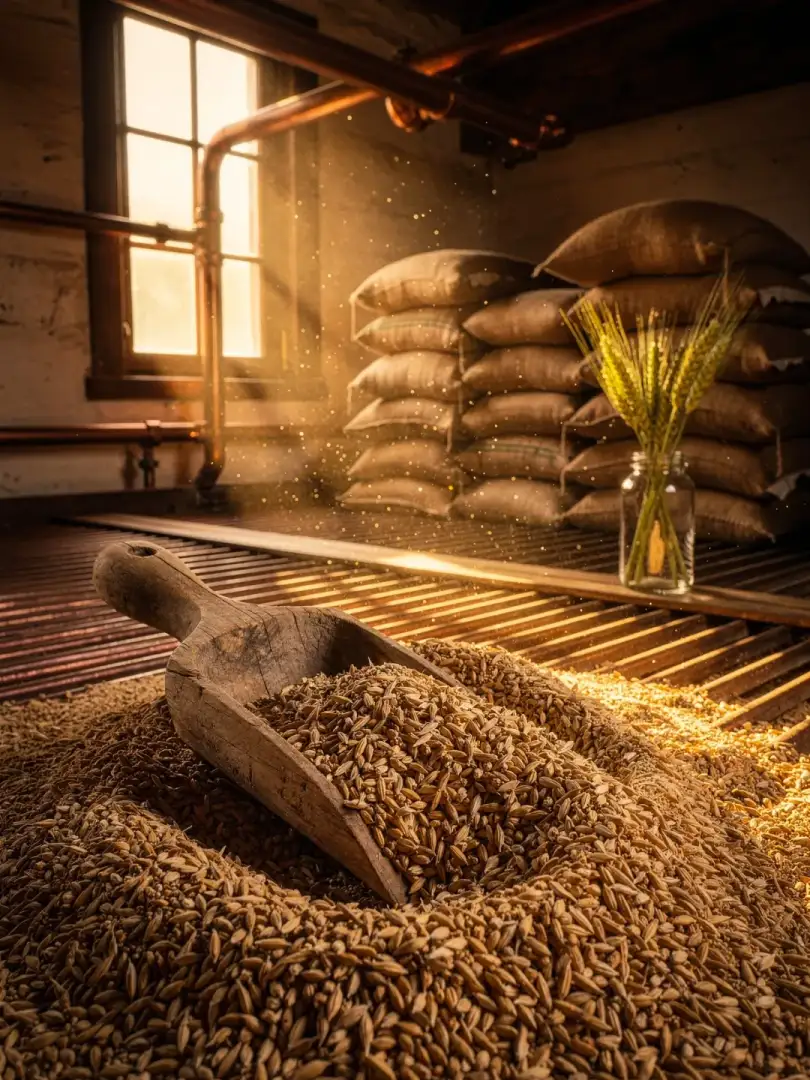
Malt is made by soaking barley in water until it germinates. In doing so, the grain forms enzymes that later convert starch into fermentable sugar. With heat, the maltster ends germination — this is kilning — and determines how light or dark the malt becomes.
The local tourism association promotes the fact that in the Hallertau, water, barley malt from the neighborhood and hops are all close at hand. For the region's flagship beers, Helles, Pils and Weissbier, pale malts are needed, such as those used by the Ziegler Bräu brewery in Mainburg. Dark roasted malts hardly play a role in the glass here.
With hops, drying is a matter of gentleness. In a hop kiln on a farm near Mainburg or Wolnzach, freshly picked cones lie spread out, containing a great deal of water and liable to rot or lose their aroma in a short time. That's why they're dried warm, but not hot, until the stem and leaves are equally dry.
The rule limits the options. Bottom-fermented beers like Helles and Pils may, in Germany, be made only from barley malt, hops, yeast and water. Weissbier is top-fermented and may therefore contain other malt, in practice mainly wheat malt, and in Bavaria, sugar is not permitted here either.
For the hop farmer, what matters in the end is whether his hops suit the malt. A very pale, sweetish malt can carry a lot of bitterness; a sharp Pils needs more of it than a mild Helles. The balance between the two determines how much hops the brewery buys.