How Much Hops
Beer Styles
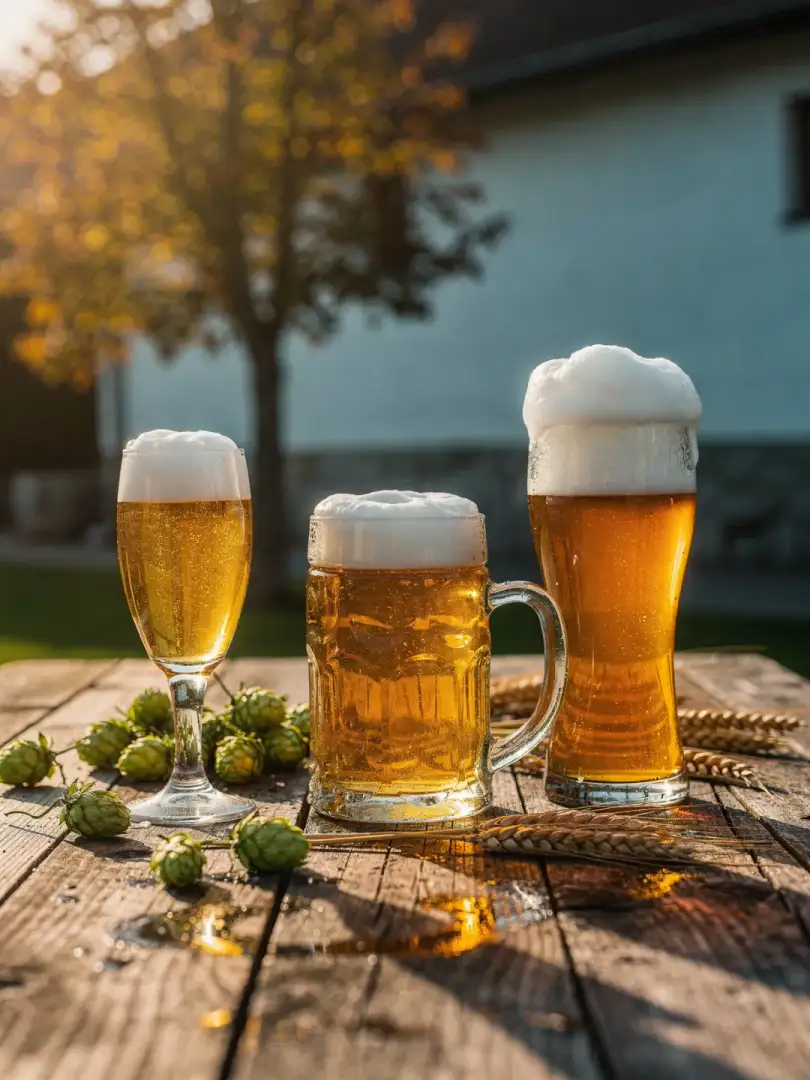
How bitter can a beer be? The Hallertau answers with three styles that differ mainly in their bitterness. This can be measured in IBU, International Bitterness Units: more IBU, more bitterness.
Helles is the gentle case. It's golden yellow, bottom-fermented and malty, with little bitterness. Here, hops are meant to support the malt body, not overpower it, so when drinking you barely notice any hop aroma.
German Pils is the classic hop beer. It's pale, dry and distinctly more bitter, with a floral or herbal aroma, and the hop character lingers through to the finish. In Germany, Pils is a generic style name, not a protected term.
Weissbier is the outlier. It's top-fermented, has banana and clove notes from the yeast, and only mild bitterness, since the hops stay in the background behind the yeast. Next to a Pils, it seems almost sweet, even though the difference lies mainly in the hops and the yeast.
Ask for a beer in Mainburg or Wolnzach, and you'll usually get one of these three. The hops used are often Hallertauer Mittelfrüh or Perle, the classic aroma varieties, whose aroma is most noticeable in a Pils. The variety alone won't reveal a recipe, though, since every brewery blends its hop additions its own way.
The figures below come from the BJCP 2021 competition guidelines, a US standard, and are ranges, not recipes. An individual beer may fall outside them; the brewery's own specifications are what count.
Hellesbottom-fermented
- Original gravity
- 11–11.9 °P
- Alcohol
- 4.7–5.4 % vol
- Bitterness
- 16–22 IBU
- Colour
- 6–10 EBC
Golden yellow, malty, little bitterness, barely any hop aroma.