Plenty of Malt
Malt & Grain
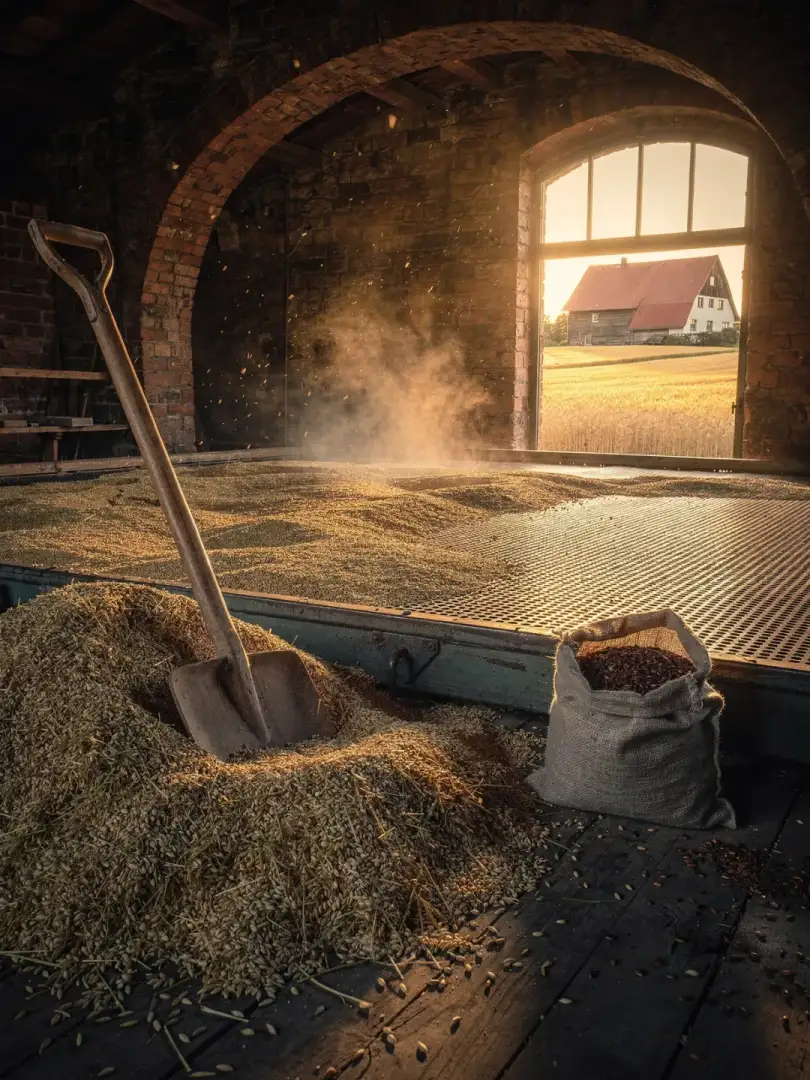
Malt is grain that's been allowed to germinate and then dried on a kiln. This process creates sugars that yeast later converts into alcohol. The beers of this region need plenty of it. That's why a Kulmbacher Eisbock ranks among the strongest beers in Germany.
The figure that reveals this is the original gravity, known in German as Stammwürze. It indicates how much dissolved substance from malt is present in the wort before fermentation, measured in degrees Plato. A Helles, according to the BJCP competition guidelines, sits at 11 to 11.9 degrees Plato, while an Eisbock reaches 18.9 to 28.1. Under German beer regulations, a beer may only be called a Bockbier if its original gravity is at least 16 percent.
For Bock, brewers turn to darker malt, since it brings more roasted character. Think caramel, bread crust, and dried fruit. How heavily a malt is kilned determines its color and flavor, ranging from pale Pilsner malt all the way to nearly black roasted malt.
Maisel's Weisse in Bayreuth and the Kapuziner Weißbier from Kulmbach also rely on wheat malt. The industry rule of thumb is a wheat malt share of at least 50 percent. No legal basis for this rule was confirmed in this research. In Bavaria, even for top-fermented Weissbier, adding sugar remains forbidden.
Where each brewery sources its barley and which maltings supplies it is something the breweries state individually. For Kulmbach, only the basic principle holds: the Bavarian Beer Purity Law of 1516 specified "barley, hops and water," and that still applies in Bavaria today.