Yeast and Lactic Acid
Yeast & Fermentation
Is Gose top-fermented? Yes, it ferments with top-fermenting yeast at room temperature up to moderate warmth. Alongside that comes a second force: lactic acid bacteria, which convert the same sugar into lactic acid. The result is a mixed-fermentation beer that tastes fresh and lemony-sour, with barely any vinegar character.
How does Gose become sour? Either the brewery deliberately inoculates the wort with lactic acid bacteria, or it sours a portion beforehand in a separate vessel and blends it into the wort. Today this process is controlled so that every batch tastes consistent. In the past, the environment within the brewery played a role too.
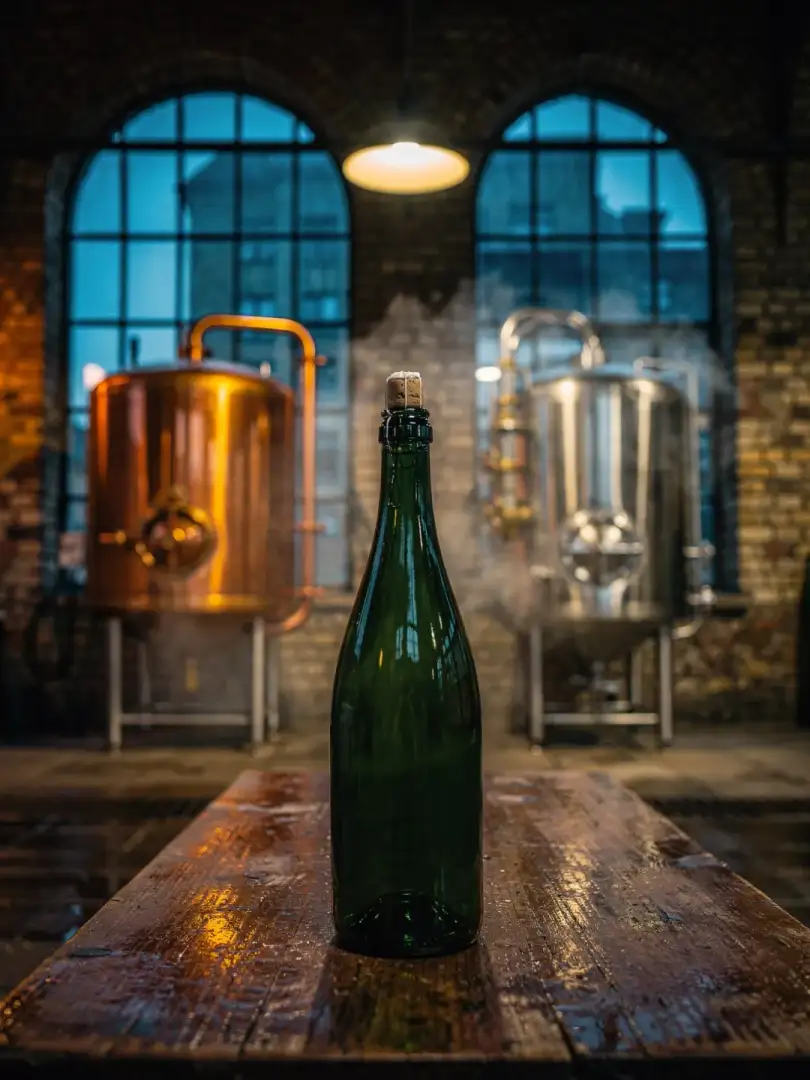
The old Leipziger Gose continued to mature in the bottle. The beer was filled into a bulbous, dark green bottle with a very long neck and wasn't sealed with cork or crown cap. During secondary fermentation, the yeast would naturally rise up the neck and form a plug, known as the "Flor," which kept air out.
Before pouring, the neck was first wiped clean. The bottle shape and yeast plug are more a matter of memory than everyday practice today, though some Gose brewers revive them as decorative touches. Some Gosebrauerei now display the long bottle purely as an ornament. Gose itself remains a beer meant for youthful freshness: weeks are enough, it doesn't need months in the cellar.
What matters most for the flavor is the final cooling step. Gose is cold-stored and either filtered or only roughly clarified, depending on the brewery. It then reaches the table not as a heavy, cloudy brew but as a light, lively drink, at around 4 percent alcohol.