Wheat Takes the Lead
Malt & Grain
What's in Gose? The style is built on a high proportion of wheat malt, often at least half the grain bill, combined with barley malt. This makes the beer pale, lightly hazy, and soft on the palate. However, the minimum amount isn't documented as a fixed legal requirement—it's considered an industry convention.
Malt is grain that's allowed to germinate and is then dried. In the kiln, a type of drying chamber, heat determines the color: pale malt stays delicate and sweetish, dark malt tastes of bread and roasted notes. For Gose, lightly kilned malt is used because the beer should pour straw-yellow to golden in the glass. By the standard, the color falls between 6 and 8 EBC, the unit for beer color.
Two ingredients come straight from the kitchen. Coriander, the dried seeds of the spice herb, brings a lemony, lightly spicy note. Salt creates an impression of fullness without the beer tasting as salty as seawater. Both go into the wort during the boil—the sugar solution from which beer later ferments.
Because of the salt and coriander, Gose doesn't fit the Reinheitsgebot. Top-fermented beers may contain other malts and sugar, but not spices. That's why it's classified as a "special beer" with an exemption from the state authority—a route breweries in Saxony make use of.
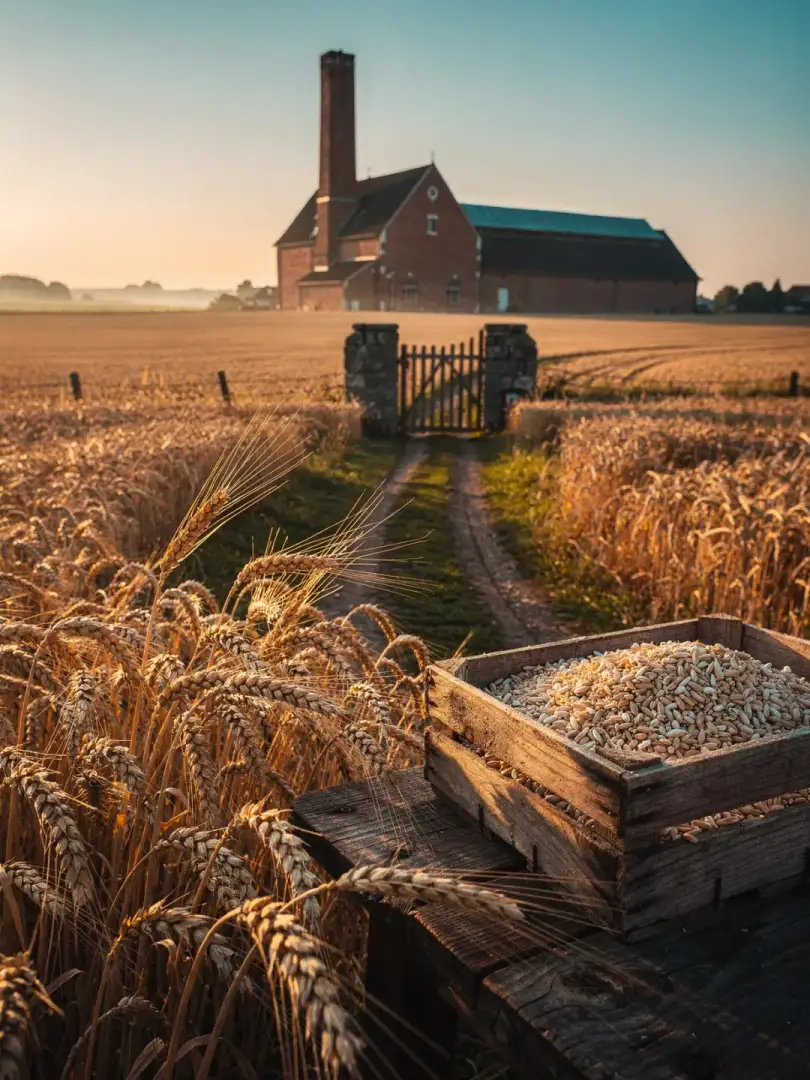
Those looking for the grain behind Leipziger Gose will find it just outside the city: Leipzig sits on the edge of the fertile Börde region of central Germany, where barley and wheat grow across wide fields. How much of it ends up in Leipzig's brewhouses can't be quantified, and which malthouse supplies the Gosebrauerei or other establishments isn't documented in any verified source.