Top, Bottom, Felsenkeller
Yeast & Fermentation
What does top-fermented mean? The yeast works at warmer temperatures and rises to the surface foam by the end of fermentation. Münstersch Alt falls into this category, as does Hefeweizen. The Pils from Herford and Paderborn, on the other hand, is bottom-fermented: its yeast sinks and works at significantly cooler temperatures.
The name "Alt" refers to the old style of brewing. Brewers in Westphalia and along the Lower Rhine fermented their beer top-fermented long before cold lager beers took over. Typical fermentation temperatures run around 15 to 20 degrees Celsius, after which the beer matures for a while in the cold. This combination gives Alt its fruitiness along with a clean character.
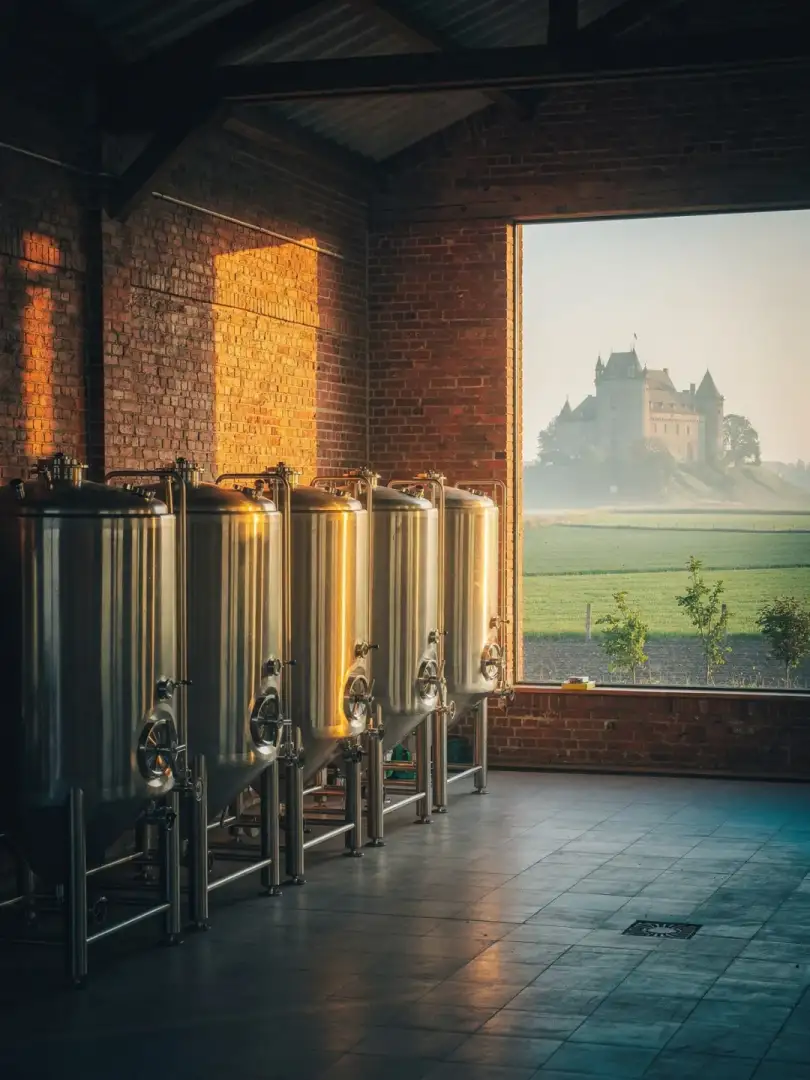
For Pils brewers, cold sets the pace. A bottom-fermenting yeast usually ferments at about 8 to 12 degrees Celsius, after which the beer lagers for weeks at near-freezing temperatures. This is precisely what rock cellars like the one in Schweicheln were built for, which is why the Herforder Brauerei takes its name from the cellar. Herforder Pils and Paderborner Pilsener still mature according to this principle today.
Yeast is a fungus that converts sugar into alcohol and carbon dioxide, and every brewery cultivates its own strain. It gives the beer a signature that water or hops alone can't achieve. Which strains individual breweries use is typically kept private, with nothing publicly documented. What matters is that at Pinkus Müller, Alt and Weizen both rely on top-fermenting strains, while the neighboring Pils relies on bottom-fermenting ones.
For the drinker, this means: an Alt from the tap is lightly hazy or clear, depending on the brewery, with a fruity aroma. A Westphalian Pils is clear, lean, and bitter. The difference lies in the fermentation vessel, not in the color.