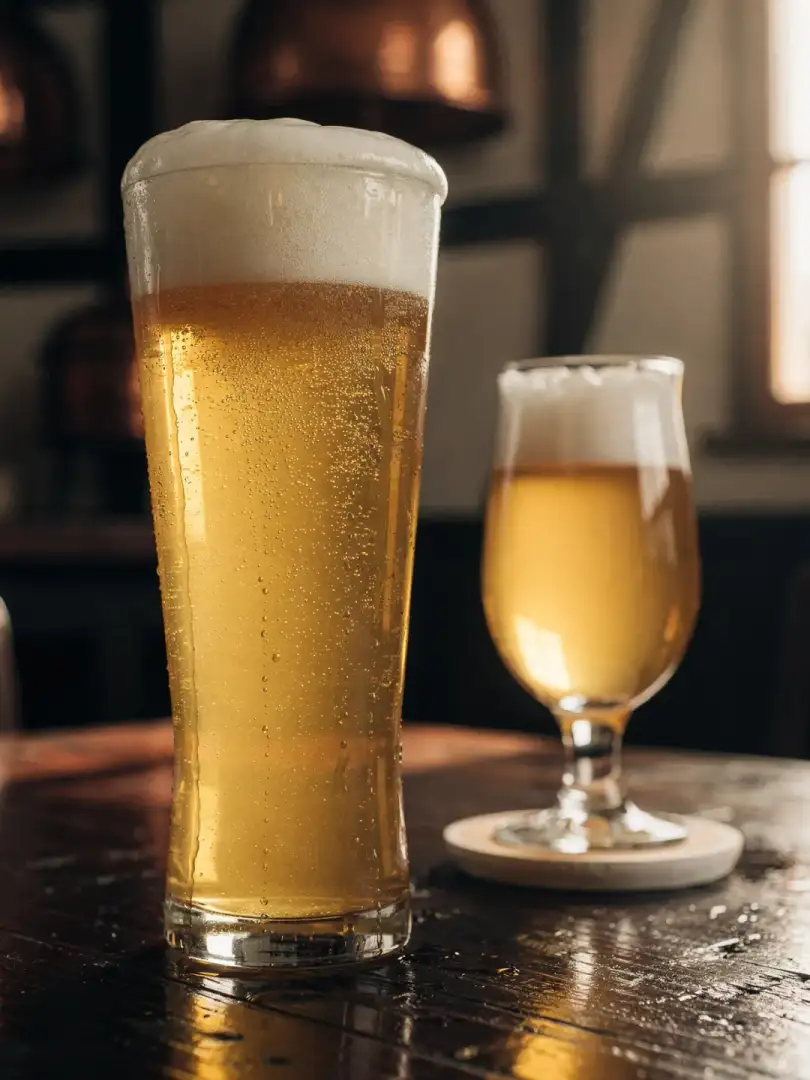
Münstersch Alt, Westfalenpils
Beer Styles
What's the difference between Münstersch Alt and Düsseldorfer Altbier? The Düsseldorf version is copper-colored, assertively bitter, and brewed purely from barley malt. The Münster Alt is pale, more gently hopped, and contains wheat malt. Both are top-fermented, yet they taste quite different. Even the foam and finish differ, since the wheat gives the beer more body and a softer mouthfeel.
Flavor-wise, Münstersch Alt leans toward a pale, fruity beer with a light freshness. First-time drinkers, misled by the name, often expect roasted notes and get something entirely different instead. No BJCP benchmark exists for this particular type, so the profile below uses Düsseldorfer Alt as a reference point for comparison.
The second pillar is Pils. Herforder Pils and Paderborner Pilsener belong to the Westphalian Pils tradition: dry, bitter, with a crisp foam. In Germany, Pils is a generic style name, not a protected place of origin. What defines a Westphalian Pils, then, isn't set by any regulation but by the taste of each individual brand.
Then there's a Hefeweizen, also brewed by Pinkus Müller. It follows the familiar wheat beer tradition of wheat malt and top-fermenting yeast, just from an organic brewery in Münster. Each house's recipes remain its own business, with style guidelines only providing the framework. A Hefeweizen comes across fruity and lightly spiced, while the Alt feels more neutral and dry by comparison.
As a rule of thumb for the region: top-fermented and pale in Münster, bottom-fermented and bitter in Ostwestfalen. The boundaries blur, but anyone who tries both can taste just how different two beers can be, even separated by only a short stretch of highway.
Pils (German)bottom-fermented
- Original gravity
- 11–12.4 °P
- Alcohol
- 4.4–5.2 % vol
- Bitterness
- 22–40 IBU
- Colour
- 4–8 EBC
Pale gold, clear, fine foam, pronounced hop bitterness, dry finish.