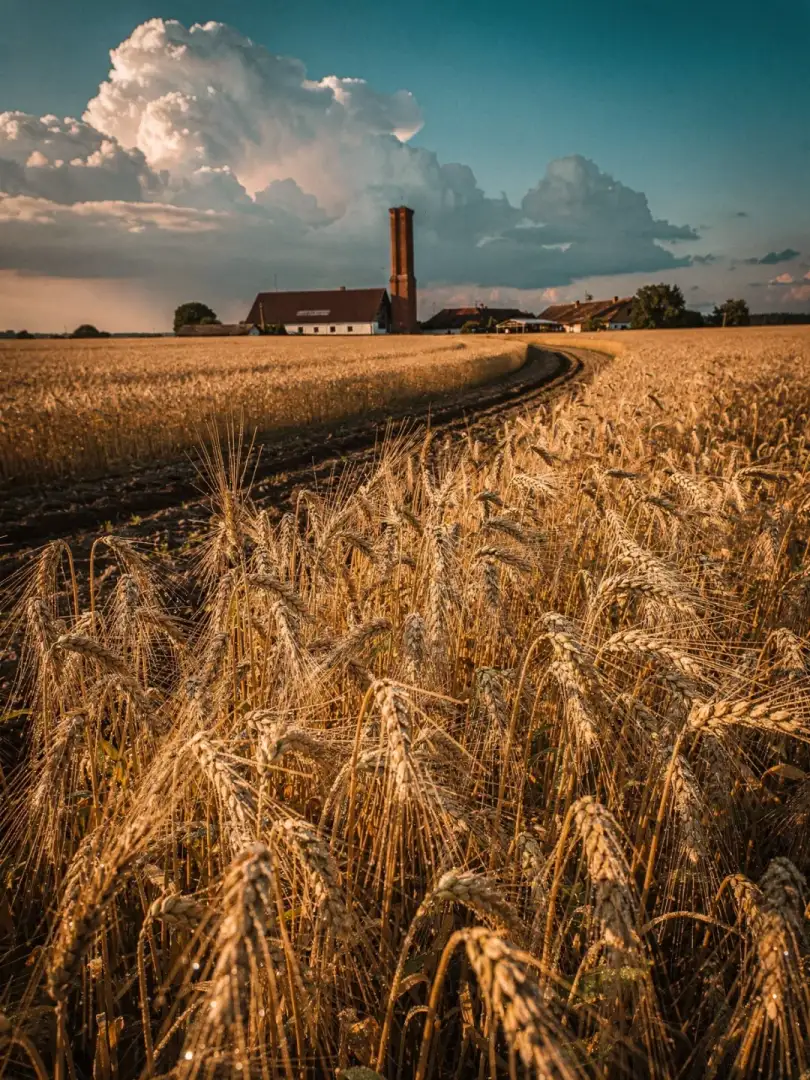
Barley from the Loess
Malt & Grain
Why is the Gäuboden called Bavaria's granary? Because the loess soils here yield unusually abundant crops: wheat, corn, sugar beet, potatoes, and field vegetables, plus the barley brewers turn into malt. The soil is deep, nutrient-rich, and easy to work, and the yields show it.
Karmeliten Brauerei states that its malting barley comes from within the Straubing city area. That's a short trip from field to brewhouse. The brewery thus has something that other regions have to haul their grain hundreds of kilometers to get.
Barley becomes malt by moistening the grains, letting them germinate, and then drying them on the kiln. In the process, starch and protein transform into substances that yeast can later ferment into alcohol. The longer and hotter the kilning, the darker and more roasted the malt becomes. Pale malts give the Festbier its rich gold color, while a touch of caramel malt rounds it off.
With Weißbier, wheat comes into play. The Straubinger Weisse, like every Weißbier, is brewed from wheat malt and barley malt. The wheat makes the foam creamy and the beer cloudy and fruity. The exact share of wheat malt in any given style is listed on the brewery's own website, not here.
We haven't found evidence of dedicated malthouses within the city itself. What is certain, though, is that the Carmelites bought back a malt mill as early as 1848. Milling the malt before mixing it with hot water in the brewhouse has thus always been part of the brewery's work.