Lager and Happōshu
Beer Styles
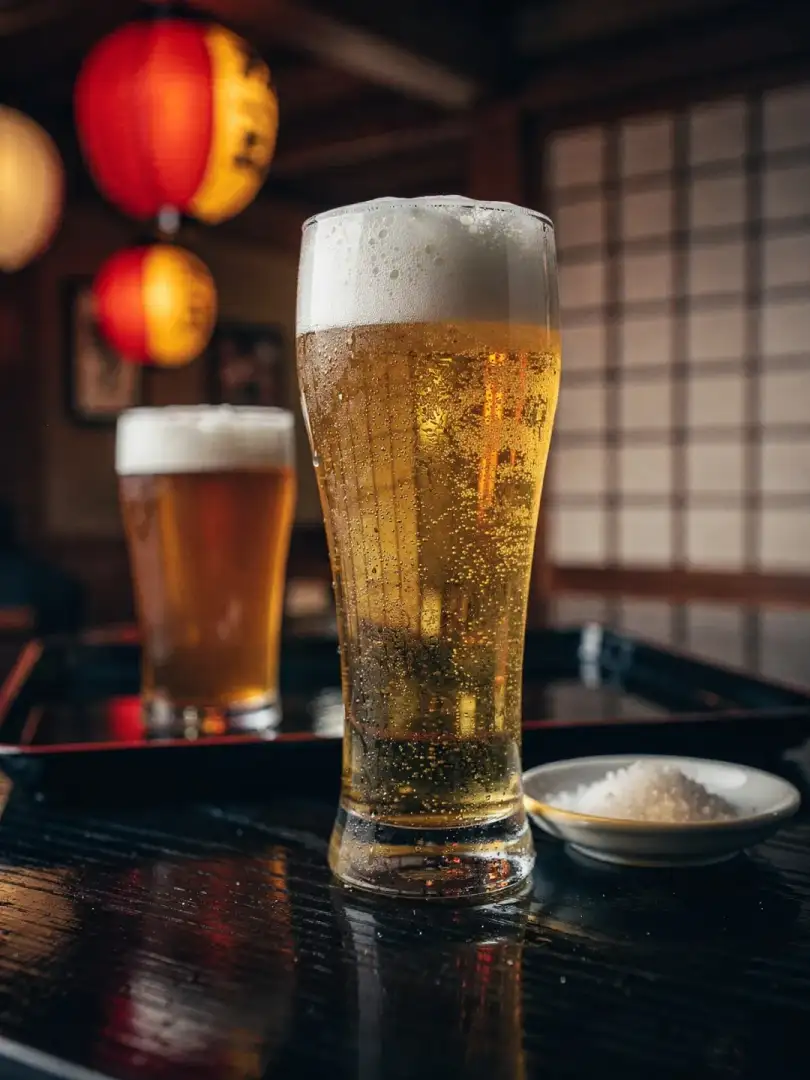
What is Japanese lager? It's a pale, bottom-fermented beer with little malt sweetness, clean fermentation, and restrained bitterness. The American judging guide BJCP doesn't list it as its own style but places it under "International Pale Lager." Asahi Super Dry, Kirin Ichiban Shibori, and Yebisu all fall into this category, even though they come across as quite different from one another.
The difference between them lies in the details. Asahi Super Dry, at 5.2 percent alcohol, is the leanest of the three, with crisp carbonation. Kirin Ichiban Shibori, meaning "first press," is marketed on using only the first wort, without a second runnings addition. Yebisu is seen as the maltier counterpart, with more body.
What sets this lager apart from German Pilsner is hop bitterness. A German Pilsner reaches 22 to 40 IBU, while a Japanese lager usually sits at the lower end of the scale. In exchange, it tastes cooler and smoother, and pairs well with salty, fatty food.
Alongside lager, the rest of the tax categories fill Tokyo's shelves. Happōshu and the third category aren't beer styles but legal terms. They depend on malt content and ingredients, not on flavor. In the glass, they look like lager.
Then there's the craft scene. Since 1994, small breweries in Kanagawa and Tokyo have been brewing pale ale, IPA, wheat beer, and dark beers. Kirin's Spring Valley Brewery is a craft line that harks back to Copeland's brewery. So these beers now emerge from the very place where it all began more than 150 years ago.
Japanese Lagerbottom-fermented
- Original gravity
- 10.5–12.4 °P
- Alcohol
- 4.5–6 % vol
- Bitterness
- 18–25 IBU
- Colour
- 4–12 EBC
Pale, clear, lean, low bitterness, dry finish. BJCP: International Pale Lager.