Wildshut and the Weinviertel
Malt & Grain
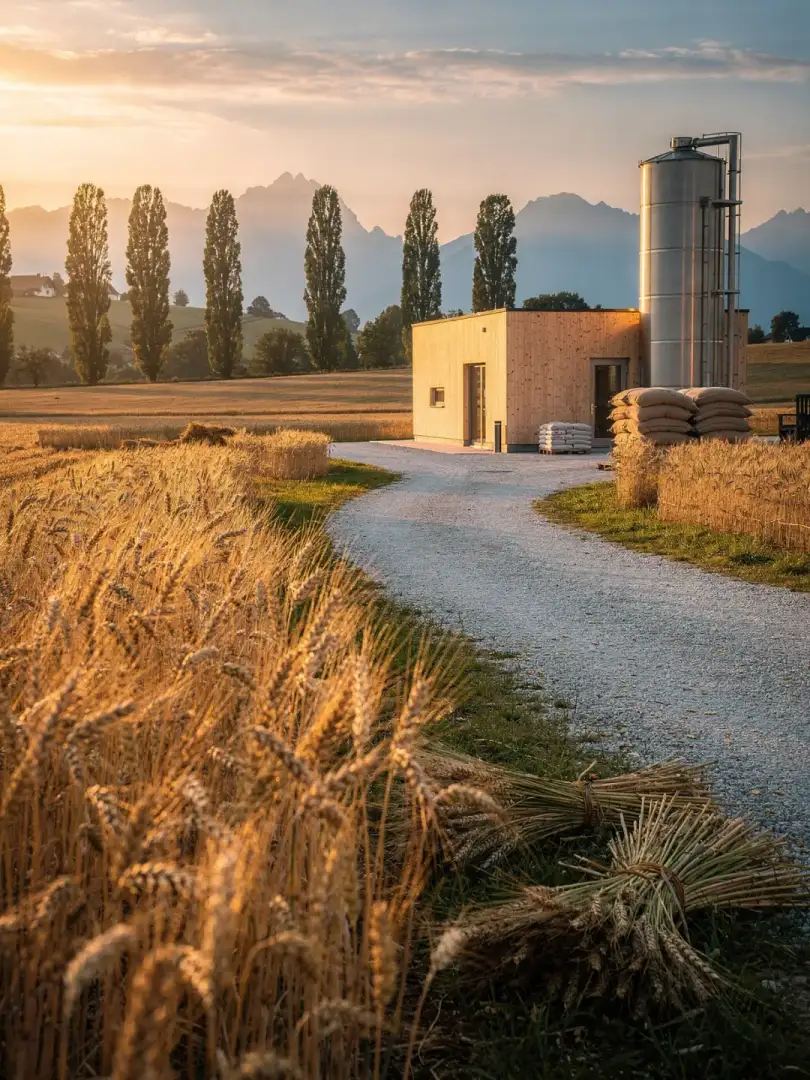
At Stiegl's own Gut Wildshut estate near Salzburg, barley and more grow in the fields. There the brewery cultivates heritage grain varieties, malts them in its own malthouse, and—according to the brewery—brews special beers from them on a small experimental system. What Wildshut can't supply comes as brewing barley and malt from the Weinviertel.
Malting works like this: the grain is moistened and encouraged to germinate so it develops enzymes that will later convert starch into sugar. Then the kiln—a drying oven—halts the growth. The hotter and longer the malt sits there, the darker and more roasted it becomes.
For a pilsner, brewers use the palest malt available, Pilsner malt, which is kilned only gently. It supplies the body and a delicate bread-crust note—nothing more. A Märzen, like the one served at the Augustiner Bräustübl, needs a more robust malt that lends the beer color and fullness.
Rye and wheat play no starring role in Salzburg's classic beers; the flagship brews are barley beers. Organic barley, heritage varieties, and regional sourcing have only become talking points again in recent decades, as breweries look to shorten their supply chains.
What matters most for flavor is that the barley comes from the region, not from vast collective storage facilities. Wildshut shows how brewery and farm can grow close together again. At Stiegl in Maxglan, a brew often begins months in advance, out in the field, with the choice of variety and the timing of harvest. The malt then travels only a short distance to the brewery, where it's crushed—coarsely ground—so the water can dissolve its compounds.