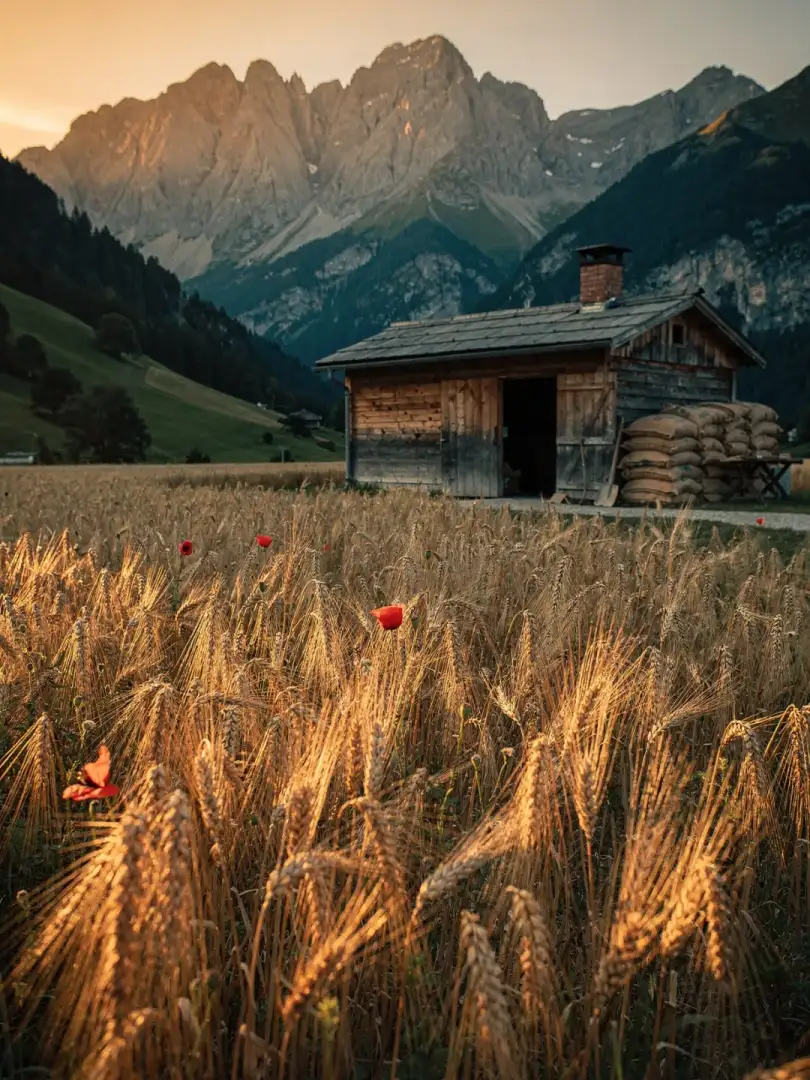
Mountain Malt, Organic Barley
Malt & Grain
Barley malt gives Eastern Swiss beer body, color, and that background bready note. Malt is barley that is allowed to germinate while moist and is then dried, so that its starch can later be broken down into sugar during the boil. For a pale lager, it's kilned gently at low heat, otherwise roasted aromas would end up in the glass.
The Locher brewery names barley malt from the mountains of Graubünden for its beers. The grain therefore doesn't come from the area around Appenzell itself, but from higher elevations in the canton of Graubünden, where barley ripens slowly through short, cool summers. Such grains often develop thin husks and a milder character, which suits a clear, pale malt tone.
The Naturperle is something special. Locher describes it as the first Swiss beer with the Bio Suisse label, the Knospe (bud). Both the barley malt and the hops come from certified organic farms for this beer. That means: no chemical crop protection in the field, but the same craft technique in the brewhouse as for the other varieties.
The malt profile generally stays pale, even with the choice of varieties. Pale pilsner malt forms the base, with darker beers getting a touch of roasted malt or caramel malt added. Caramel malt is created by letting moist malt convert to sugar and then heating it, and it brings sweetness along with a golden-brown color. In the glass, this shows up as an amber hue and a light caramel note in the finish. A small proportion is enough; a lager doesn't need more, or it would turn sickly sweet and heavy.