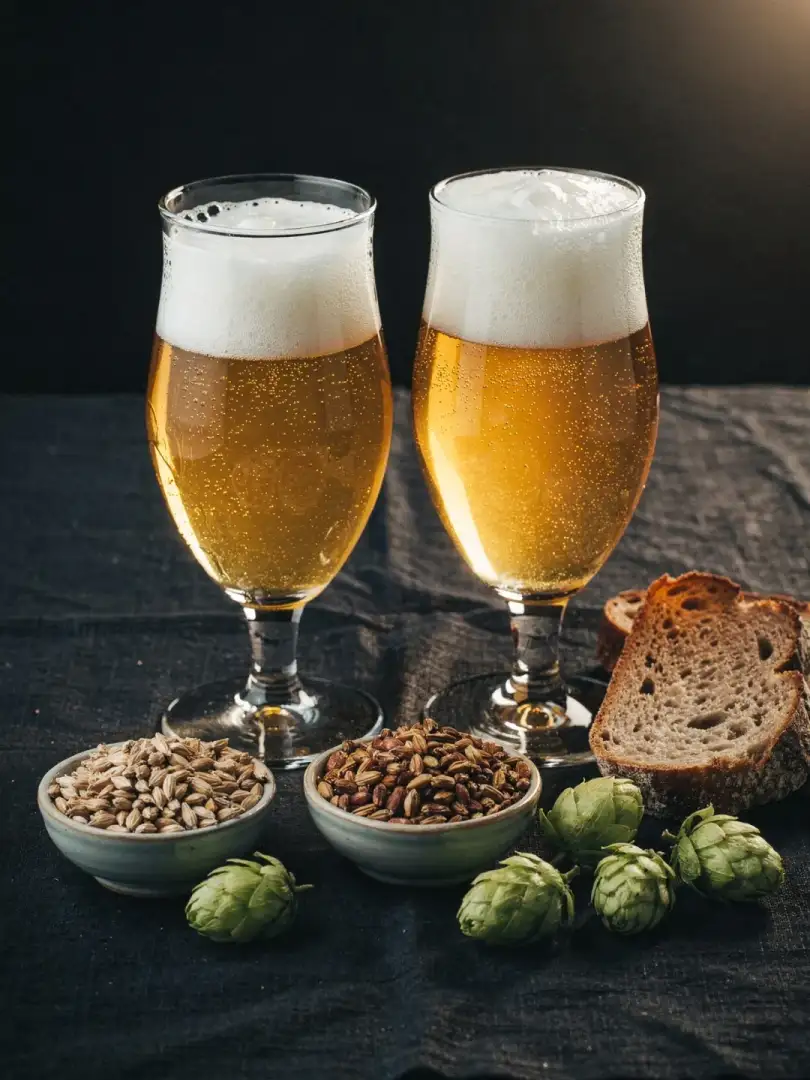
Body & Malt Character
Why Does Alcohol-Free Beer Taste Different?
Alcohol-free beer tastes different because alcohol itself has a flavor: it warms, carries aroma compounds, and gives beer body. Without it, sweetness, malt character, and bitterness all come through more strongly. Here's what happens in the glass, where that characteristic malty taste comes from, and how brewers counteract it.
What does alcohol contribute to the taste of beer?
A 5% ABV Pils contains roughly 25 milliliters of alcohol in a half-liter serving. That's more than enough to shape the flavor. Alcohol tastes faintly sweet and provides a warming sensation in the mouth and throat. It makes the beer feel denser, giving it what experts call body or mouthfeel. And it's an excellent solvent for many aroma compounds, carrying them up from the glass to the nose.
Take the alcohol out, and all three effects disappear at once. The beer feels thinner, the hop bitterness stands out more sharply and feels disconnected from the rest. Fruity esters, which form during normal fermentation, come through weaker, or are partly lost during de-alcoholization. Many drinkers describe this as watery, even though the actual water content is barely higher than in regular beer.
Malty and Sweet: Where Does That Characteristic Wort Flavor Come From?
With beers from arrested fermentation, a second effect comes into play. Unfermented wort tastes of malt, honey, and fresh bread. It contains aldehydes, aroma compounds that yeast would largely transform during full fermentation. Cut fermentation short, and they stick around. In the glass, this produces a note tasters often describe as a wort-like character: sweetish, bready, sometimes with a hint of potato or cardboard.
Then there's the residual sugar. A normal beer is mostly fermented out, with the bulk of its malt sugar consumed. A beer with arrested fermentation, by contrast, retains plenty of it and tastes correspondingly sweet. De-alcoholized beers show this wort character less often. They tend instead toward a leaner, sometimes slightly flat impression, since after full fermentation they lack both alcohol and some of the volatile aromas.
How Brewers Improve the Taste of Alcohol-Free Beer
Breweries have learned a great deal over time. One tool is malt selection. A touch of caramel or specialty malt adds color, roasted notes, and body, without requiring the yeast to turn it into alcohol. A second tool is hops. Dry hopping, where hops are added to the cold beer after fermentation, delivers plenty of aroma and masks the wort character. That's why hop-forward styles often turn out surprisingly well in alcohol-free form.
A third tool is carbonation. A bit more of it makes the beer feel livelier and distracts from the missing warmth of alcohol. Many breweries also blend beers made by different methods to balance sweetness, body, and freshness. A touch of acidity, say from soured wort made with lactic acid bacteria, can also help tame excess sweetness. Which paths a given brewery takes is usually kept as a trade secret.
Tasting Alcohol-Free Beer: Temperature and Glassware
If you want to judge non-alcoholic beer fairly, you should taste it like a regular beer. Serve it ice-cold straight from the bottle and you won't taste much. A little warmer, in the right glass, malt, hops and yeast show themselves far better. The comparison is worth doing side by side: the same brewery, once with and once without alcohol. It's worth paying attention to sweetness, body and finish. That way you quickly learn which production method you're dealing with, and which one you actually like.
Non-alcoholic beer doesn't have to be a weaker copy of the original. Many people appreciate its lightness, at lunchtime, after work or with a meal. At the table it even has its strengths: a slight residual sweetness can soften spicy dishes, and without alcohol, chili burns less. The bitterness of a non-alcoholic pilsner cuts through fat just like a regular one. So if you choose a non-alcoholic beer to go with food, you follow the same rules as with any other beer, paying attention to style, bitterness and sweetness rather than alcohol content.