Barely Fermented
Arrested Fermentation and Special Yeasts: Brewing Alcohol-Free
Arrested fermentation means the brewery prevents alcohol from forming in the first place. They cut the fermentation short early, let the yeast work only at cold temperatures, or use yeast strains that can't ferment malt sugar at all. This is how Clausthaler hit the market in 1979. Here's how it works, and why it tastes sweeter.
How does arrested fermentation work?
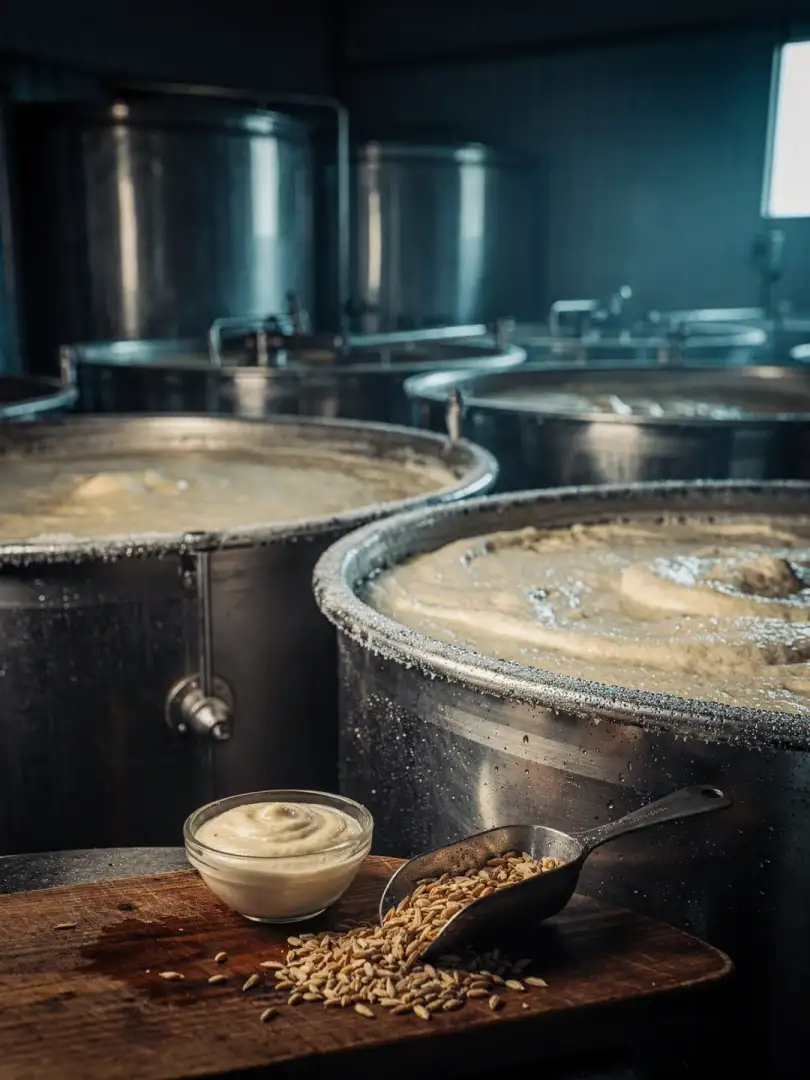
In every beer, yeast consumes sugar and turns it into alcohol and carbon dioxide. The wort, meaning the sweet malt extract before fermentation, consists mostly of maltose, the characteristic malt sugar. In a normal beer, the yeast is allowed to keep working until nearly all the fermentable sugar is used up. With arrested fermentation, the brewer intervenes much earlier. As soon as the yeast has produced just under 0.5% ABV, fermentation is halted, typically by rapid cooling, filtering out the yeast, or a brief burst of heat.
This is the method behind the beer that first made alcohol-free beer famous in Germany. The Frankfurt-based Binding brewery launched Clausthaler nationwide in 1979, stopping fermentation at 0.5% ABV through a brief, intense heating step. The method's cost shows up in the glass: a lot of sugar stays unfermented. The beer tastes noticeably sweeter and maltier than its fully fermented counterpart.
Fermentation can't be skipped entirely. Under German beer regulations, only a fermented beverage brewed according to the standard ingredient rules may be called beer. A brief fermentation is enough to qualify, whereas unfermented, sweetened wort would count as a malt beverage instead. Timing the cutoff takes real skill. Yeast works fast in warm wort, and hitting the right moment requires continuous monitoring. Stop too late, and the beer exceeds 0.5% ABV and loses its alcohol-free status. Stop too early, and it tastes of raw wort. That's why many breweries also work on the wort itself.
The Cold Contact Method: Yeast at Near-Freezing
One variation exploits yeast's sluggishness in the cold. In the cold contact method, yeast stays in contact with the wort for an extended period at temperatures near freezing. It produces almost no alcohol this way, but it does convert some of the compounds responsible for that raw-wort taste. Experts are referring mainly to aldehydes here, aroma compounds with notes of bread crust, potato, or wet cardboard.
To achieve a pleasant result, the brewery also adjusts the mashing process itself. Mashing at higher temperatures produces more unfermentable malt components called dextrins. These add body without giving the yeast anything to feed on. That keeps alcohol levels low while the beer still retains fullness.
Which Yeast Is Used for Alcohol-Free Beer? Maltose-Negative Strains
The most elegant route runs through the yeast itself. Maltose-negative yeasts simply can't metabolize the principal malt sugar. The best-known strain is Saccharomycodes ludwigii. It ferments glucose, fructose, and sucrose, the simple sugars that make up only a small fraction of the wort. Maltose and maltotriose, the lion's share, it leaves untouched. Fermentation naturally comes to a stop at a very low alcohol level.
One advantage of these yeasts lies in the aroma. They produce esters and other fermentation aromas that a beer with merely arrested fermentation lacks. In recent years, research and yeast suppliers have introduced further strains, including some from yeast genera other than Saccharomyces. Breweries rarely reveal which yeast a given beer uses. Where it does appear on the label, it's the producer's own stated claim.
Why Alcohol-Free Beer Demands Especially Clean Brewing
Alcohol provides normal beer with a degree of natural protection against spoilage. Without it, and with plenty of sugar still present, unwanted microbes find ideal conditions to thrive. That's why breweries handle alcohol-free beer with particularly strict hygiene, and many pasteurize it briefly after bottling by heating it. This ensures shelf life but can subtly alter the flavor. If you leave an opened bottle of alcohol-free beer sitting out, you'll also notice the difference: it doesn't keep as long as a normal beer.