Styles & Market
Non-Alcoholic Wheat Beer, Pils, IPA: Styles and Market
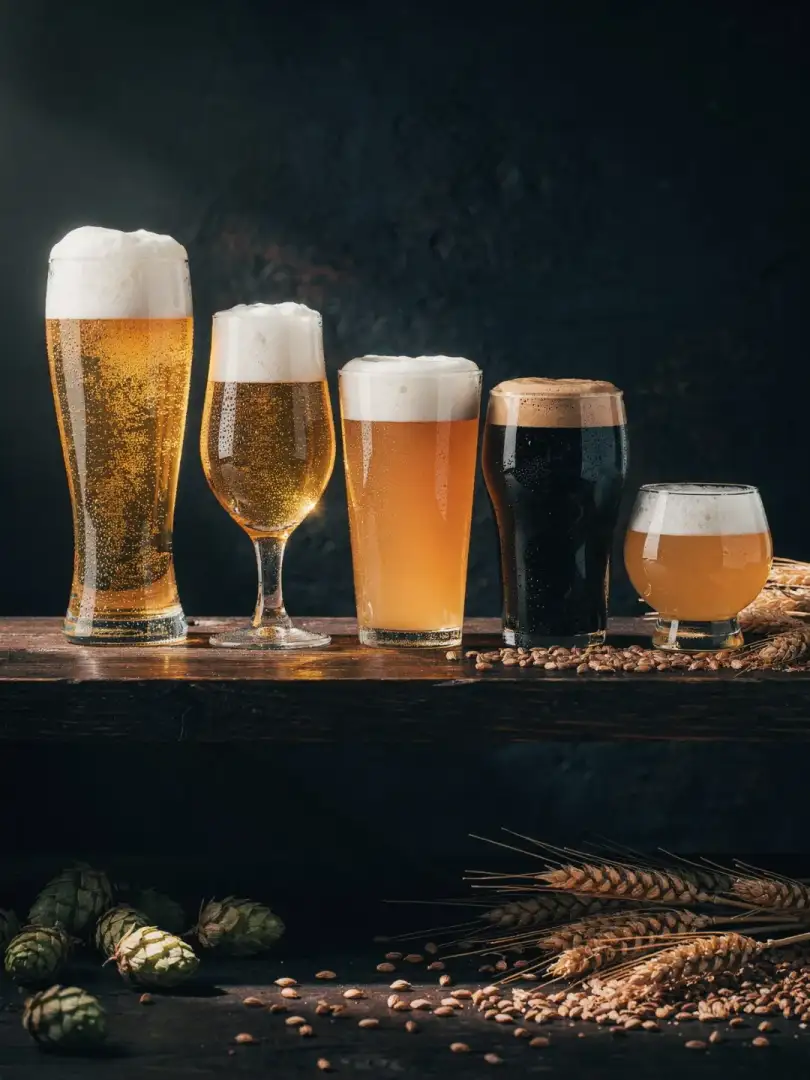
Non-alcoholic wheat beer succeeds particularly well, because yeast aromas and wheat make up for the missing fullness. Pils and Helles are harder to pull off, while for IPA the hops help. Which styles work well alcohol-free, what sets them apart, and how big the German market was in 2025.
Non-Alcoholic Wheat Beer: Why It Comes Closest to the Original
A Bavarian wheat beer lives on its yeast. During fermentation, it produces aromatic compounds reminiscent of banana and clove, while the wheat contributes protein that supports the foam and softens the beer. Plenty of carbonation rounds it out. All three characteristics survive the journey to non-alcoholic beer comparatively well. The aroma fills the gap left by the alcohol, and a slight wort-like note barely registers between the banana and yeast character.
That's why non-alcoholic wheat beers are among the most successful examples. Many Bavarian wheat beer breweries have one in their range. Compared with Belgian witbier, which is spiced with coriander and orange peel, the distinction remains even without alcohol: the wheat beer tastes of yeast, the witbier of spice.
Non-Alcoholic Pils and Helles: The Hardest Challenge
With Pils and Helles, there's nowhere to hide. Both are bottom-fermented, very clear, lean beers whose appeal lies in balance. A Helles relies on soft malt and restrained bitterness, a German Pils on its distinct, dry hop character. Any weakness in the process, whether a wort-like note, sweetness or thin body, stands out immediately here.
Pils has a slight advantage, though. Its higher bitterness distracts from the residual sugar, and many non-alcoholic pilsners therefore come across as rounder than non-alcoholic Helles. It's precisely in these styles that modern dealcoholization and aroma recovery have made the greatest progress. Many major Pils breweries now offer a 0.0% version.
Non-Alcoholic IPA, Stout and Sour Beer
In the craft sector, bold flavors have proven to be the key. A non-alcoholic IPA (India Pale Ale, a heavily hopped, top-fermented beer) is usually dry-hopped generously. The aroma of citrus, mango, or pine masks the worty notes, while the bitterness provides structure. Dark beers like stout or porter rely on roasted malt: coffee and cocoa notes add depth without needing alcohol.
Sour beers offer a third approach. Lactic acid keeps the beer fresh and lively while keeping sweetness in check. Non-alcoholic versions of Berliner Weisse or Gose are available from a handful of breweries. Across all three approaches, the rule holds: the more pronounced a style's character, the less you miss the alcohol.
How big is the market for non-alcoholic beer in Germany?
The numbers point to a clear trend. Total beer sales in Germany fell to around 78 million hectoliters in 2025, a drop of 6.0 percent and the first time since the series began in 1993 that sales have dipped below 80 million. Non-alcoholic beer, by contrast, grew. The larger breweries produced around 616 million liters in 2025, 6.5 percent more than the previous year.
According to the German Brewers' Association, non-alcoholic beers and beer-based mixed drinks accounted for more than 10 percent of retail sales for the first time in 2025. What began in 1979 with a single beer made using arrested fermentation has grown into its own category spanning nearly every style. For newcomers, it's worth sampling several production methods and styles side by side before forming an opinion on non-alcoholic beer.
A few pointers help when browsing the shelf. The alcohol content tells you whether you're looking at a beer under 0.5% ABV or a true 0.0. The style designation shows what to expect, a non-alcoholic wheat beer tastes of yeast, a non-alcoholic pilsner tastes of hops. Some breweries also state the production method. Freshness matters especially for hop-forward beers, since hop aroma fades over time. That's why checking the best-before date is more worthwhile for a non-alcoholic IPA than for a dark beer.