Boiling and Clarifying
Wort Boiling: Hops, Trub, Whirlpool
During the wort boil, the wort typically simmers for 60 to 90 minutes with hops. This releases bitter compounds, coagulates protein into trub, drives off unwanted aromas, and sterilises the wort. In the whirlpool afterward, hop residue and protein settle into a cone shape.
Why Is the Wort Boiled?
Standing beside a simmering kettle of wort for the first time, you catch scents of bread, honey, and fresh hay. Boiling serves several purposes at once, and each one matters for a clean beer. First, the heat sterilises the wort. Bacteria and wild yeasts from the malt and air are killed off, so that only the intended yeast gets to work later.
At the same time, water evaporates, typically a few percent of the volume per hour. This concentrates the wort, letting the brewer reach the planned original gravity. Along with the steam, dimethyl sulfide, or DMS, also escapes, a compound that smells like cooked vegetables or corn. Pale Pilsner malt in particular carries a lot of its precursor. Too short or covered a boil takes its revenge in a Pils with this dull, vegetal note.
Finally, browning reactions take place during boiling. The wort darkens slightly, and aromas reminiscent of caramel and bread crust develop. In pale beers, brewers want to keep this to a minimum; in Märzen or Bock, more of it is welcome.
What Is Trub in Wort Boiling?
After a few minutes of vigorous boiling, the picture in the kettle changes. Small flakes drift through the wort, which grows clearer between them. Brewers call this the break. It's protein from the malt that coagulates under the heat and binds with tannins from malt and hops, much like egg white setting in hot water.
After separating out, these flakes are called hot trub. They have to go, because in the finished beer they would cause haze, a rough taste, and shorter shelf life. A good break needs a rolling, vigorous boil. That's why brewers pay as much attention to boil intensity as to boil time.
Hop Additions During the Boil: Bitterness or Aroma
Hops contain alpha acids that are barely soluble in cold water and taste only mildly bitter. Only during boiling do they convert into iso-alpha acids, the main source of bitterness. Experts call this isomerization. The longer the hops boil, the more bitterness develops, until after about an hour hardly any more is added. Bitterness is measured in IBU, International Bitterness Units, meaning milligrams of iso-alpha acids per liter.
The aromatic compounds in hops, by contrast, are essential oils, which evaporate quickly during boiling. That's why brewers split up their hop additions. An early addition delivers bitterness, while a late addition just before the end of the boil brings aroma. A classic Pils often gets a strong bittering addition and a delicate late aroma addition with noble hops. A Helles stays more restrained on both counts, so the malt remains in the foreground.
Whirlpool: How Is the Wort Clarified After Boiling?
After boiling, the brewer pumps the hot wort tangentially, that is, from the side, into a round vessel. It starts spinning and slowly comes to rest. In the process, hot trub and hop residue collect in a cone at the center of the bottom. Everyone knows this principle from a glass of tea, where the leaves settle in the middle after stirring. The clear wort is then drawn off from the edge.
Modern breweries also use the whirlpool as an aroma station. The wort there is still hot, but below boiling point. Hops added at this stage release plenty of aroma and comparatively little additional bitterness. Many IPAs thrive on this whirlpool hopping, often combined with dry hopping, where hops are added to the beer during or after fermentation.
Copper Kettle or Stainless Steel: Does the Material Change the Flavor?
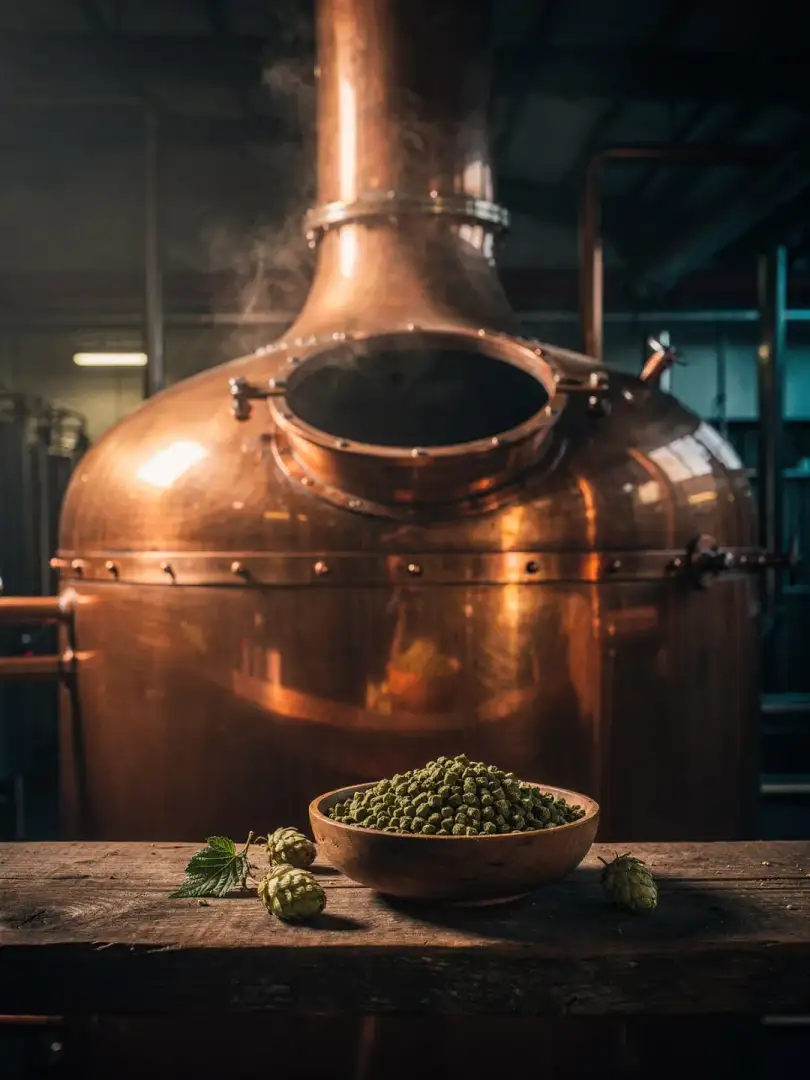
The gleaming copper hoods of many brewhouses are a piece of tradition. In the past, kettles were indeed made of copper, because it conducts heat well and was easy to work with. Today, most systems are made of stainless steel on the inside, which is easier to clean. The copper cladding is often just a shell for visitors to admire.
Whether heating is done directly with a flame, with steam, or via an internal heater affects energy consumption and browning far more than the material of the outer shell. In the end, what matters for flavor is that the boil is thorough and vigorous enough, and that the hops go in at the right time.