The Yeast at Work
Cooling, Pitching, Fermenting: How Wort Becomes Beer
Fermentation means: yeast converts the sugar in the wort into alcohol and carbon dioxide. Beforehand, the wort is quickly cooled, aerated, and inoculated with yeast, a step called pitching. Top-fermenting yeast usually works at 15 to 25 °C, bottom-fermenting yeast at around 6 to 12 °C. This temperature shapes the flavor.
Why Does the Wort Need to Be Cooled Quickly?
After the whirlpool, the wort is nearly 100 °C. Yeast would die instantly in it. That's why it runs through a plate cooler, in which cold water flows between thin metal plates in a counterflow arrangement. Within a few minutes, the temperature drops to the level the yeast needs. The brewery often uses the now-warmed cooling water right away for the next brew.
Speed matters here because warm wort is an ideal breeding ground for unwanted microbes. In addition, DMS, the vegetable-like aroma from boiling, continues to form while the wort stays hot. In the past, brewers cooled wort in shallow, open vessels called coolships, often in the attic. Today, almost only lambic brewers still use this open cooling method, and they do so deliberately: their wort is meant to pick up wild yeasts and bacteria from the air.
What Does Pitching Mean in Brewing?
The cooled wort contains almost no oxygen, since boiling drove it out. But yeast needs some oxygen at the start to build healthy cell walls and multiply. That's why the wort is aerated on its way into the fermentation tank. Later, in the finished beer, oxygen is the enemy, since it leads to a stale, cardboard-like flavor.
Then comes pitching, the brewer's term for adding yeast to the wort. Many breweries carry their yeast forward through many brews, harvesting it from the bottom of the tank after fermentation and adding it to the next batch of wort. Others regularly propagate fresh yeast from a pure culture. The amount matters: too little yeast ferments sluggishly and produces more off-flavors.
Fermentation: How Temperature Shapes Flavor
During primary fermentation, the yeast consumes the sugar. This produces alcohol and carbon dioxide, but also tiny amounts of byproducts. Esters, for instance, are fruity aroma compounds that can smell like banana, pear, or apple. Higher alcohols, in larger amounts, taste solvent-like and heavy. The warmer the fermentation, the more of these the yeast produces.
Here lies the heart of the difference between ale and lager. Top-fermenting yeasts work warm and give beers like Weissbier, Pale Ale, or Stout their fruity, sometimes spicy character. Bottom-fermenting yeasts work cool and more slowly. They deliver the clean, restrained flavor of Pils, Helles, or Märzen. Primary fermentation often takes just a few days for ales, while lager beers usually need a week or longer.
Kölsch and Altbier stand between these worlds. Both are fermented with top-fermenting yeast, but at comparatively cool temperatures and then cold-stored afterward. That's why they taste rounder and cleaner than many British ales, without quite reaching the neutral character of a Pils. Altbier differs from Kölsch mainly through its darker malts and a more pronounced bitterness.
Open Fermentation Vessel or Cylindroconical Tank?
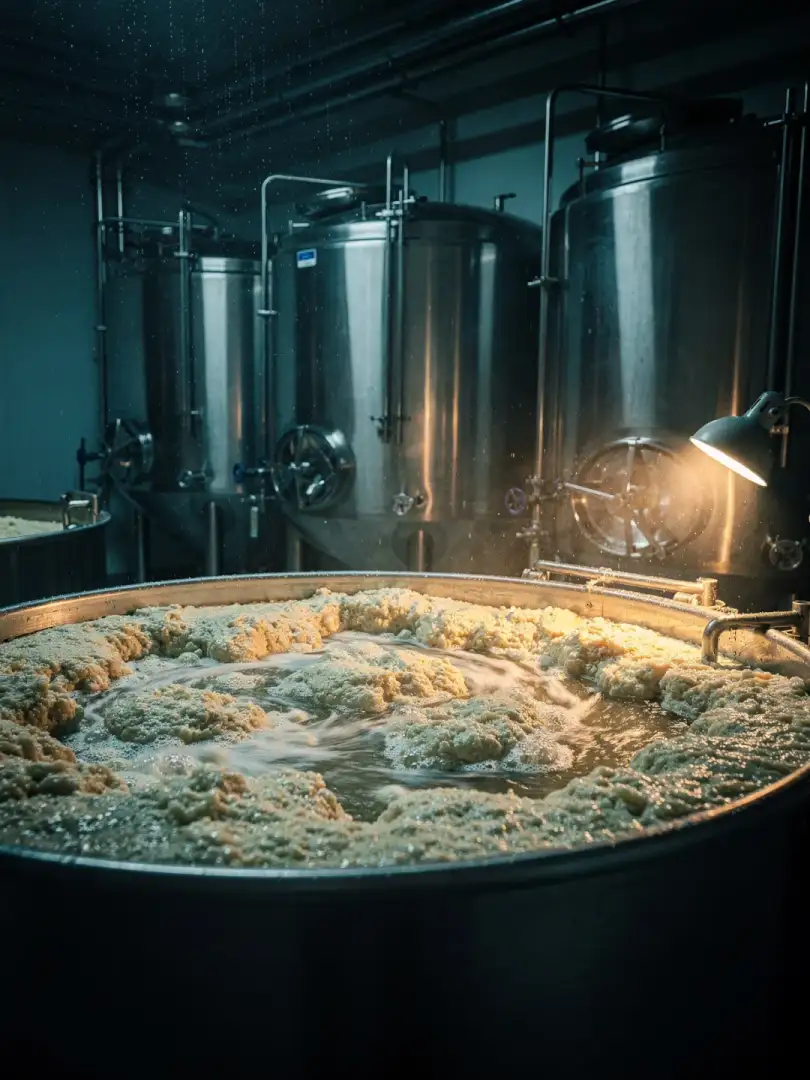
Traditionally, beer fermented in open vessels. With top-fermenting beers, the yeast rises to the top with the foam there and can be skimmed off, hence the name. Bottom-fermenting yeast settles at the bottom. Many wheat beer breweries and English houses still value open fermentation today, because it influences aroma development differently than a closed tank.
Most breweries now use cylindroconical tanks, known as CCTs. Their cone-shaped bottom collects the yeast, which can be drawn off conveniently from there. The tanks are cooled, sealed, and easy to clean. Toward the end of fermentation, many brewers let the temperature rise briefly. During this diacetyl rest, the yeast breaks down diacetyl, a compound that tastes like butter or butterscotch and is considered a flaw in a Pils.