From Anchor to Today
Craft Beer in the US: History of the Revolution
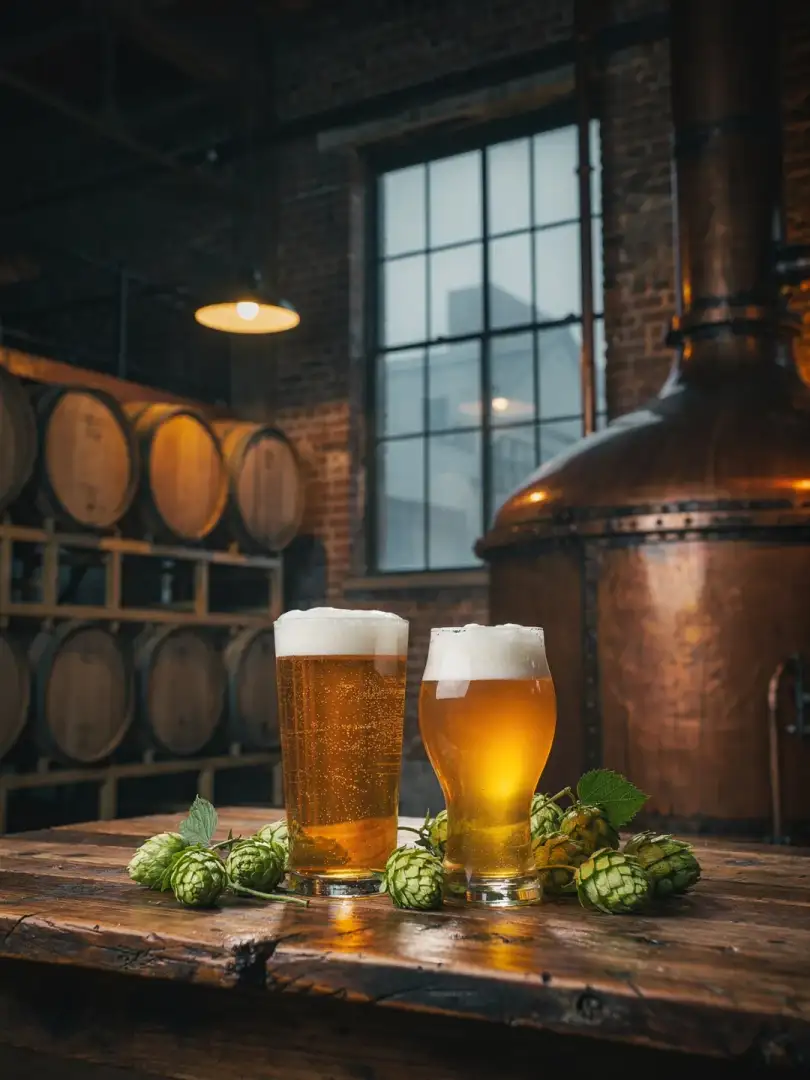
The craft revolution in the US began in 1965, when Fritz Maytag bought the struggling Anchor Brewery in San Francisco. New Albion followed in 1976, home brewing was legalized in 1978, and Sierra Nevada launched in 1980. By 2025, the Brewers Association counted 9,578 craft breweries nationwide.
Why was there so little beer variety in the US for so long?
Prohibition banned the production and sale of alcohol nationwide from 1920 to 1933. Hundreds of breweries folded. Those that survived and resumed brewing afterward bet on volume, advertising, and nationwide distribution. Smaller operations were swallowed up or closed. In the end, a single beer style dominated the market.
The BJCP, a US association for beer judges, calls this style American Lager in its competition guidelines. It's bottom-fermented, very pale, with 4.2 to 5.3 percent alcohol and just 8 to 18 bitterness units. Rice or corn often replace part of the barley malt, giving it a leaner body and more neutral flavor. That's not a flaw — a well-brewed American Lager demands real skill. But anyone wanting porter, stout, or a hoppy ale in the 1960s found barely any on offer.
Who started the craft movement in the US?
In 1965, Fritz Maytag bought a 51 percent stake in the Steam Beer Brewing Company in San Francisco for very little money; by 1969, he owned it outright. Its Steam Beer is a special case the BJCP guidelines classify as California Common: bottom-fermenting yeast, but fermented warm, with 30 to 45 bitterness units. The result sits between lager and ale, with a clear malt character and a woody hop spiciness.
On April 18, 1975, Anchor brewed Liberty Ale for the first time. It used Cascade, then a young American hop variety from 1972 with aromas of grapefruit and blossom, and was dry-hopped. In this technique, hops are added after the boil, contributing aroma but very little bitterness. In 1976, engineer and homebrewer Jack McAuliffe founded New Albion in California, the first newly founded small brewery of this movement. It lasted only about six years, but proved that such an operation was possible.
What does Jimmy Carter have to do with craft beer?
President Jimmy Carter signed the bill H.R. 1337 on October 14, 1978. A rider in it made homebrewed beer for personal household use tax-exempt. From February 1, 1979, adults were allowed to brew up to 100 gallons a year, households with two adults up to 200 gallons. This made homebrewing legal at the federal level.
The effects showed quickly. In kitchens and garages, a generation of brewers emerged, swapping recipes and experimenting with hops. Charlie Papazian, a leading figure among homebrewers, estimated that around 90 percent of professional craft brewers started out as hobby brewers. In 1980, Ken Grossman founded Sierra Nevada in Chico, California; the brewery remains family-owned to this day. Its Pale Ale made with Cascade hops became the model for an entire style, the American Pale Ale, at 30 to 50 bitterness units.
How big is craft beer in the US today?
For 2025, the Brewers Association reports 9,578 craft breweries, down 2.9 percent from the previous year. 300 breweries opened, 481 closed. Together, craft brewers produced 22.034 million barrels, down 4 percent from 2024. Because the overall beer market shrank even more, craft's volume share actually rose slightly, from 13.2 to 13.4 percent. The scene has matured and no longer grows automatically.
Even the pioneer itself faced upheaval. Anchor was owned from 2017 by the Japanese company Sapporo and was closed in July 2023. In May 2024, Chobani founder Hamdi Ulukaya bought the brewery. A reopening has been announced, but as of June 2026 no date had been set. The name Anchor thus stands for both things: the start of the movement, and proof that even pioneers can fail in the marketplace.