Three IPA Schools
IPA Types: West Coast, Hazy, and Double IPA
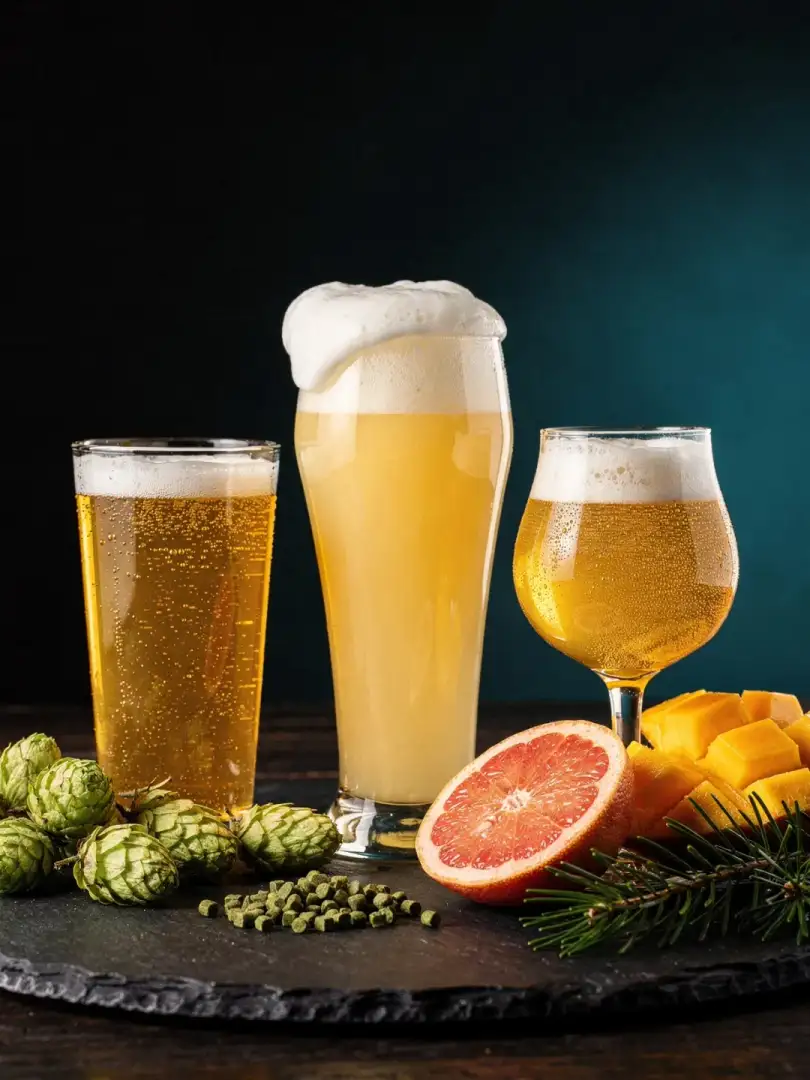
West Coast IPA is clear, dry, and distinctly bitter, Hazy IPA is cloudy, soft, and juicy, Double IPA is stronger in both alcohol and hops. All three are top-fermented, hop-forward ales; they differ in bitterness, haze, malt body, and the point at which hops are added.
Where does craft brewers' IPA come from?
IPA stands for India Pale Ale. The popular legend that a London brewer invented it for the sea voyage to India doesn't hold up. Beer had already been shipped to India as early as 1711, and the name India Pale Ale doesn't appear until the early 19th century. A more accurate description: a pale, heavily hopped export beer that found particular success in India. Today's English IPA, per BJCP guidelines, runs 5 to 7.5 percent alcohol and 40 to 60 bitterness units.
US craft brewers adopted the name and swapped out the hops. Instead of earthy English varieties, they used Cascade, Centennial, Simcoe, Amarillo, and later Citra or Mosaic. These varieties smell of grapefruit, pine resin, mango, or passion fruit. What had been an English style became its own family, one that today sits in nearly every craft brewery's cooler worldwide.
What is a West Coast IPA?
The BJCP guidelines list the classic as American IPA, referring to the West Coast IPA from California. It has 13.8 to 17.1 degrees Plato original gravity, meaning that much dissolved malt sugar before fermentation, plus 5.5 to 7.5 percent alcohol and 40 to 70 bitterness units. Color ranges from gold to amber.
The dry finish is characteristic. The yeast ferments nearly all the sugar, the pale malt stays in the background, and so the bitterness comes through clear and long. Some of the hops are boiled for a long time, since it's during the boil that hop alpha acids convert into soluble bittering compounds. Later additions in the boil and dry hopping bring aromas of citrus peel and resin. The beer is usually bright, meaning clear, because it's either aged for a while or filtered.
What is a Hazy IPA (New England IPA)?
The Hazy IPA, also called NEIPA, comes from New England in the northeastern US. The 2021 BJCP guidelines list it as its own style: 14.7 to 20.5 degrees Plato, 6 to 9 percent alcohol, 25 to 60 bitterness units, and a very pale, cloudy color. It's meant to smell like fruit juice, with notes of mango, peach, and passion fruit, and to feel soft, almost creamy.
The haze is intentional. Oat and wheat flakes add protein and gummy substances to the beer, large hop additions contribute polyphenols (plant-based tannins), and many Hazy yeast strains settle out poorly. Most of the hops go in after the boil, either into the hot wort or as dry hops added to the young beer. As a result, a Hazy smells intense but tastes less bitter than a West Coast IPA. Its aroma fades faster, which is why brewers recommend drinking it fresh and keeping it cold.
What is a Double IPA?
Double or Imperial IPA means: more of everything. Per BJCP guidelines, it runs 15.9 to 20.5 degrees Plato, 7.5 to 10 percent alcohol, and 60 to 100 bitterness units. More malt provides more sugar for the yeast and thus more alcohol, while more hops keep the sweetness in check. A good Double IPA still stays drinkable and doesn't taste like syrup or solvent. The warmth of the alcohol is noticeable.
A Double can also be hazy; in that case it's often called a Hazy Double IPA. At the other end of the spectrum are lighter versions brewers call Session IPA. The guidelines mentioned above don't set specific limits for this; the idea is an IPA with lower alcohol but full hop aroma. For all IPA types, the same holds true: the numbers are competition guidelines, not requirements. What's actually in a given beer is on the label.