Pilsen, 1842
The History of Pils: Its Triumphant Rise
Pils was created in 1842 in Pilsen, brewed by the Bavarian brewer Josef Groll. What was new wasn't the bottom fermentation, but the color: a pale, golden, distinctly hopped lager. With the railway, glass, and refrigeration technology, it became the world's most widely brewed beer style.
Who Invented Pils?
In Pilsen, Bohemia, citizens in the 1830s were dissatisfied with their own top-fermented beer. The citizens with brewing rights founded a new Bürgerliches Brauhaus (citizens' brewery) and brought in a brewmaster from Bavaria, where bottom-fermented brewing was the tradition: Josef Groll from Vilshofen. On October 5, 1842, he started the first brew, and from November 11, 1842, the beer was served.
It's often said that bottom-fermented beer was invented in Pilsen. That's not true. The Bavarians had brewed bottom-fermented beer for centuries, and Groll brought exactly this knowledge with him. What was new was the combination, which produced a pale, golden lager. The brand Pilsner Urquell, in Czech Plzeňský Prazdroj, has existed since 1898; it was meant to set the original apart from the many imitations.
Why Was the First Pils So Pale?
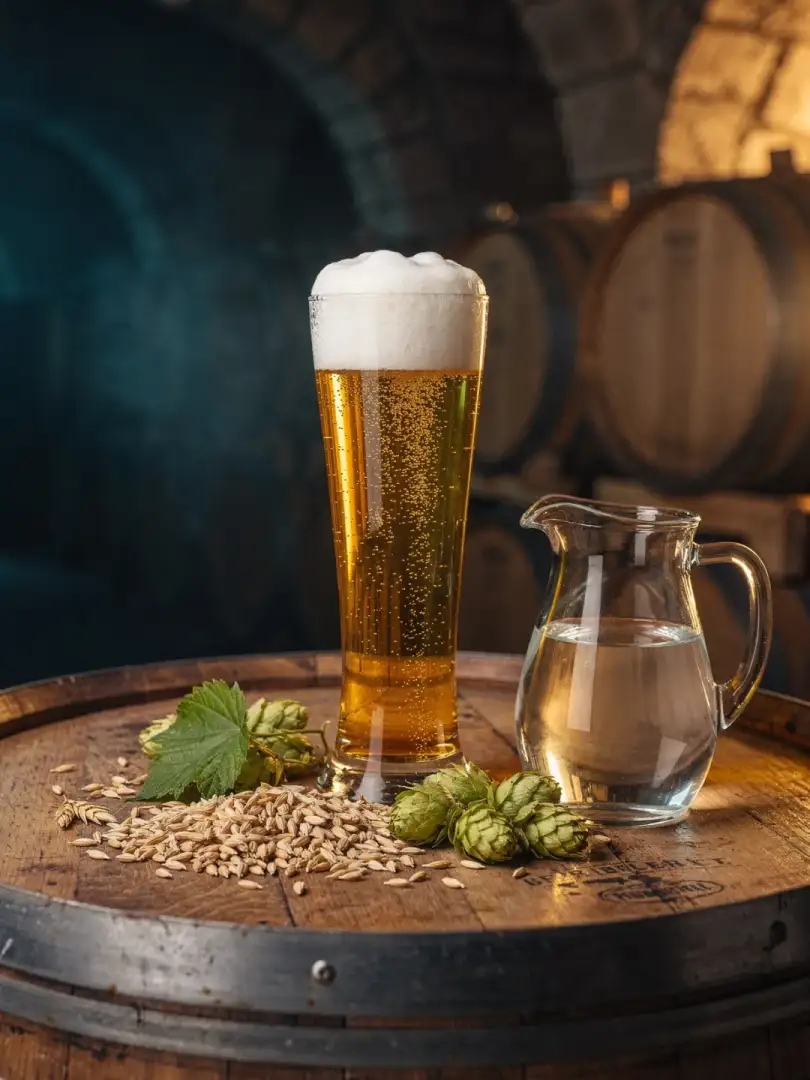
Three things came together in Pilsen. First, very soft, low-mineral water; it makes hop bitterness feel fine and round rather than harsh. Second, pale malt, dried on a kiln with indirect heating as in England, without smoke and without heavy roasting. Third, Saaz hops from the area around Žatec, a finely spiced aroma hop.
The result was a beer that shone in the glass. And glass was just becoming cheap enough for taverns. A dark, cloudy beer in a stoneware mug didn't stand out; a clear, golden one with a white foam crown did. Here, technology and the taste of the times came together.
That said, the role of the water shouldn't be overstated. Soft water was a prerequisite for the original Pilsner, but it wasn't a secret that only Pilsen possessed. Today, nearly all breweries treat their water, softening it or deliberately adding salts. The claim that a particular water creates a style is therefore mainly an explanation of how styles came to be, not of where they can be brewed today.
From Pilsner to Pils: Its Spread
The railway brought Pilsner beer to Vienna, Prague, and German cities already in the 19th century. Breweries across Central Europe began brewing beers in the Pilsner style. Linde's refrigeration machine and Hansen's pure-culture yeast made this possible independent of cellars and seasons. In Munich, brewers responded at the end of the 19th century with Helles, a beer that was likewise pale but more malt-forward and less bitter.
In Germany, Pils is today a generic name—a style designation that any brewery is free to use. Only brand names like Pilsner Urquell and Czech designations of origin like České pivo are protected. Especially in northern and western Germany, Pils became an everyday beer in the 20th century; major Pils breweries like Krombacher, Warsteiner, Veltins, and Bitburger represent this development.
German Pils, Bohemian Pils, International Lager
As the style spread, it changed. Bohemian Pils, according to the BJCP guidelines, has 30 to 45 IBU (International Bitterness Units, a measure of dissolved hop bittering compounds), and is fuller-bodied, often a bit darker, with a soft, rounded bitterness. German Pils is usually leaner, paler, and drier, with 22 to 40 IBU and a crisper finish.
Worldwide, a third branch emerged from this in the 20th century: international pale lager. It's pale, mild, lightly bitter, and often brewed with corn or rice, which lightens the body. From Mexico to Japan and China, this type is today what most people mean when they say beer. What connects it to Groll's first brew is the color and the bottom-fermenting yeast—little else.
Anyone tasting the three types side by side notices the difference immediately. Bohemian Pils tastes of bread crust, honey, and spicy hops, German Pils of grain, herbs, and a clean, dry bitterness, and international lager mainly fresh and neutral. All three are bottom-fermented and pale, and yet there's more distance between them than between some Pils and a Helles.