Cloudy or clear
Yeast-cloudy or filtered: Kellerbier, Zwickel, Kristallweizen
Yeast-cloudy means the beer hasn't been filtered: yeast and protein particles are still suspended in it. Kellerbier and Zwickelbier are such naturally hazy lagers, while Kristallweizen is the clear, filtered counterpart to Hefeweizen. Haze is a style characteristic, not a judgment of quality.
Why is beer cloudy? Yeast, protein and cold
Freshly fermented beer is never clear. It contains suspended yeast cells, protein from the malt, and tannins from malt and hops. Some of this settles out naturally during cold lagering. What remains gives the beer an opalescent, milky shimmer, or makes it distinctly hazy.
With top-fermented beers, clarity depends heavily on the yeast strain. Some strains flocculate strongly and settle quickly, while others stay suspended for a long time. Wheat beer yeasts belong to the latter group, which is exactly why a Hefeweizen stays evenly hazy even after weeks.
Chill haze is its own phenomenon. Protein and tannins bind together at low temperatures into fine particles that can cloud an otherwise clear beer in the fridge. Warm the beer up, and the haze disappears again. It has nothing to do with yeast, which is why breweries treat it separately.
Kellerbier and Zwickelbier: what's the difference?
Both are unfiltered bottom-fermented beers, and the line between them is blurry. Kellerbier originates in Franconia, where it was traditionally served straight from the lagering cask in rock cellars. It's often amber-colored, malty, and noticeably bitter from the hops. Some Franconian Kellerbiers are stored ungespundet, meaning with an open bunghole, which gives them especially low carbonation.
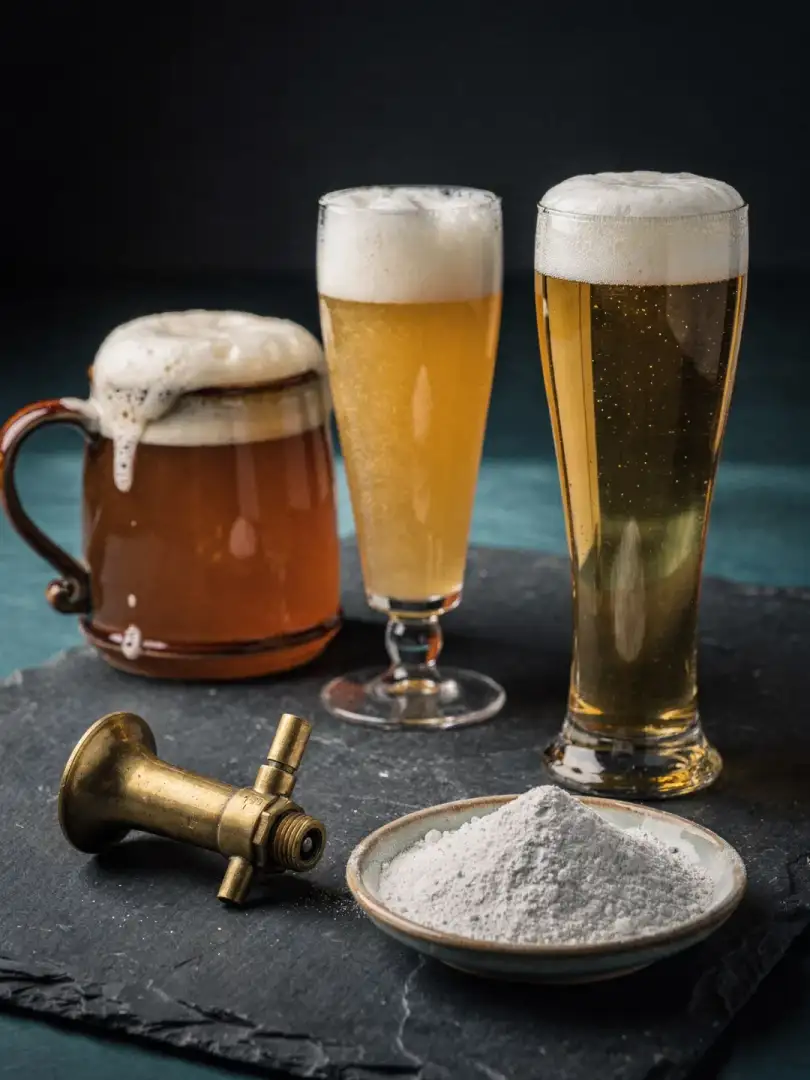
Zwickelbier takes its name from the Zwickelhahn, a small sampling tap on the lagering tank that the brewmaster uses to check how the beer is coming along. At its core, a Zwickel is simply beer straight from the lagering tank: unfiltered, young, and still containing yeast. Today, many breweries bottle Kellerbier or Zwickel as the naturally hazy version of their Helles or Pils.
There's no legal distinction between the two terms. What's printed on the label is really just brewery custom. If you want to know what's actually in the glass, it's better to look at color, original gravity and origin than at the name itself.
How does beer become clear? Filtration and stabilization
For a brilliantly clear beer, the yeast has to go. Classically, breweries filter using kieselguhr, a fine powder made from the shells of fossilized diatoms, which forms a filter bed that traps particles. There are also membrane filters and centrifuges, which separate yeast by centrifugal force. Before filtering, the beer is chilled down so that chill haze flocculates out too and gets removed at the same time.
For stabilization, breweries often also bind protein or tannins, using silica gel or PVPP, a synthetic powder that's fully removed again after treatment. Clear, stable beer stays attractive on shelves for longer. Filtered beer isn't inferior because of this, it's simply pursuing a different goal.
Pasteurizing, meaning brief heating for preservation, is a separate step and has nothing to do with clarity. Even a yeast-cloudy beer can be pasteurized, in which case the yeast inside is no longer alive. Unpasteurized, unfiltered beer, on the other hand, still contains living cells, needs to be stored cold, and tastes best fresh.
Does yeast-cloudy beer taste different? Hefeweizen and Kristall
Yeast in beer adds body and a softer mouthfeel. It can contribute a slightly bready note and round off the bitterness. A Zwickel therefore often tastes rounder and fresher than the same beer filtered. At the same time, unfiltered beer ages differently, since yeast cells break down over time and release flavors that can taste like broth or yeast extract.
With wheat beer, the difference is especially visible. Hefeweizen contains the yeast, while Kristallweizen is filtered. Many wheat beer drinkers swirl the last bit in the bottle to bring the yeast sediment into the glass. That's a matter of taste, not a rule. With Belgian abbey beers, on the other hand, many connoisseurs prefer to leave the sediment in the bottle, since it makes the beer more bitter and yeasty.
Be cautious of health claims: yeast does contain B vitamins, but the amounts in a glass of beer are tiny, and alcohol remains alcohol. If you choose yeast-cloudy beer, it's best to do so for the flavor.