Aroma from Oils
Hop Aroma: Oils, Thiols, Citrus, and Herbs
Hop aroma comes from the cone's essential oils, not from the bittering compounds. Myrcene, linalool, geraniol, and sulfur-containing thiols create notes of citrus, florals, herbs, or blackcurrant, depending on the variety and the timing of the hop addition.
Essential Hop Oils: Small Amounts, Big Impact
Hop oil often makes up only one to two percent of the cone's weight. Even so, you can recognize a variety faster by its oil than by its bitterness. The oils are volatile, meaning they evaporate easily. Boiling hops for an hour drives most of it out of the kettle with the steam. That's why a beer's aroma comes from late additions, from the whirlpool after boiling, or from dry hopping.
Broadly speaking, the oils fall into two groups. Hydrocarbons like myrcene, humulene, caryophyllene, and farnesene usually make up the lion's share. Then there are oxygen-containing compounds, such as linalool and geraniol. These are present in smaller amounts but have a strong effect and hold up better in the finished beer than the volatile myrcene.
Myrcene, Humulene, Linalool: What Each Compound Smells Like
Myrcene smells fresh, resinous, and green, with a hint of mango. It dominates in many American varieties but fades quickly. Humulene and caryophyllene smell woody, spicy, and peppery; a high humulene content is considered a hallmark of classic European aroma varieties. Linalool evokes lily of the valley, bergamot, or lavender, while geraniol suggests roses.
No single compound smells like hops on its own. Only the blend creates the picture we call Saaz or Citra. That's why aroma is so sensitive to vintage, terroir, harvest timing, and drying, and the same variety can smell noticeably different from one year to the next.
Thiols in Hops: Passion Fruit, Grapefruit, Blackcurrant
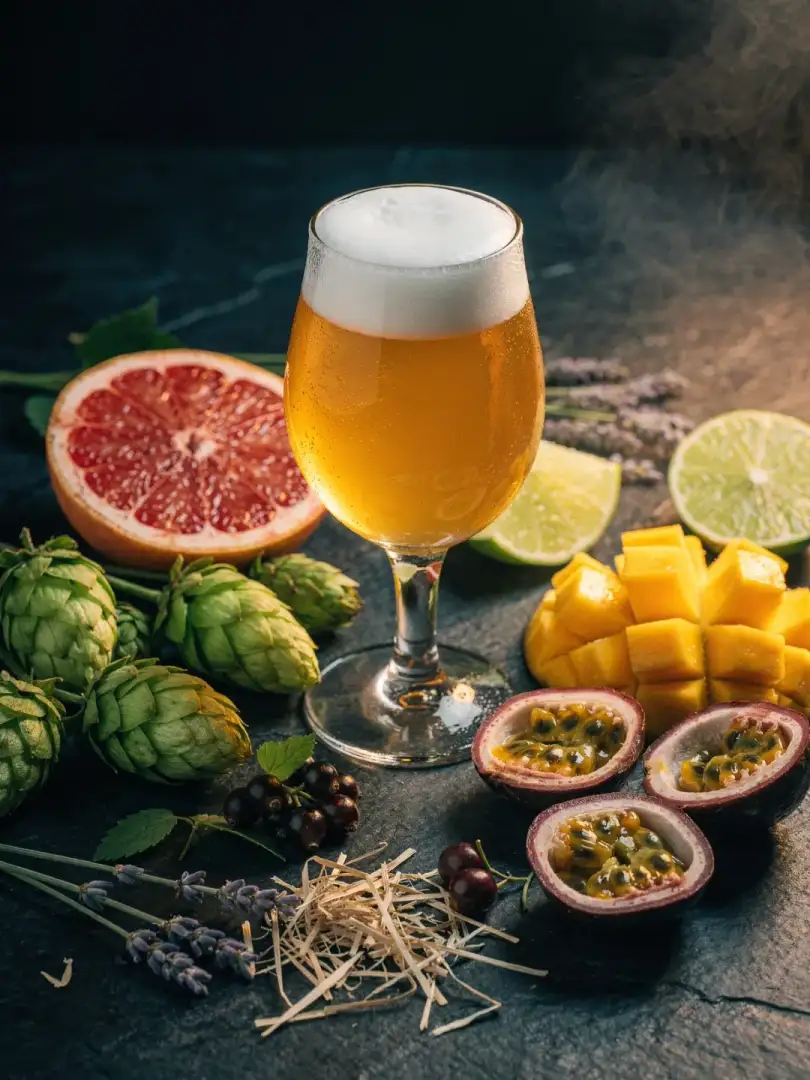
Thiols are sulfur-containing aromatic compounds detectable even at parts-per-trillion levels. The compound known as 4MMP smells like blackcurrant and boxwood, while 3MH smells like grapefruit and passion fruit. The same compounds shape Sauvignon Blanc, which explains why some hops remind people of white wine. The New Zealand variety Nelson Sauvin even carries the comparison in its name.
A large portion of these thiols exist in bound form in hops and malt and initially have no scent. Certain yeast strains release them during fermentation. This yeast-driven conversion is called biotransformation. Yeast also partially converts geraniol into citronellol, which smells of lemon and rose. Hops and yeast thus work together on aroma, and brewers choose the timing of hop additions with this in mind.
Citrus or Herbs? European and American Hops
Put simply, classic European aroma varieties smell of herbs, hay, florals, and mild pepper. Modern varieties from the US, Australia, and New Zealand, by contrast, tend toward citrus, tropical fruit, pine, and berries. This isn't a law of nature but the result of breeding, parent varieties, and climate. German breeders now also offer fruity varieties, such as Mandarina Bavaria or Huell Melon.
The easiest way to learn to describe aromas is by comparison. Two beers of the same style, one with European hops and one with American hops, side by side in the glass, reveal the difference far more clearly than any list ever could.
Where Does the Aroma Come From? Hops, Yeast, or Spice
Not every fruity note in the glass comes from hops. Belgian witbier smells of orange and coriander because both are added as spices to the brew. Bavarian wheat beer smells of banana and clove because its yeast produces esters, fruity fermentation aromas, and spicy phenols. Both styles are lightly hopped despite seeming aromatic.
A hazy IPA, by contrast, draws most of its mango and passion fruit character from hops added late and cold; the yeast only amplifies this. In German Pilsner, the aroma also comes from hops, but more quietly: hay, herbs, and florals, layered over a neutral bottom-fermenting yeast.