Fruity new breeds
Citra, Mosaic, Nelson Sauvin: New World hops
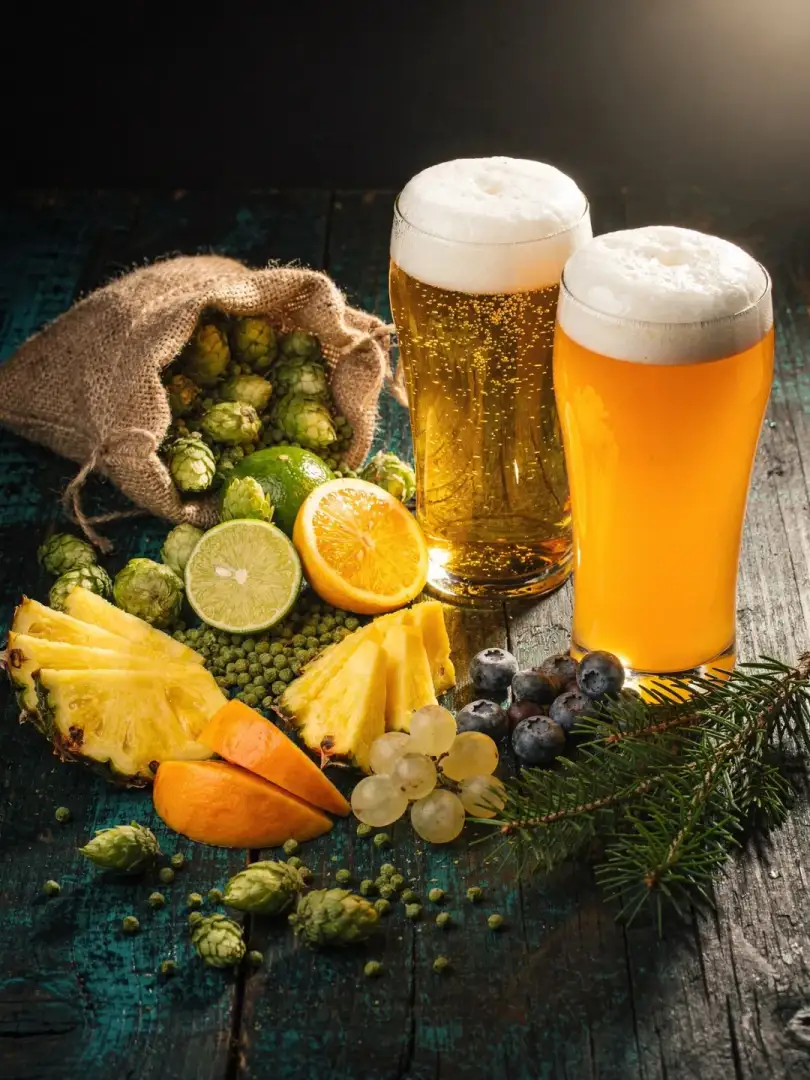
New World hops are varieties from the USA, Australia and New Zealand that smell of citrus, tropical fruit and pine. Cascade made the start in 1972; Nelson Sauvin (2000), Citra (2007) and Mosaic (2012) now define IPA and Pale Ale worldwide.
Cascade: how grapefruit got into beer
American hop breeding at Oregon State University was looking for its own aroma variety that could replace European imports. The result was Cascade, available commercially since 1972. The variety smelled different from its European predecessors: of grapefruit, blossoms and a touch of resin. Large breweries initially took to it cautiously, while small breweries of the emerging craft movement made exactly this aroma their trademark.
From Cascade, later supplemented by varieties like Centennial and Chinook, came the smell that many still associate with American Pale Ale and West Coast IPA today: citrus peel, pine needles, resin. This marked the first time hops became the actual star of a beer style instead of a background seasoning.
Citra and Mosaic: tropical fruit as the new standard
Citra came onto the market in 2007. The variety smells of lime, mango, passion fruit and lychee, and at the same time has high alpha acid content, making it suitable for both bitterness and aroma. Mosaic followed in 2012 as a daughter of the Simcoe variety. Its aroma ranges from blueberry and mango to herbs and pine, weighted differently depending on terroir and harvest.
Both varieties belong to private breeding programs, and their names are registered trademarks. Anyone wanting to grow them needs a license. This is the case with many modern hops and explains why sought-after varieties are scarce and expensive in some years. For breweries, this means that anyone offering a beer with a fixed recipe often secures the variety years in advance through contracts.
Nelson Sauvin and Galaxy: hops from the Southern Hemisphere
New Zealand has run a state-supported hop breeding program for decades. Nelson Sauvin was released in 2000 and smells of gooseberry, white grapes and passion fruit, a profile many compare to Sauvignon Blanc. Behind this are the same thiols that create this scent in wine as well. Australia contributed Galaxy, a variety with strong notes of peach and passion fruit.
In the Southern Hemisphere, harvest takes place in March and April, half a year offset from the European and American harvest. Fresh hops from there therefore come onto the market in early summer, when northern stocks are already a year old.
West Coast IPA, Hazy IPA and hoppy lager compared
The clear West Coast IPA uses New World hops for a pronounced bitterness and resinous citrus notes, over dry, pale malt. The hazy New England or Hazy IPA shifts the weight: little bitterness, lots of hops added late and cold, oats and wheat for a soft mouthfeel, and often a yeast that contributes fruity esters itself. The haze comes from hop polyphenols, protein and yeast, and is intentional.
Lager beer, too, has embraced the new varieties. An India Pale Lager is bottom-fermented and cold-stored, but carries the hopping of an IPA. This makes it come across as clearer and leaner, because the cold-working yeast contributes hardly any fruit notes of its own.
The German answer: fruity hops from Hüll
German breeders responded in the 2010s with their own fruit varieties. Mandarina Bavaria brings a mandarin aroma, Hallertau Blanc notes of white wine and gooseberry, Huell Melon honeydew melon and strawberry. This allows IPAs to be brewed from German hops that still smell like New World.
For beer drinkers, this means: the origin of the hops no longer reliably reveals the aroma. A hop from the Hallertau can now smell of mandarin, while an American one can smell of herbs. What matters is the variety, and good breweries name it on the label or in the description.