Three steps of craft
Malting: steeping, germination, and kilning explained
Malting means turning grain into malt in three steps: steeping, germination, and kilning. The kernel absorbs water, germinates for a few days, and is then dried with hot air. Together this takes about a week, and each step shapes the malt's colour, flavour, and brewing behaviour.
Steeping: how the kernel wakes up
Before the process begins, the barley is cleaned and sorted by kernel size. It then goes into large steeping vessels. Here the maltster alternates between wet steeps and air rests: for several hours the kernel sits submerged in water, then the water is drained and air is blown through the grain bed. The kernel actually breathes once it becomes moist, and would otherwise suffocate in its own carbon dioxide.
Dry barley contains roughly 12 to 14 percent water. After one to two days of steeping, this rises to around 42 to 46 percent. Small white dots then appear at the tip of the kernel, the first rootlets. Maltsters call this chitting. From this point on, a programme runs inside the kernel that is actually meant to produce a new plant. The maltster adjusts the duration and water temperature for each batch, since variety, harvest year, and kernel size all affect how quickly the barley takes up water. An uneven steep can barely be corrected later on.
Germination: what happens inside the kernel
Germination today usually takes place in large germination boxes with perforated floors, through which moist, cooled air flows. Turners move slowly through the grain bed to keep the rootlets from matting together. At around 14 to 18 degrees Celsius, germination takes roughly four to six days. From the outside, you see a tuft of roots. Beneath the husk, the acrospire pushes forward, and its length tells the maltster how far along the kernel is.
The decisive action happens inside. The kernel forms starch-splitting enzymes and breaks down the cell walls in the endosperm, a process experts call modification. A well-modified kernel can be crumbled between the fingers like chalk. At the same time, it breaks down protein into smaller building blocks that will later feed the yeast. This is where the craft lies: if the maltster lets germination run too long, the seedling consumes starch the brewer needs. If he stops it too soon, the malt stays hard and poor in enzymes. The result of these days is called green malt and smells fresh, like cucumber.
Kilning: how drying creates colour and flavour
On the kiln, a large drying floor with warm air flowing through it, germination is halted. The maltster first dries at low temperatures, around 50 to 60 degrees Celsius. This withering stage removes most of the kernel's water while the sensitive enzymes are still moist, since heat would otherwise damage them. Only once the malt is largely dry does the curing stage follow, at a higher temperature.
How hot the kiln gets at the end determines the character of the malt. Pale malt for pilsner is cured at around 80 to 85 degrees, dark Munich malt at roughly 100 to 105 degrees. At these temperatures, sugars and protein fragments react with each other. This Maillard reaction, the same one that browns bread crust and roast crust, produces colour and flavour. After that, the malt contains only a few percent water. Machines remove the dried rootlets, which are sold as animal feed, and the finished malt rests for a few weeks before going to the brewhouse.
Floor malting and box malting: old and new
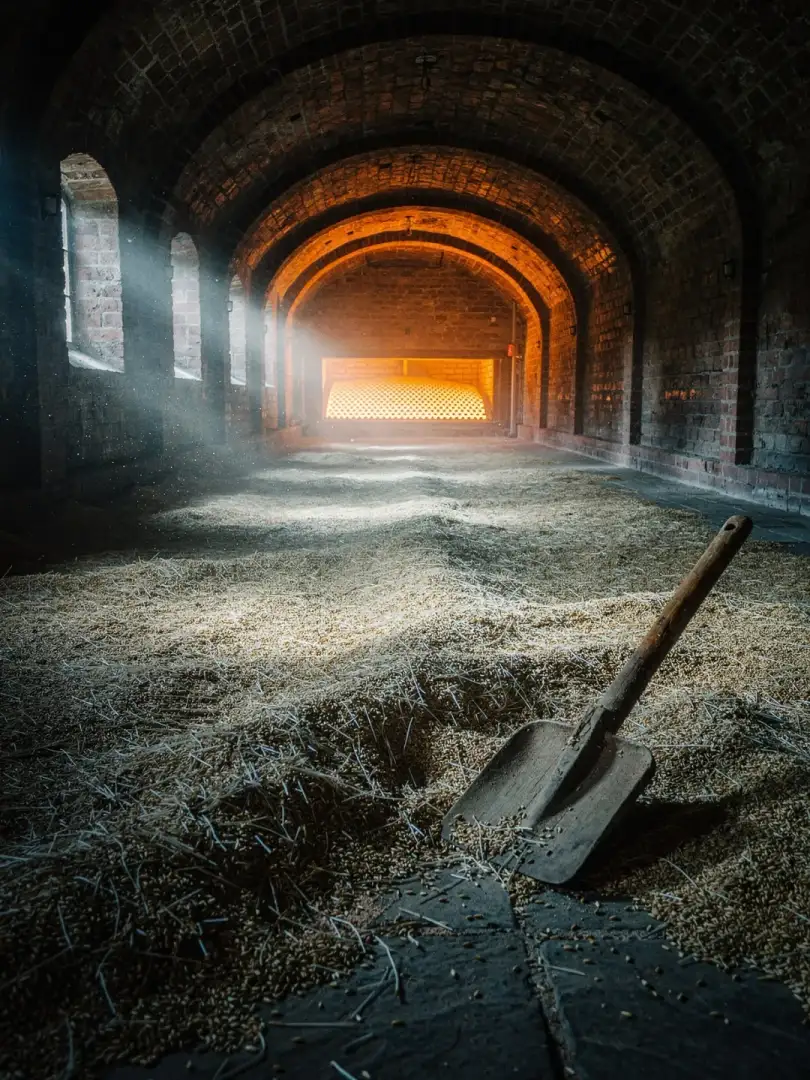
In the past, barley germinated on a malting floor, a smooth stone surface where workers spread the grain in a thin layer and turned it by hand with shovels. This took space, strength, and experience. In the late 19th century, ventilated germination boxes appeared, followed later by systems in which germination and kilning take place in the same vessel. These work more evenly and require less labour.
Only a handful of floor maltings remain today, mainly in the UK and at a few breweries with their own maltings. Some brewers consider their malt rounder and more aromatic, though solid comparisons are scarce. One effect of modern technology is certain, though: today's malt is almost always well modified. Elaborate mashing techniques, once needed to compensate for poorly modified malt, have largely become a matter of style rather than necessity.