Beyond barley
Wheat, rye, oats, spelt: beer from other grains
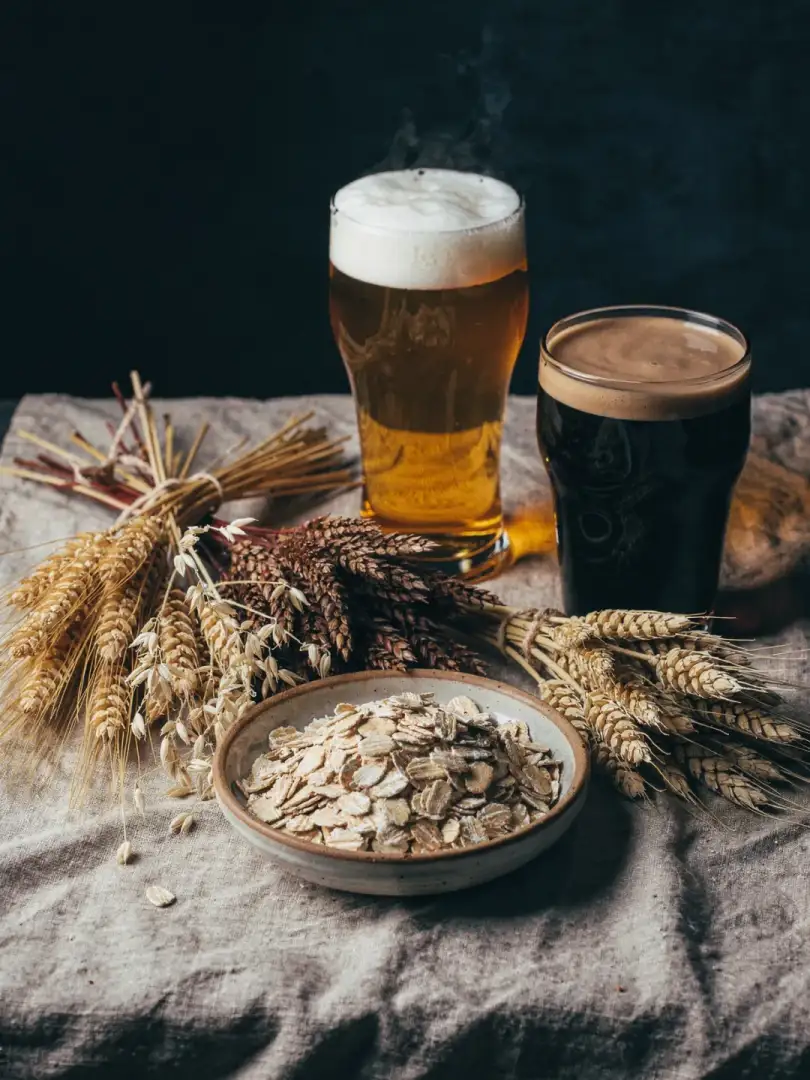
Wheat, rye, oats, and spelt supplement barley in brewing but rarely replace it entirely. Wheat contributes foam and haze, rye a spicy, dense fullness, oats a velvety mouthfeel. In Germany, malts from these grains are only permitted in top-fermented beer; a Pils or Helles must remain pure barley malt.
Wheat malt: foam, haze, and Weissbier
The wheat kernel has no firm husk and typically contains more protein than barley. Both show up in the glass. The protein carries a tall, stable head and produces the characteristic haze. Without a husk, though, the natural filter bed is missing during lautering. That's why brewers almost always blend wheat malt with barley malt, just so the wort can run off at all.
A Bavarian Weissbier usually contains 50 to 70 percent wheat malt. Many people assume the banana and clove aromas come from the wheat. In fact, they come from the Weissbier yeast, which produces esters—fruity aroma compounds—and spicy phenols. Wheat malt itself tastes more of pale bread and fresh dough, with a slightly tangy freshness. Ferment a wheat beer with a neutral yeast, and you get a fresh, bready beer without any banana.
Even in beers no one would call a wheat beer, a touch of wheat malt often finds its way in. Brewers in the UK, Belgium, or the US add a few percent to Pale Ales and IPAs because it makes the foam more stable. A German Pils has to do without this help. As a bottom-fermented beer, it must be made entirely from barley malt, and its foam has to be carried by barley and hops alone.
Weissbier or Witbier: malted or raw?
Belgian Witbier is often confused with German Weissbier, since both names mean 'white.' The difference starts with the grain. Witbier uses unmalted wheat—brewers call it raw grain—often with some oats added. The raw wheat brings plenty of protein and starch that aren't fully broken down. The beer turns milky pale and feels soft on the palate. Coriander and dried orange peel give it a spicy, citrusy aroma.
A brewer in Germany wouldn't be allowed to brew a beer like this. Raw grain counts as a malt substitute and is forbidden. A state authority can grant an exception for coriander and orange peel as a special beer—except in Bavaria—but even then, malt substitutes remain off-limits. Belgian Witbier can still be sold here: since the European Court of Justice ruling of 1987, a beer is allowed on the market if it's legally recognized as beer in its country of production.
Rye and spelt: old grains rediscovered
Rye is the trickiest guest in the brewhouse. It, too, has no husk, and it contains lots of mucilage, compounds experts call pentosans. They make the mash as gluey as bread dough, turning lautering into a test of patience. In return, rye gives beer a spicy, slightly peppery flavor and a dense, almost oily mouthfeel. Bavarian Roggenbier is top-fermented and often uses a Weissbier yeast; in the US, Rye IPAs are common.
Spelt is a close relative of wheat but keeps its husk during threshing. It malts well and yields nutty, soft beers. Spelt beers in Germany are top-fermented, since spelt counts as an 'other malt' and isn't allowed in bottom-fermented beer. Some breweries are also experimenting with the ancient grains emmer and einkorn.
Oats: velvety in Stout and in hazy IPA
Oats have a thick husk and contain more fat and more beta-glucans than barley. These soluble fibers make a beer thicker and rounder. In British Oatmeal Stout, oats smooth out the roasted notes and lend a velvety impression. Many modern hazy IPAs, often called New England IPA, contain rolled oats or oat malt for a soft mouthfeel and stable haze.
Flaked grains are pre-cooked, rolled raw grain, and therefore count as raw grain. In a beer brewed in Germany, they aren't permitted—oat malt, however, is, as long as the beer is top-fermented. German breweries brewing an Oatmeal Stout or a hazy IPA therefore turn to malted oats. Kvass also deserves a mention here: a drink popular in Eastern Europe made from rye bread or rye malt, it's only briefly fermented, usually very low in alcohol, and is considered a refreshment rather than a beer in its home region.