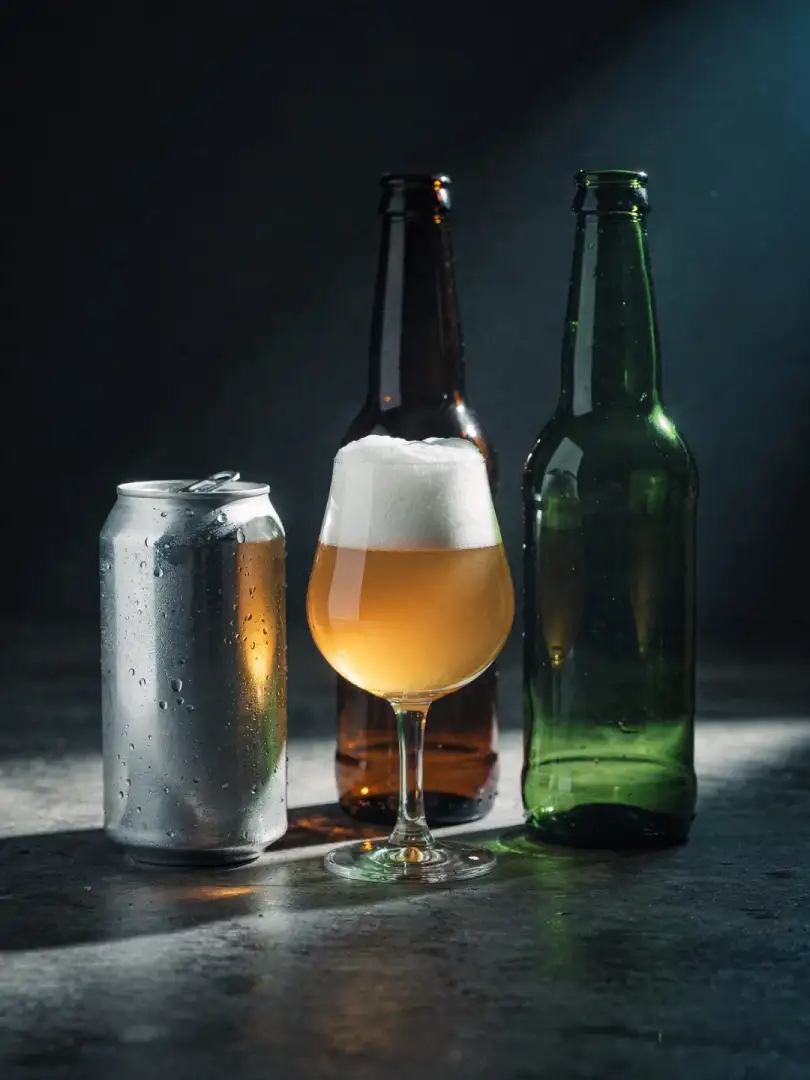
Can vs. glass
Is canned beer worse than bottled beer?
No, canned beer isn't inherently worse. The can fully blocks out light and is airtight against oxygen. An inner lining prevents any contact with the metal. Whether a beer tastes good depends far more on freshness and storage than on the packaging.
Canned beer: where did its bad reputation come from?
The first beer cans appeared in the USA in the 1930s. Made of steel, with coatings inside that were still far from perfected, they often left behind a metallic aftertaste. In Germany, cans long had the image of cheap packaging for mass-produced beer stacked in bulk at discount stores.
Then came the environmental debate. One-way cans littered the landscape until Germany introduced a deposit on single-use packaging in 2003. Afterward, cans nearly vanished from shelves for several years. Many beer drinkers still associate them with poor quality today, even though technology and the range of products have changed dramatically.
What protects beer better: can or bottle?
Beer has two great enemies: light and oxygen. Light in the blue and ultraviolet range breaks down bitter compounds from the hops. This creates a sulfur compound that smells like skunk or burnt rubber—experts call this "lightstruck." Green and clear glass let a lot of this light through, while brown glass blocks much of it. The can lets in no light at all.
The can also performs well against oxygen. Modern lids seal very tightly, while crown caps can let a bit of air through over time. Oxygen ages beer and creates notes of cardboard or sherry. Hop-forward beers like IPA in particular lose their fresh aromas quickly. That's why many craft breweries deliberately package their hop-forward beers in cans.
Does canned beer taste like metal?
Today's beverage cans are mostly made of aluminum and lined inside with a thin plastic coating. The beer never actually touches the metal. Bisphenol A, a substance once used in such coatings, has been banned in food contact materials in the EU since January 2025. A transition period until July 2026 applied to single-use packaging such as beverage cans.
You're more likely to notice a metallic taste when drinking straight from the can. That's because your lips touch the rim, and your nose picks up the metal instead of the beer. Poured into a glass, this impression disappears. Anyone who really wants to taste a beer should pour it into a glass, whether it comes from a can or a bottle.
Why freshness matters more than the packaging
Most beers aren't brewed for aging. A pilsner, a helles, or an IPA tastes best while it's young. With every week spent in warm conditions, it loses hop aroma and develops aging notes. This holds true for cans just as much as bottles. The best-before date is a useful guide. Some breweries also print the filling date, which helps when shopping.
Cans have a practical advantage here: they cool down faster because aluminum conducts heat well and the walls are thin. In the fridge, a canned beer is therefore ready to drink sooner. Conversely, it also warms up faster if left in the sun. Anyone who wants to genuinely enjoy their beer shouldn't choose based on whether it's canned or bottled, but on how fresh it is and how it's been stored.
What remains unclear
Whether can or bottle performs better over months of storage depends on the individual beer, the closure, and the storage temperature. Generally valid comparative studies covering many beer styles are lacking. The environmental footprint is also debated: reusable glass bottles often perform well in Germany when transport distances are short, while cans are lighter and recycle well.
For everyday purposes, a simple rule applies. Beer likes it cool, dark, and fresh. A canned IPA that's been stored chilled usually tastes better than the same beer from a green bottle that sat for weeks in a bright shop window.