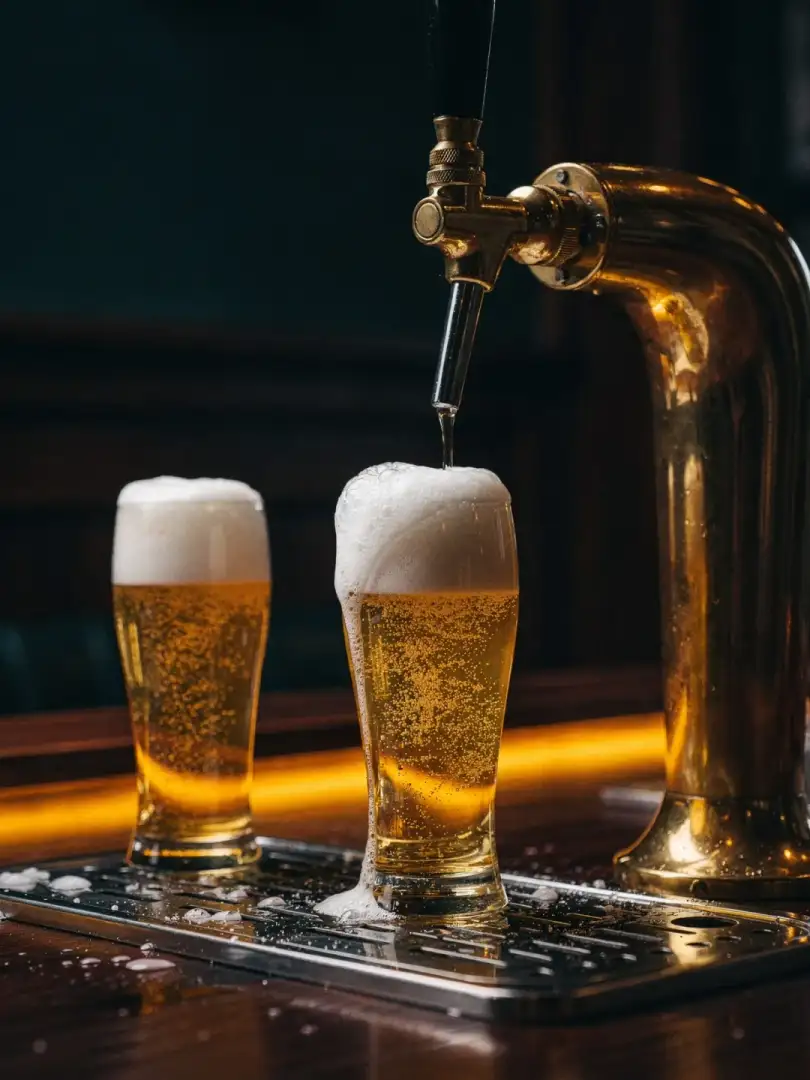
Pouring and foam
Does a good pils need 7 minutes? The pouring myth explained
No, there's no standard and no evidence for the 7-minute pils. The number is just a saying. How long pouring takes depends on the tap system, temperature, and carbonation. A well-adjusted keg delivers a beautiful pils in much less time.
Where does the 7-minute pils come from?
In German pubs, you've heard the phrase for decades: "A good pils takes seven minutes." Breweries have picked it up in advertising, and publicans use it as an excuse for wait times. But there's no source, no brewing regulation, and no technical standard that specifies exactly seven minutes. The number only ever appears as a saying.
Still, there's a grain of truth in it. In the past, beer was often poured from wooden casks or older systems where the beer was too warm or carried too much carbonation. It would foam up heavily when poured. The publican had to wait for the foam to settle and pour again several times. That took time, and a number grew out of that experience.
What actually happens when you pour
Pils contains dissolved carbon dioxide, the carbonation. As long as the beer sits under pressure in the keg, the gas stays dissolved. As soon as it flows from the tap into the glass, the pressure drops, and some of the gas bubbles out. That's where the foam comes from. How much foam forms is determined mainly by three factors: the temperature of the beer, the pressure in the line, and the amount of carbonation in the beer.
If the beer is too warm, the gas dissolves less readily and foams heavily. If the pressure is too high or the line is sized wrong, the beer shoots into the glass too fast. In both cases, it takes patience and several pours. A well-adjusted system with cold beer and the right pressure, on the other hand, delivers a firm foam head in a short time.
Why the foam matters for pils
With pils, the foam is more than just looks. It's made up of proteins from the malt and bittering compounds from the hops that keep the bubbles stable. A firm head protects the beer from oxygen for a while and carries hop aromas to the nose. Since pils is especially hop-forward, a good foam head stands out all the more.
In the Czech Republic, there are distinct pouring styles with deliberately different amounts of foam, ranging from almost foamless to glasses that are nearly all foam. This shows that foam is a matter of taste and tradition, not a clock. Anyone who wants to learn more about pouring can find it in the chapter on tasting.
Why does pouring still take a long time in some pubs?
If a pils takes a long time today, it's usually down to the equipment or its upkeep. Dirty beer lines let bacteria and buildup grow, which causes carbonation to bubble out erratically. A glass with traces of grease, say from dish soap or lip balm, makes the foam collapse quickly. The publican then pours again, and again, until the head holds.
A warm glass straight from the dishwasher also makes the beer foam up. That's why many publicans quickly rinse the glass with cold water before pouring. So if you find yourself in a pub where every pils takes minutes, it's more a sign of a system that isn't running optimally than of special care. That doesn't mean the beer tastes bad, but it's no seal of quality. A publican who cleans their lines regularly and sets the pressure correctly pours faster, and usually fresher too.
What remains open
Whether pouring multiple times really improves the taste hasn't been properly studied. Some publicans say it makes the beer smoother, because some of the carbonation escapes. Others consider that wishful thinking and see it mainly as lost time and warm beer. Reliable blind comparisons are lacking.
What's certain is only this: seven minutes isn't a rule. Waiting a long time for your pils at the beer garden or the pub doesn't automatically get you a better beer. A freshly poured pils, cold, in a clean glass with a firm head, can be in front of you after just a minute, too.