The nose investigates
How does beer smell? Malt, hops, and yeast
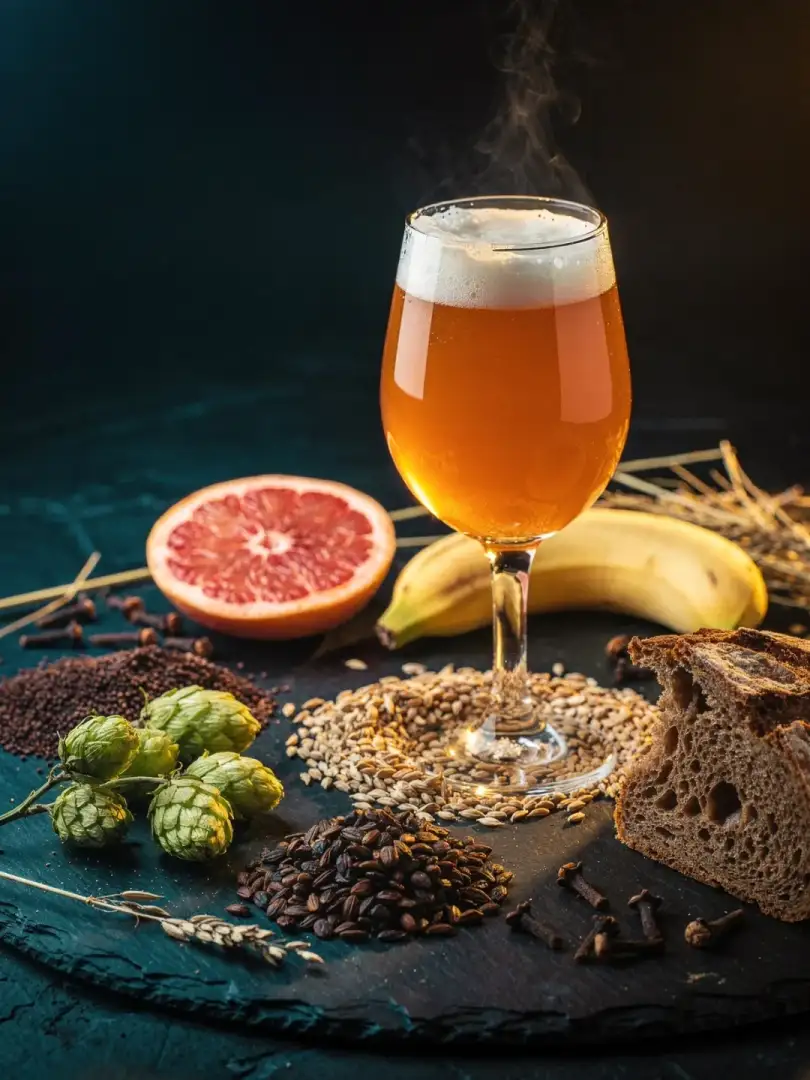
Beer smells like what it's made from and how it's made: malt brings bread, honey, caramel, or coffee; hops bring herbs, flowers, or citrus; yeast brings fruit or spice. The nose detects far more nuance than the tongue, which is why aroma is the most important part of any beer tasting.
Smelling beer: swirling and sniffing the right way
The tongue distinguishes only a few basic tastes. Everything more refined runs through the nose, which is why it pays to give aroma most of your time. Swirl the glass gently to release aromatic compounds from the beer, then smell in several short bursts instead of one long inhale.
The reason is adaptation. After just a few seconds, the brain tunes an odor out. Smelling the back of your hand or a neutral sleeve in between resets the nose. With lighter beers, it helps to briefly cover the glass with your hand so the aromatic compounds can gather.
The first impression is often the most honest. Highly volatile compounds like sulfur or fresh hop oils dissipate quickly. That's why you smell right after pouring, and again once the beer has warmed a few degrees. Some beers only open up at that point.
Which aromas come from the malt?
Pale malt smells like fresh bread, grain, sometimes honey or hay. That's typical in Helles, Pils, or Kölsch. More darkly kilned Munich malt brings bread crust and nut, as in Märzen or Munich Dunkel. Caramel malt contributes caramel, toffee, and dried fruit.
Roasted malt is produced at very high temperatures. It smells of coffee, cocoa, or dark chocolate. Porter and stout live off it, as does Schwarzbier. In the smoked beer from Bamberg, the aroma of ham and campfire comes from malt dried over an open beechwood fire.
Hop aroma: herbs, flowers, citrus, and tropical fruit
Beyond bitterness, hops contribute essential oils. Classic European varieties from the Hallertau, Tettnang, Spalt, or Saaz regions smell herbal, floral, and lightly spicy. A German or Czech Pils shows this side especially clearly. English varieties like East Kent Goldings or Fuggle tend toward earthy, woody aromas.
American, Australian, and New Zealand varieties bring entirely different notes: grapefruit, mango, passion fruit, pine resin, and with Nelson Sauvin even gooseberry. An American IPA is often recognizable just from the glass. Thiols contribute to this too; these are sulfur-containing aromatic compounds that smell of tropical fruit even in tiny amounts.
Hop aroma is delicate. It fades with time, heat, and oxygen. An IPA that's sat warm for months often ends up smelling flat and more like caramel than fruit.
A simple comparison is worthwhile for beginners. Place a German Pils next to an American IPA and smell both in turn. In the Pils, meadow, fresh herbs, and a hint of bread dominate. In the IPA, citrus peel and ripe tropical fruit jump out of the glass, while the malt recedes. Both beers are heavily hopped, but with varieties from entirely different worlds. That's exactly the distinction the nose should learn to pick up on.
What does yeast smell like? Esters, phenols, and clean lagers
Yeast also divides the major beer families in terms of aroma. Bottom-fermenting lager yeast works cool and leaves a clean picture in which malt and hops speak for themselves. Top-fermenting yeasts ferment warmer and produce more esters, fruity aromatic compounds that recall pear, apple, or banana.
Bavarian wheat beer yeast additionally produces a clove-scented phenol. Banana and clove together are the signature of a Hefeweizen. Belgian yeasts contribute pepper, spice, and ripe fruit, as in a Tripel or Saison. Wild yeasts like Brettanomyces recall leather, barnyard, or horse blanket. In Lambic that's intentional; in a Pils it would be a flaw.