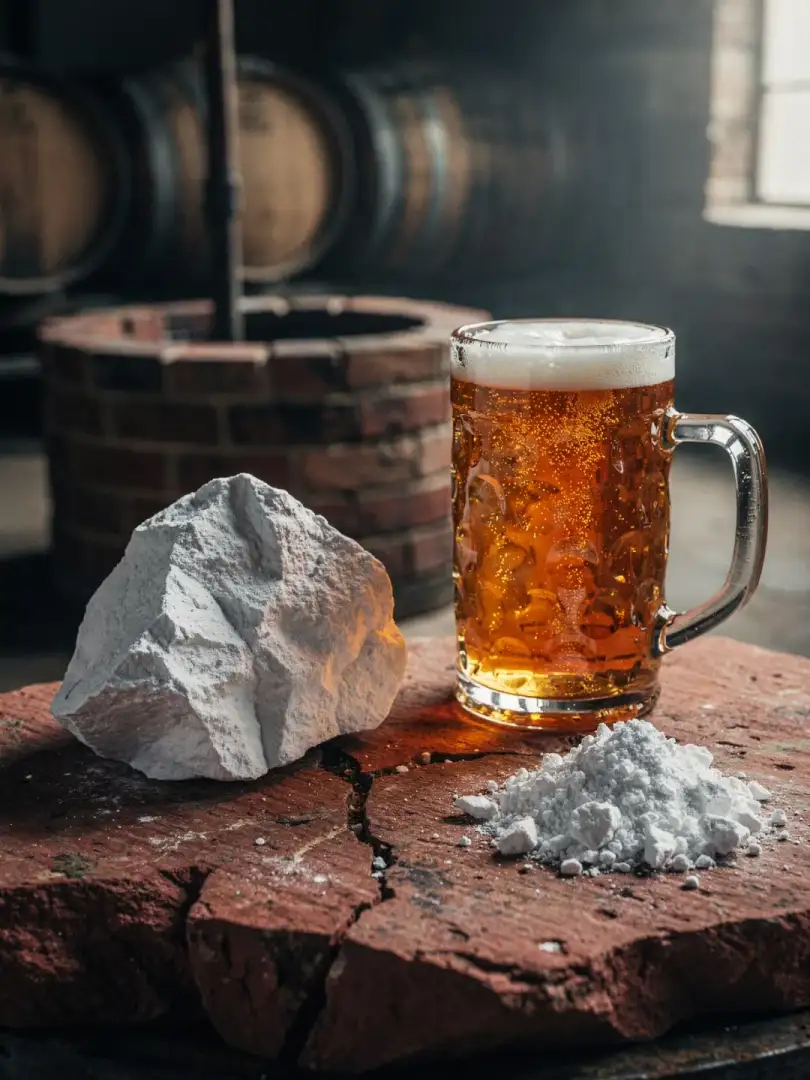
Burton, Gypsum-Rich
Burton Water: Gypsum, Pale Ale, and IPA
Gypsum-rich well water made Burton upon Trent the capital of English pale ale in the 19th century. The sulfate in it gives hop bitterness a dry, firm edge. Brewers elsewhere learned to replicate this water, a practice they called "Burtonizing."
What's special about Burton's water?
Burton upon Trent sits in the English Midlands on the River Trent. But brewing there didn't use river water—it used well water rising up through sandstone laced with gypsum. Gypsum is calcium sulfate. The water is therefore very hard, and predominantly in sulfate rather than bicarbonate. According to the Oxford Companion to Beer (2012), sulfate levels in Burton's waters reach up to around 800 milligrams per liter.
This mixture is the opposite of Pilsen's. Where almost nothing is dissolved there, Burton's water is loaded with calcium and sulfate. For pale malt, that's still favorable: calcium pushes the mash pH down, and bicarbonate barely gets in the way. So an English small town ended up with water that seemed tailor-made for pale, assertively hopped ales.
How sulfate makes bitterness drier
Sulfate doesn't change how much bitter compound is in the beer, but it changes how that bitterness comes across. It hits more sharply, stays firm, and finishes dry, without ever turning broad or sticky. Beers from Burton therefore tasted crisp, clean, and refreshing, which in the 19th century was seen as a mark of quality. The Oxford Companion describes this effect as the bitterness's "hard, dry mineral edge."
Sulfate-rich water also leaves a trace in the nose. During fermentation, yeast can form sulfury notes from sulfate that, fresh out of the bottle, briefly recall a just-struck match. In England, this hint became known as the "Burton Snatch." It fades quickly and is considered part of the character of traditional ales from the region. In a pilsner, it would be a flaw; in a Burton ale, more a mark of origin.
What does "Burtonizing" mean?
Burton's success with pale ale put pressure on other breweries, especially in London, where the water tended to be carbonate-rich. For a long time, they couldn't figure out why their pale beers came out duller. Only in the late 19th century, according to the Oxford Companion, did London brewers learn to treat their water with gypsum and other salts so that it resembled Burton's. The term "Burtonizing" caught on for this practice.
Burtonizing is one of the first deliberate forms of water treatment in brewing. The idea behind it still holds today: read your own water, compare it to your target, and close the gap with salts. The method first spread across the British Isles and later worldwide. Many breweries brewing a dry pale ale or a West Coast IPA today add gypsum to their water quite deliberately.
Burton and the IPA: what's true?
It's often said that India Pale Ale was invented in Burton for the long sea voyage to India. That's not quite right. Beer had already been shipped to India from 1711 onward, and the London brewer George Hodgson of Bow Brewery supplied a pale "October beer" without inventing a new style. The name "India Pale Ale" doesn't appear until the early 19th century. A more accurate description: a pale, heavily hopped export beer that was especially successful in India.
Burton entered this story because its water happened to make this type of beer particularly good. Breweries like Bass, founded in 1777, grew large on pale, bitter ales for export and the home market. The dry Burton style shaped how pale ale and bitter were expected to taste in England. Modern American IPAs have moved away from this with fruity hops, but the affinity for gypsum in brewing water has remained.