Advertising and truth
Felsquellwasser & Co.: myths about brewing water
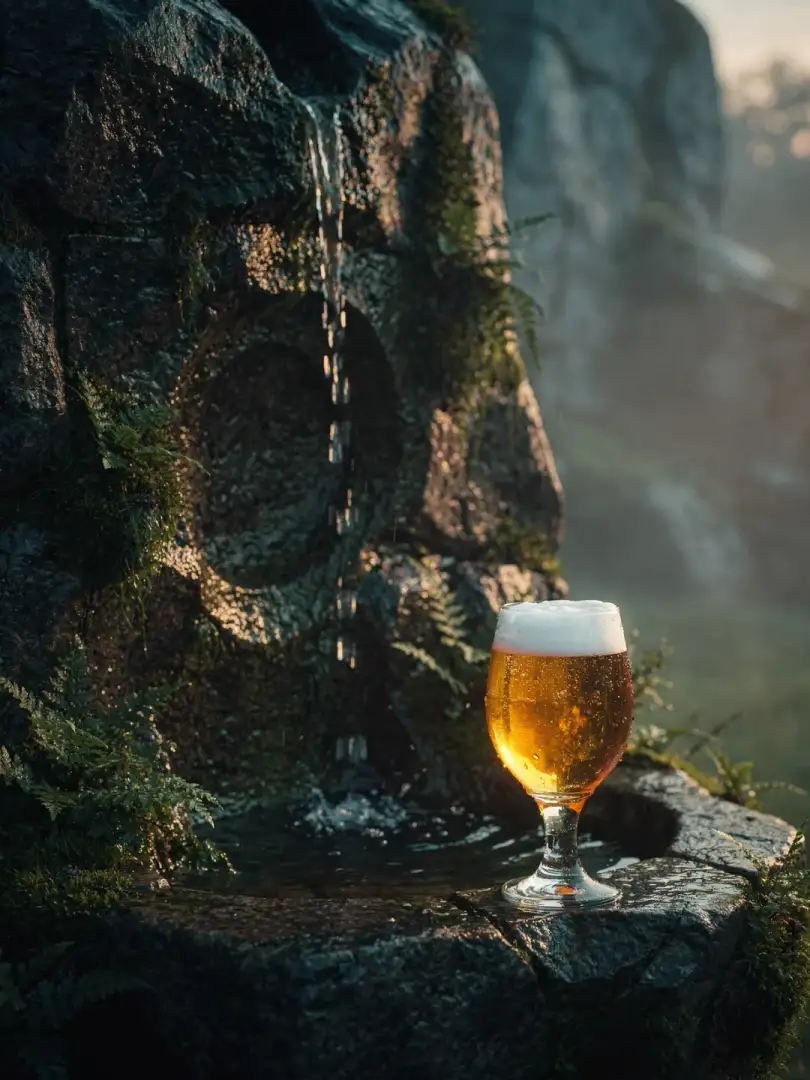
Felsquellwasser (rock spring water), mountain spring, water from their own well: breweries love to advertise their water. Some of it is true; much of it describes a feeling more than a flavor. Which water myths persist, and what's really behind them.
What is Felsquellwasser?
Hardly any advertising term for beer is as well known as "Felsquellwasser." The Krombacher brewery has used the phrase since the 1960s, claiming its beer is brewed with rock spring water, and had the term registered as a trademark for beer in 2010. A homebrewer sued to have it cancelled, arguing the word merely described an ingredient. The Bochum Regional Court ruled in his favor in November 2017, but the Hamm Higher Regional Court overturned the ruling in early 2019. The trademark stood.
The case shows what such terms are really about: recognition and a sense of origin. Water that comes from a spring in rock can be excellent for brewing. But whether a beer therefore tastes different from one made with treated city water depends on its minerals and its treatment, not the word on the label. Advertising terms should therefore be read as manufacturer claims, not as quality standards.
Does spring water taste better than tap water?
Many breweries draw their water from their own wells, others use the municipal network. Either can produce excellent beer. Tap water in Germany is strictly monitored and almost always usable once chlorine is removed and the hardness is adjusted appropriately. Spring water has the advantage of often being more consistent in composition. But it's no guarantee, since a spring too can be too hard, too high in iron, or inconsistent.
What matters is what the brewery does with the water. A dedicated well with stable, suitable water saves on treatment. A brewery on the municipal water network with good equipment can produce any profile. In the glass, it's nearly impossible to trace the difference back to the water's origin. Anyone trying to identify in a blind tasting whether a beer was brewed with spring water has no reliable clues to go on. What you can taste are only the effects of a water profile, such as a dry bitterness, a soft roundness, or a metallic off-flavor, and good water treatment can just as easily create or avoid these effects.
Is Guinness brewed with water from the Liffey?
No. In Dublin, the story persists that Guinness is brewed with water from the Liffey, the river that flows past the brewery. Guinness itself denies this: today the water comes from the Wicklow Mountains about 40 kilometers south of the city, and it was never drawn from the Liffey. In 1759, Arthur Guinness secured access to the city's water supply in his lease agreement.
Similar stories exist in many places. The Pilsner Urquell brewery, for instance, claims to draw its water from the same underground source as in 1842. Such claims may well be true, but they come from the breweries themselves. When it comes to stories about water, it's worth considering who's telling them and whether there's independent evidence. The same applies to figures: the mineral values for Pilsen, Burton, Munich, or Dublin circulating in books and forums come from different, often old analyses and sometimes differ considerably from one another. They point in a direction, but they're no fixed recipe.
Does the water still make the difference today?
The saying "The water makes the beer" is, at its core, history. It explains why Pilsen, Burton, Munich, and Dortmund gave rise to their respective styles. Today, almost every brewery treats its water, and a good beer results from the interplay of recipe, malt, hops, yeast, water profile, and care. Bad water can ruin a beer, but exceptional water alone doesn't make it exceptional.
In everyday terms, this means: you can enjoy marketing that invokes springs, rock, and mountains, but shouldn't overestimate it. What matters more is whether the beer lives up to its style. A pilsner should finish soft or crisply bitter, depending on its origin. A pale ale should finish dry. A stout should be round, without sharp acidity. Those who can taste this recognize good water by its effect, not by its name.