Apple Brandy Around the World
Applejack and Cider Brandy: Apple Brandies from America, England, and Spain
Applejack is an American apple brandy closely tied to the Laird family of New Jersey, whose distillery holds US Treasury License Number 1, dating back to 1780. Today the name usually refers to a blend of apple brandy and neutral spirit. Related brandies made from cider also exist in England and Asturias.
Where Does Applejack Come From?
In colonial North America, apples grew more easily than the grain needed for beer or the vines needed for wine. Cider became an everyday drink, and wherever cider was made, distilling soon followed. Apple brandy is especially closely linked to New Jersey. The Laird family traces its history back to William Laird, who came from the Scottish county of Fife and settled in Monmouth County starting in 1698. What exactly he distilled there is recorded in family lore, though no documents survive to confirm it.
The year 1780 is better documented. Laird & Company holds US Treasury License Number 1, making it the oldest licensed distillery in the United States. Today the company is based in Scobeyville, New Jersey, and remains in family hands through the ninth and tenth generations. Applejack became synonymous there with American apple brandy, much as Calvados stands for cider brandy in France.
What Does "Jacking" Mean? Freeze Concentration Instead of Distillation
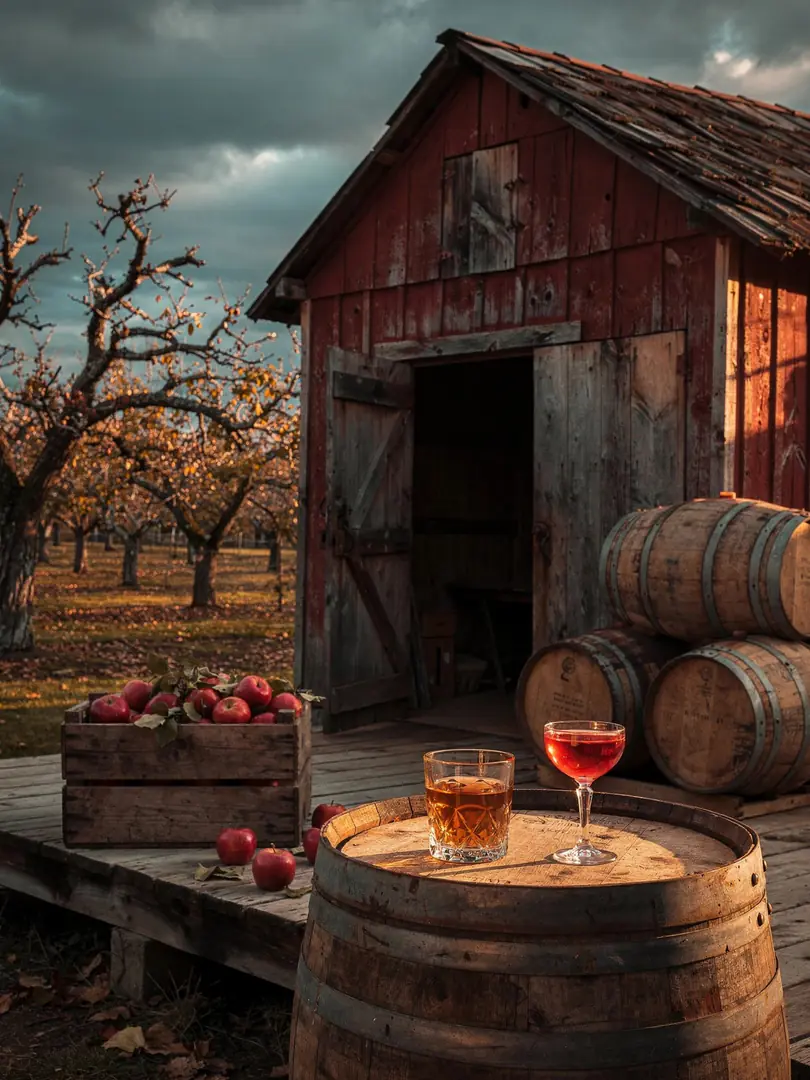
The name tells a second story. On farms, barrels of cider were once left outside during winter. Since water freezes before alcohol, ice would form and could be removed, leaving behind a stronger, more concentrated liquid. This freeze-concentration process was called "jacking," and it's said to be where Applejack got its name. It was a method for households without a still, a bit of self-sufficiency to get through a hard winter.
This has little to do with distillation as we understand it today. In distilling, the foreshots containing unwanted compounds can be separated out; in freeze concentration, everything stays in the concentrate, including methanol and fusel oils. Under EU law, a brandy can only be produced through distillation, so freeze-concentrated cider wouldn't legally qualify as apple brandy. For this reason, professional producers have long distilled Applejack using pot stills or column stills. Freeze concentration belongs to history now, not to the bottle on the store shelf.
Blended Applejack and Apple Brandy: What's in the Bottle Today
The market changed in the 20th century. In the late 1960s, the Laird family petitioned for a dedicated product definition, which took effect in 1972. Since then, "Blended Applejack" in the US has referred to a blend of at least 20% apple brandy and neutral grain spirit. According to the company, Laird's Blended Applejack contains 35% apple brandy. The result tastes lighter and less fruit-forward. The distillery also produces pure Apple Brandys, made entirely from apples, much like Calvados.
For European readers, the distinction matters. A blend with neutral spirit wouldn't qualify as a brandy from apple wine or as a fruit spirit under EU rules, since both categories prohibit added alcohol. A Straight Apple Brandy, on the other hand, comes close to Calvados, even without the regulations of an appellation. In bars, Applejack is best known from the Jack Rose, a classic cocktail made with grenadine and citrus juice.
Cider Brandy from Somerset and Aguardiente from Asturias
In England, the county of Somerset has a long tradition of cider-making. "Somerset Cider Brandy" is a Protected Geographical Indication and, like Calvados, falls under EU Category 10, brandy made from cider. According to its product specification, it must age at least three years in oak casks. The best-known producer is the Somerset Cider Brandy Company in Burrow Hill near Martock, which grows its apples on its own orchards, cultivating many different varieties.
Northern Spain offers another example. In Asturias, sidra is widely enjoyed, a tart apple wine traditionally poured into the glass from a great height. From this, producers distill "Aguardiente de sidra de Asturias," registered with the EU since 1989. The distillate leaves the still at no more than 72% ABV. The young version rests at least one year in stainless steel or glass and remains colorless, while aged versions mature in oak casks and take on an amber hue.