Calvados with food
Trou normand and Calvados in the kitchen
The trou normand, literally "Norman hole," is a small glass of Calvados or an apple sorbet with Calvados served in the middle of a long festive meal. The custom is said to make room for the next courses. That alcohol speeds up digestion, however, is not supported by evidence; studies tend to show the opposite.
What is a trou normand?
Norman feasts were famous for their length and their many courses. Between fish and meat, the story goes, the host would serve a glass of Calvados. The brandy was meant to punch a "hole" in the full stomach so guests could keep eating. The custom became known in literature partly through the stories of Guy de Maupassant, who loved to describe Normandy's lavish tables. Today it's more a piece of folklore than a fixed part of everyday dining.
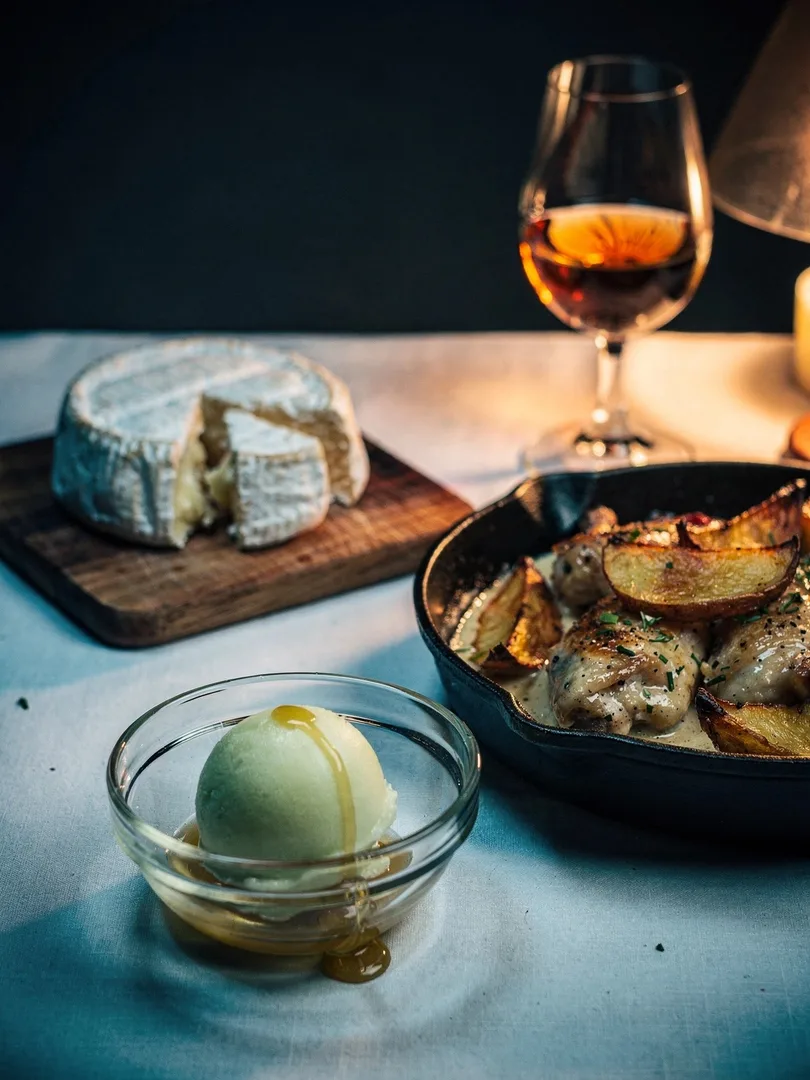
Served in modern style, the trou normand usually arrives as a scoop of apple sorbet with a splash of Calvados poured over it. This cools and refreshes the palate and feels lighter than a glass drunk neat. Looked at soberly, the effect comes from cold, acidity and a pause, not digestion. It's not actually a digestive aid, since alcohol tends to delay stomach emptying. The feeling of relief is relaxation, not faster digestion.
Cooking with Calvados: sauce, braised dishes, flambéing
In Norman cuisine, apple, cream and butter constantly meet, and Calvados brings them together. A well-known example is dishes "à la Vallée d'Auge": chicken or pork is seared, deglazed with Calvados, braised with cidre and cream, and served with sautéed apple wedges. The brandy adds depth and a light acidity that cuts through the richness of the cream. Young Calvados works perfectly well here; older bottles belong in the glass.
When flambéing, Calvados is warmed and set alight, for example over crêpes or apple pancakes. It looks impressive but calls for caution: flames can leap high, so the bottle should stay well away from the stove. A common misconception concerns the alcohol. It doesn't fully cook off during flambéing or braising, some always remains in the dish. For children, pregnant women and people who don't drink alcohol, Calvados in the sauce is therefore not a good idea.
Calvados with cheese and dessert
Normandy is also a land of cheese. Camembert, Pont-l'Évêque and Livarot come from the same pastures where cows graze beneath the apple trees. Pairing Calvados with these pungent soft cheeses follows the old rule that what comes from the same landscape belongs together. Its fruit and acidity cut through the richness, while the oak picks up the pungent rind notes. Pommeau is the sweeter, lower-alcohol alternative here.
For dessert, apples are the obvious choice. Tarte Tatin, apple cake and baked apples take on a more grown-up note with a splash of Calvados in the batter or filling. As an accompaniment in the glass, an older Calvados pairs especially well with desserts featuring caramel, nut or vanilla, since it brings these flavors itself from the cask. With very sweet desserts, though, dessert wines are usually the better match, answering sweetness with sweetness.
Calvados neat and in cocktails
Served neat, Calvados shows best in a tulip-shaped glass that concentrates the aromas. Room temperature is enough; warming it in the hand isn't necessary. Young Calvados also works well as a long drink, for example with tonic, which highlights the apple fruit. In classic cocktails, Calvados often stands in for Cognac or Applejack. The Jack Rose, with grenadine and citrus juice, is the best-known example of the apple family at the bar.
Those looking for the flavor without alcohol can reach for tart juice made from cider apples or alcohol-free cidre, both of which capture much of that Norman character. For those who do enjoy Calvados, the usual rule applies: better one small glass savored with attention than several drunk in passing. The brandy is strong, at least 40% ABV, and its effect depends solely on the amount of alcohol consumed, not on the fruit it was distilled from.