Origin on the label
Protected names: from Schwarzwälder Kirschwasser to Pálinka
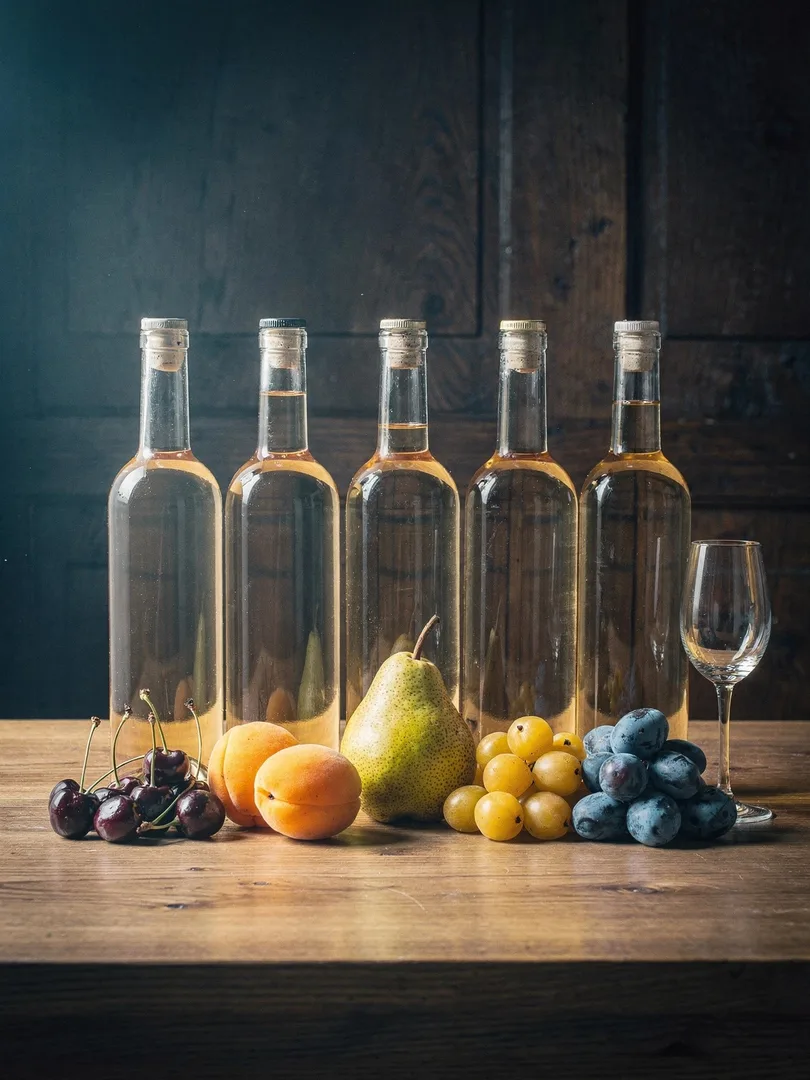
Protected spirit names such as Schwarzwälder Kirschwasser, Wachauer Marillenbrand, or Pálinka are geographical indications within the EU. They're listed in the European Commission's eAmbrosia register, and only spirits that meet the rules of their product specification may carry these names.
How does origin protection work for spirits?
For wine and food products, the EU distinguishes two tiers: protected designation of origin and protected geographical indication. For spirits, there is only one type of protection: the geographical indication, abbreviated GI. The legal basis is the Spirit Drinks Regulation (EU) 2019/787. Every protected designation has a product specification setting out where the spirit comes from and the rules that apply to it.
All protected names are listed in the European Commission's eAmbrosia register, where you can check whether a name is registered, applied for, or withdrawn. One peculiarity applies to spirits: many entries carry the date 12 June 1989. This reflects the legacy stock from the former Spirit Drinks Regulation (EEC) No 1576/89, i.e. names that were already protected at that time.
Protection extends beyond the exact name. Allusions and additions such as 'style' or 'type' don't help a foreign product use the name either. The generic category, however, remains free. Kirschwasser may be produced by any distiller who meets the rules for fruit brandy. Schwarzwälder Kirschwasser, however, may only be used by those who follow the specification.
German spirits with protected origin
Germany has eight fruit brandy designations in the register. Seven of these belong to the 1989 legacy stock: Schwarzwälder Kirschwasser, Schwarzwälder Mirabellenwasser, Schwarzwälder Williamsbirne, Schwarzwälder Zwetschgenwasser, Fränkisches Kirschwasser, Fränkisches Zwetschgenwasser, and Fränkischer Obstler. The eighth is Hohenloher Birnenbrand, applied for in 2019 and registered on 31 May 2022.
There are also two designations that aren't fruit brandies. Schwarzwälder Himbeergeist is a geist, meaning it's made from unfermented raspberries in neutral alcohol. Bayerischer Gebirgsenzian is a spirit distilled from gentian roots. Among grape brandies, Deutscher Weinbrand and Pfälzer Weinbrand are protected. Rüdesheimer Weinbrand, however, is not in the register, despite how well known the name is.
Austria, Hungary, and the shared name Pálinka
The best-known Austrian spirit with protected origin is Wachauer Marillenbrand, protected since Austria joined the EU in 1995. Its rules are strict: spirits from 21 municipalities, a minimum of 38% ABV, no more than 4 grams of sugar per liter, and no continuous distillation. Distinct from this is the Wachauer Marille, a protected designation of origin for the fruit itself. Wachauer Marillenlikör, in turn, is a liqueur, not a brandy.
Also protected is Pregler or Osttiroler Pregler, a spirit made from apples and pears in the district of Lienz. The case of Pálinka is particularly notable. The name belongs jointly to Hungary and Austria. In Hungary, Pálinka must be made from 100% Hungarian-grown fruit, with no sugar, flavoring, or added alcohol. In certain Austrian federal states, Marillenbrand is also permitted to be called Pálinka.
Applied for isn't the same as protected: Lake Constance, brands, and third countries
Not every name that sounds like it indicates origin is actually protected. For Bodensee Obstler and Bodensee Birnenbrand, Germany, Austria, and Switzerland jointly filed applications in 2019. According to the register, both have since been withdrawn. So anyone buying a Bodensee Obstler is buying a fruit brandy from the region, but not a protected designation. Brands, too, are not indications of origin. Asbach or Williamine protect the name of a house, not that of a region.
The picture is patchier for countries outside the EU. Pisco from Peru has been in the register since 2009. Šljivovica from Serbia is not listed there, though the customs surrounding Šljivovica have been on UNESCO's Intangible Cultural Heritage list since 2022. The Czech Republic and Slovakia have not registered a single spirit designation. Some third-country names are protected through bilateral agreements that the register doesn't fully reflect. Switzerland maintains its own AOP register.
For buyers, this means: origin in a name is a promise that, for protected designations, is actually verified. Anyone wanting certainty can check the register or look closely at the exact wording on the label.
Europe's best-known spirit designations come from France and Italy. Cognac and Armagnac are registered as wine spirits, Calvados has no fewer than three designations, and Grappa is a name reserved for Italy. Kirsch d'Alsace and Mirabelle de Lorraine are also protected. The same principle applies to all of them as in the Black Forest: origin in the name comes with an obligation to follow a specification.