Glass and temperature
Grappa warm or cold? How to drink pomace brandy properly
Young grappa is best enjoyed lightly chilled, at around 9 to 13°C (48 to 55°F), while aged grappa is better around 17°C (63°F), as recommended by the Istituto Nazionale Grappa. A small tulip glass with a rounded bowl suits it well, capturing the aroma of the grape skins. The same principle applies to marc, orujo, and tsipouro.
Grappa cold or warm? Temperature by style
For a long time, the custom in many restaurants was to serve grappa ice-cold, ideally straight from the freezer. That numbs the harshness, but it numbs the aroma too. The Istituto Nazionale Grappa, an Italian industry association, therefore recommends differentiating by style. Young, aromatic grappas should be served around 9 to 13°C (48 to 55°F), aged grappas around 17°C (63°F).
The reason lies in the pomace itself. Young pomace brandies rely on volatile aromatic compounds from the grape skin, floral notes in the case of Moscato or Traminer, for example. Lightly chilled, the alcohol stays in the background, letting these notes still shine through. Aged grappa, Marc de Bourgogne, or an orujo envejecido need a bit more warmth to open up notes of wood, dried fruit, and spice.
Which glass for grappa? A tulip, not a shot glass
The small, straight-sided shot glass, known as a Stamperl in Bavaria and Austria, is a poor choice for pomace brandy. In it, alcohol rises first and dominates, while the aromas drift off to the side. A small tulip glass works better: a rounded bowl that narrows slightly toward the top and flares out again at the rim. It gathers the aroma above the brandy and guides it to the nose without the alcohol overwhelming.
Only a small pour is needed, just enough to cover the bottom of the glass. Swirl the brandy gently, first nosing from a little distance, then closer. With pomace brandy, it's worth waiting a minute after the first impression; the skin aromas become more pronounced and the sharpness recedes.
Tasting pomace brandy: how to spot quality
A good pomace brandy smells distinctly of grape and skin, with notes of blossom, herbs, nuts, or dark fruit depending on the variety. A slightly bitter, husk-like note is typical, something a wine brandy lacks. Tasting several side by side quickly reveals how strongly the grape variety shows through: a Moscato grappa and a Pinot Noir marc are worlds apart.
Flaws tend to show up in the nose first. A sharp, nail-polish-like smell points to too much heads in the distillate, while a vinegary note suggests spoiled pomace. Musty or moldy notes come from pomace that sat too long exposed to air before distilling. Heavy, oily tones suggest too much tails. A clean pomace brandy can be powerful, but it shouldn't bite harshly.
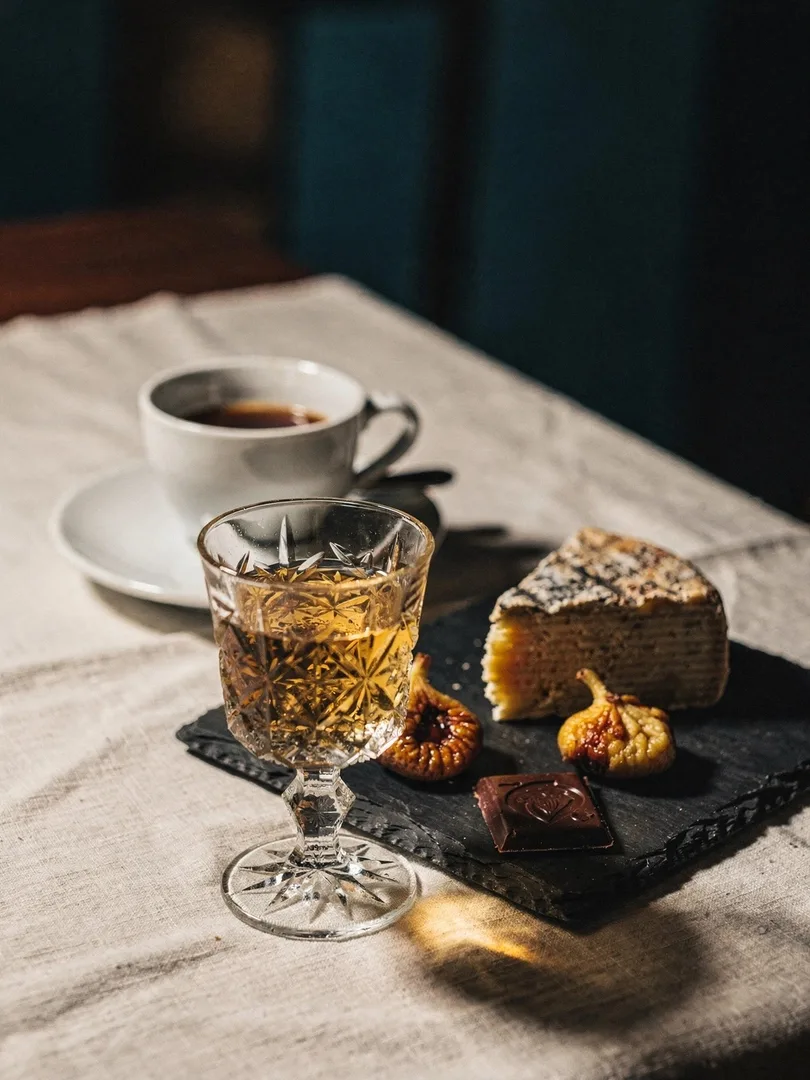
Pomace brandy pairs with food better than its reputation as an after-dinner shot might suggest. Aged grappa works well with dark chocolate, dried figs, or long-matured hard cheese. A Marc de Bourgogne complements a pungent washed-rind cheese like Époisses, which is itself washed with marc. Young, aromatic grappas made from Moscato or Traminer go nicely with fruit desserts, while tsipouro and tsikoudia are natural companions to meze. The underlying rule: bold brandy with bold flavors, fragrant brandy with lighter fare.
Caffè corretto and resentin: customs surrounding pomace brandy
In Italy, grappa is a favorite way to close out a meal, either neat or alongside an espresso. For a caffè corretto, a "corrected coffee," a small shot of grappa goes directly into the espresso. In the Veneto and Friuli regions, there's the resentin: after finishing the coffee, the still-warm cup is rinsed with a splash of grappa and drunk, mixing the coffee residue with the brandy.
It's often said that a pomace brandy after a meal aids digestion. Evidence actually points the other way, since alcohol slows gastric emptying. The pleasant feeling afterward is more about relaxation than faster digestion. Anyone wanting to enjoy pomace brandy is best off doing so slowly and in small amounts, as a finishing touch rather than a remedy.