The Iberian Peninsula
Orujo and Bagaceira: pomace brandy from Spain and Portugal
Orujo is Spain's pomace brandy, Bagaceira Portugal's, both distilled under EU rules for pomace spirits. Protected designations include Orujo de Galicia as well as Bagaceira from Alentejo, Bairrada, and the Vinho Verde region. In Galicia, Orujo is also used to make Queimada, a flaming drink with sugar and citrus peel.
What is Orujo? Pomace brandy from Galicia
As in French, the Spanish term already names the raw material: 'orujo' is the pomace, 'aguardiente de orujo' the brandy distilled from it. It's most at home in the rainy northwest. In Galicia, known for white wines like Albariño, distilling has been practiced for generations, often in the past using small stills that traveled from farm to farm.
The geographical indication Orujo de Galicia is protected, registered since 1989. Under Galician regulations, production, aging, and bottling must all take place in Galicia, and the pomace must come from vineyards belonging to one of the region's recognized wine designations of origin. A young, clear Orujo can be sold right after distillation or after a short resting period.
For aged Orujo, labeled 'envejecido,' the regulations require at least one year in a wooden cask, aged statically — without blending with other spirits during maturation. It is golden-yellow to amber in color and tastes rounder than the sharper, young Orujo blanco.
A young Orujo from Galicia often has aromas of fresh grape skin, green herbs, and almond, with a bold, dry bite. It's more austere than an aromatic grappa, since Galicia mostly distills pomace from high-acid white grape varieties. Other regions of northern Spain also produce Orujo, though without a protected geographical designation in the EU register.
Orujo de hierbas and Licor café: no longer pomace brandies
Alongside clear Orujo, Galician tables often feature yellow or dark brown bottles. These are herb- and coffee-based spirits made from Orujo, protected under a shared Galician regulation alongside Orujo itself: Aguardiente de Hierbas, Licor de Hierbas, and Licor Café de Galicia. They taste of herbs, anise, or coffee and are often sweetened.
With herbs, coffee, or significant sugar added, an Orujo leaves the pomace-brandy category, since flavoring additives are prohibited there. An Orujo de hierbas is therefore a spirit made from pomace brandy, but it is no longer a pomace brandy itself; a Licor café is a liqueur.
Queimada: Galicia's flaming Orujo tradition
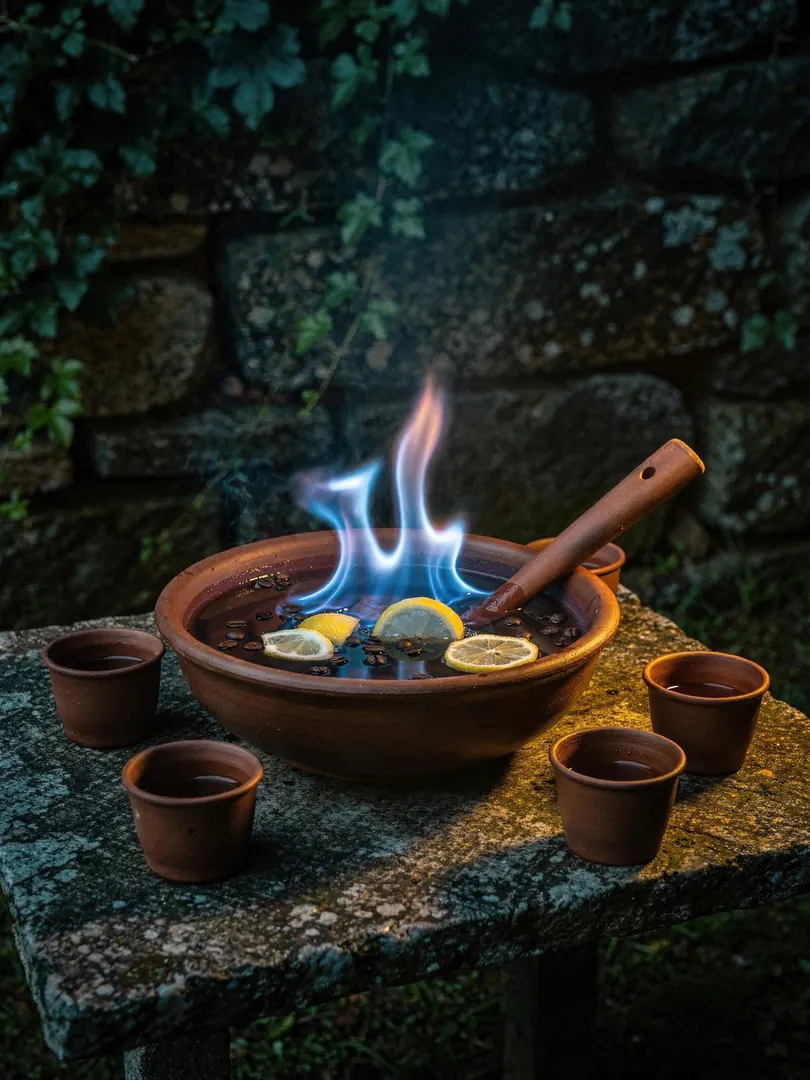
In Galicia, Orujo plays a role in a tradition that never fails to impress visitors. For Queimada, Orujo is combined with sugar, lemon or orange peel, and coffee beans in a clay bowl and set alight. As the blue flame burns, the mixture is stirred while someone recites a spell in Galician, the 'conxuro,' meant to ward off evil spirits. Queimada is especially popular on the eve of St. John's Day in June.
The tradition likely isn't as ancient as it's often made out to be. Galician media and historians point out that neither Queimada nor its now-familiar incantation date back to pagan times; the text was actually composed in the 20th century. Anyone experiencing a Queimada should treat open flame and alcohol with care, as burning alcohol poses a real danger.
Bagaceira: Portugal's pomace brandy
In Portugal, the pomace is called 'bagaço' and the brandy made from it 'aguardente bagaceira,' or Bagaceira for short. Protected geographical indications include Aguardente Bagaceira Alentejo, Bairrada, and from the Região dos Vinhos Verdes. The specification for Bagaceira from Bairrada sets a minimum of 40% ABV.
Like the French, the Portuguese make a clear distinction between pomace and wine. Alongside Bagaceira, there's 'aguardente vínica' or 'aguardente de vinho,' a brandy made from wine, from regions such as Douro, Lourinhã, or Ribatejo. Young Bagaceira is clear and robust, while aged versions carry the term 'velha,' old, and take on a wood-derived color. It's usually enjoyed after meals, in small glasses.