France's pomace brandy
Marc de Bourgogne, Marc de Champagne, Marc d'Alsace: pomace brandy from France
Marc is the French term for pomace brandy: distilled from the pomace left after pressing, not from wine. Well-known examples include Marc de Bourgogne, Marc de Champagne, and Marc d'Alsace Gewurztraminer. A Fine, by contrast, is a brandy made from wine, i.e., a wine distillate; the two terms often appear side by side.
What is Marc? The French word for pomace
In France, 'marc,' pronounced roughly like 'mar,' first refers to the pomace itself. From it, the 'eau-de-vie de marc' is distilled, the pomace brandy, commonly shortened to Marc. Legally, it is the same as Grappa: a spirit in EU Category 6, at least 37.5% ABV, with the first distillation carried out using the pomace in the still. It may not carry the name Grappa, but France has its own extensive network of protected Marcs.
The EU register lists ten French pomace brandies with geographical indications: Marc de Bourgogne, Marc champenois, Marc d'Alsace Gewurztraminer, Marc d'Auvergne, Marc de Provence, Marc de Savoie, Marc des Côtes-du-Rhône, Marc du Bugey, Marc du Jura, and Marc du Languedoc. Nearly every major wine region, then, distills its own pomace, and each Marc carries the flavor of its local varieties.
Marc de Bourgogne: pomace from Pinot noir and Chardonnay
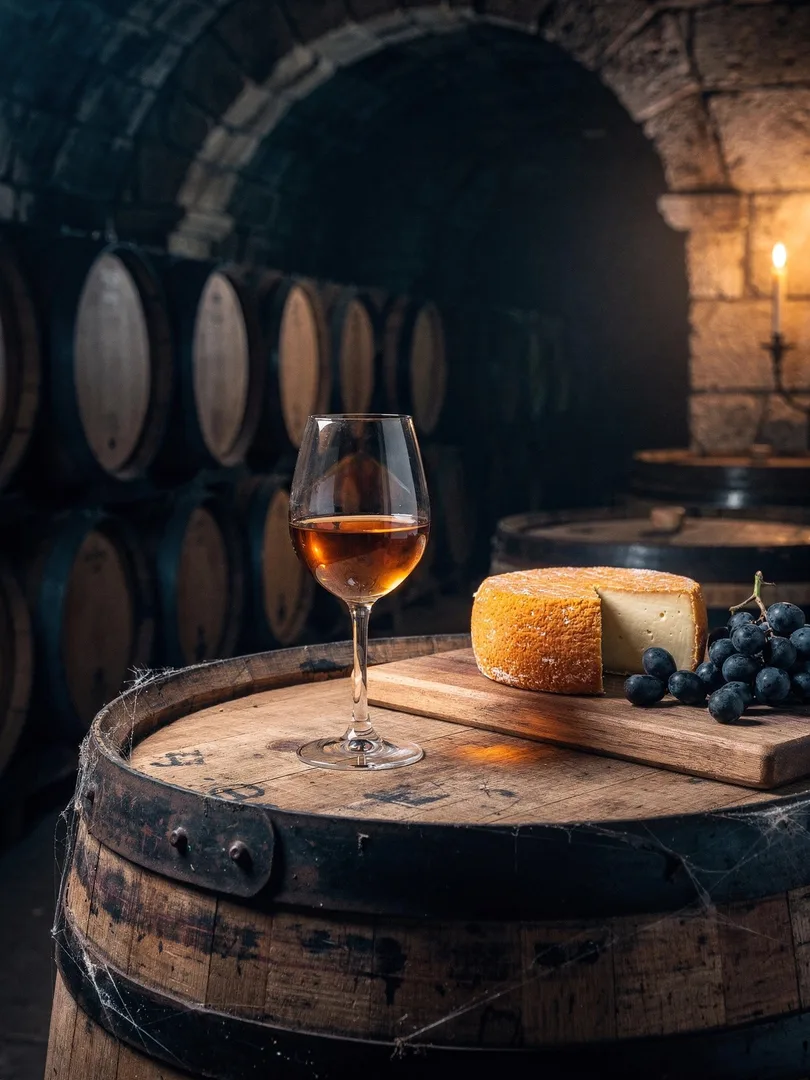
The most famous Marc comes from Burgundy. There, a great deal of Pinot noir and Chardonnay pomace remains after pressing, and many wine estates have distilled it for generations. According to the specification, Marc de Bourgogne must age at least two years in wood and is sold at a minimum of 40% ABV. That's why, unlike a young grappa, it is typically golden-yellow to amber in color.
In the glass, an aged Marc de Bourgogne often shows a mix of grape skin, forest floor, dried fruit, and oak spice. It is more robust than a brandy of the same age. In Burgundy, it is traditionally served at the table after a long meal and is also used in the kitchen to enhance cheese; Époisses, a washed-rind cheese from Burgundy, is washed with Marc during its aging.
Marc de Champagne and Marc d'Alsace Gewurztraminer
In Champagne, pressing grapes for sparkling wine leaves behind pomace of Chardonnay, Pinot noir, and Pinot Meunier. From this, Marc champenois is distilled, often labeled 'Marc de Champagne.' It tends to be finer and leaner than Burgundian Marc, since the grapes there are picked early, retaining high acidity.
In Alsace, one Marc even carries the grape variety in its protected name: Marc d'Alsace Gewurztraminer. The pomace of this highly aromatic variety yields a brandy with distinct notes of rose and lychee. As with aromatic grappa, the character of the grape variety takes center stage here; too much oak would overshadow it.
Marc or Fine? The difference on the label
Wine lists in Burgundy often feature two spirits side by side: Marc de Bourgogne and Fine de Bourgogne. The difference lies in the raw material. Marc is made from pomace. A Fine is an 'eau-de-vie de vin,' a brandy made from wine, falling under EU Category 4. Besides Fine de Bourgogne, Fine Bordeaux and Fine champenoise from the Marne are also protected as geographical indications.
A Fine therefore tastes closer to a traditional brandy: softer, fruitier, less austere. A Marc shows more skin and pit character. Things get confusing with Cognac, since 'Fine Champagne' has nothing to do with either. It refers instead to a Cognac blend from the Grande and Petite Champagne crus, containing at least 50% Grande Champagne — not a brandy from the Champagne region.
So how does Marc compare to Grappa? Both belong to the same category, both are made from fermented pomace, and neither may carry the other's name. The difference lies in style. Grappa is often enjoyed young and colorless, while many French Marcs, by contrast, are aged in barrels — Burgundy's even requires it by law. Yet place a young Gewürztraminer Marc next to a young Traminer grappa, and you'll find two remarkably similar spirits.