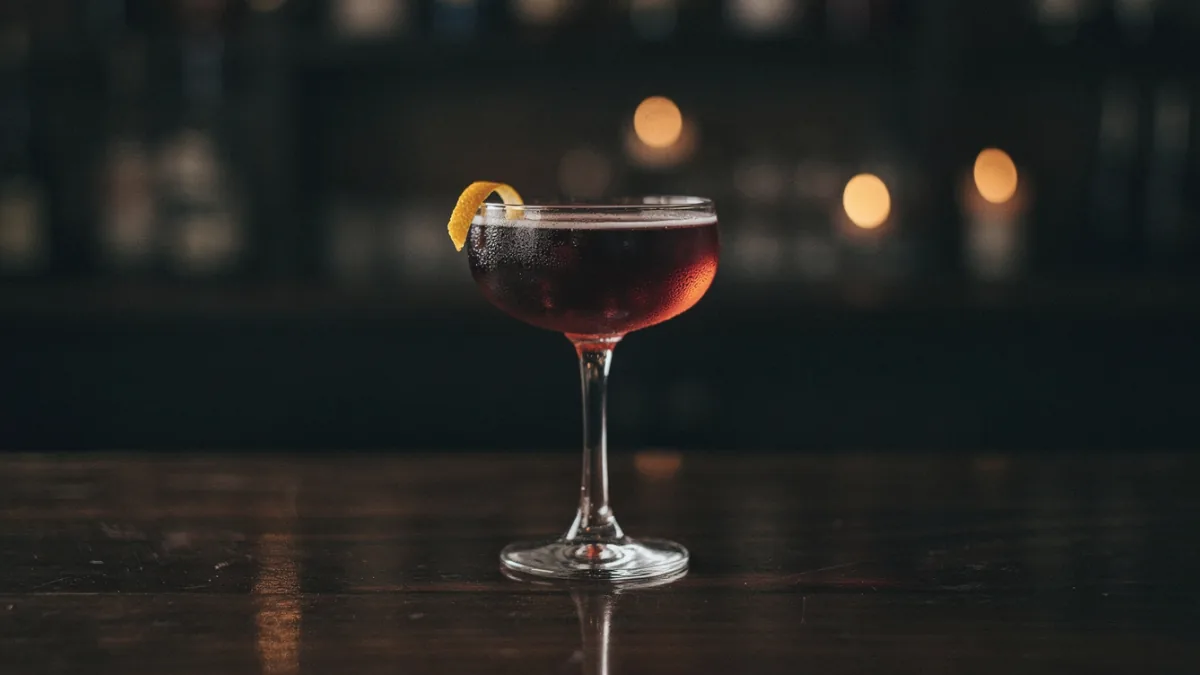
Preparation
- Chill the serving glass. Add all the ingredients to a mixing glass with plenty of ice.
- Stir with a long spoon until the mixture is well chilled and lightly diluted—about 20–30 seconds as a starting point.
- Strain through a bar strainer into the chilled glass, leaving the stirring ice behind.
- Garnish to finish: orange zest, or lemon zest as an alternative.
What does it taste like?
Bitterness is the base note, coming from the red bitter liqueur. Sweet vermouth catches it with herbs and a touch of sugar. The whiskey brings the warmth: bourbon contributes vanilla and caramel from the barrel, while spicier rye leans more toward pepper. Together they create a round, smooth bitter drink. No juice goes into the glass—all three ingredients are spirits. That's why the Boulevardier tastes concentrated and lingers on the palate. Stirred rather than shaken, it's also silky smooth and completely free of foam. The meltwater forms during stirring; in this style of serving, no ice goes into the glass afterward.
When does it work best?
The Boulevardier is for people who enjoy bitter flavors. It works as an aperitif before a meal, and just as well afterward, easing into a quiet evening. On cool days, its warmth really shines. Beginners often find it too austere; a touch more vermouth helps on a first attempt. Even so, it stays strong, since it's diluted only by meltwater.
What matters
Stir long enough—20 to 30 seconds as a starting point. The drink needs this meltwater, or it will taste harsh with the alcohol biting through. When experimenting, change only one ingredient at a time. Start by comparing the whiskey base: bourbon makes the Boulevardier sweeter and softer, rye makes it sharper and spicier. Only after that is it worth swapping the vermouth or the bitter liqueur.
Where the drink comes from
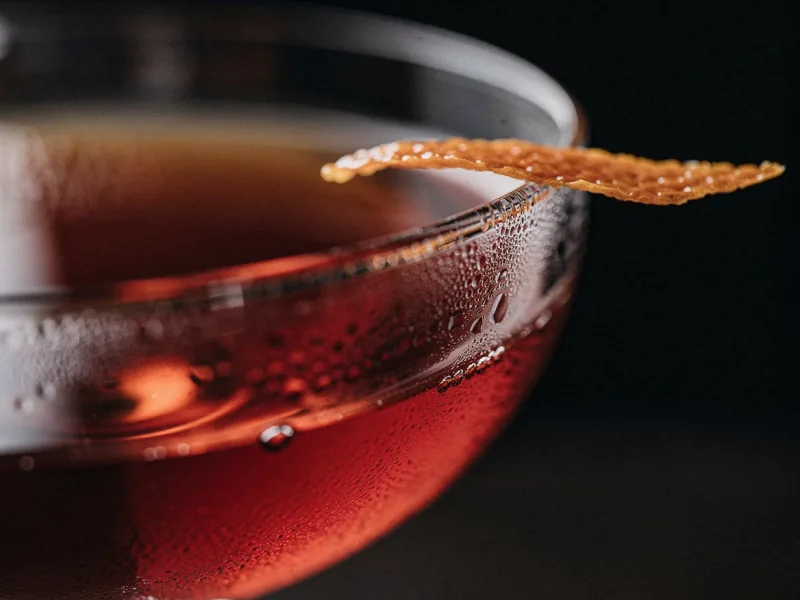
The Boulevardier has been documented since 1927. It's associated with Erskine Gwynne, an American living in Paris. Its name ties back to Gwynne's Paris magazine and to the social scene of the era. The ingredients fit that story too: American whiskey, an Italian bitter aperitif, and vermouth—two bar cultures meeting in one glass. Historically, then, it's more than just a Negroni with someone swapping in whiskey for gin and renaming the result.