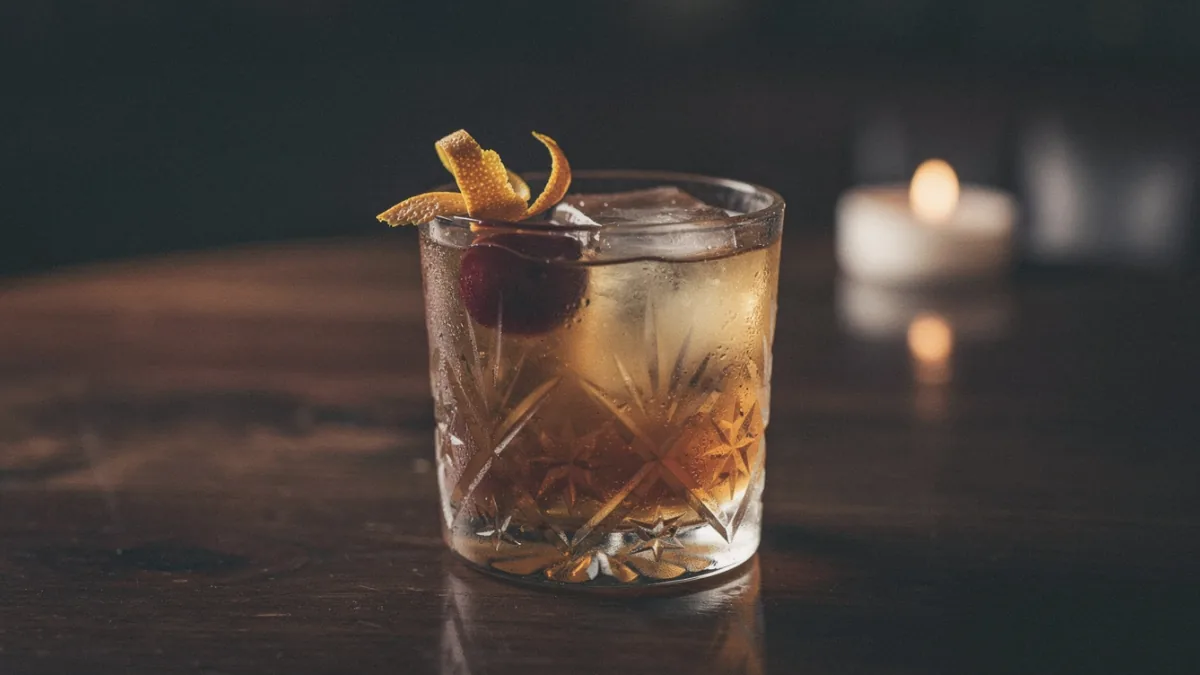
Preparation
- Soak the sugar cube in the tumbler with the bitters and water. Muddle it thoroughly until mostly dissolved.
- Add solid ice cubes and the whiskey.
- Stir until the drink is cold and the ingredients are combined.
- Finish with a garnish: orange zest or a slice, and a cocktail cherry.
What does it taste like?
The whiskey takes center stage, and it's meant to. Bourbon tastes sweeter here, rye sharper and peppery. A single sugar cube just takes the edge off the spirit — it doesn't make the drink sweet. The three dashes of Angostura bring in clove, cinnamon, and a subtle bitterness. No juice goes in, so there's no acidity at all: the Old Fashioned tastes warm and round rather than fresh. The melting ice dilutes it slowly, opening it up as it goes. The last sip is milder than the first.
When does it work best?
Drink it after a meal or during a quiet evening. It's strong, short, and completely without juice, so you sip it rather than drink it down. Beginners will only enjoy it if they generally like whiskey: the drink hides nothing. If you enjoy sipping spirits neat, this is the gentler version of that. Before a meal, most people find it a bit too heavy.
What matters
Dissolve the sugar first, before the ice goes into the glass. Soak the cube with the bitters and water and muddle it thoroughly. Sugar dissolves more slowly in cold liquid, so undissolved crystals can be left sitting at the bottom. Cube size and bitters dosage vary from brand to brand. Stick with the same products for your next attempts, or every drink will taste different.
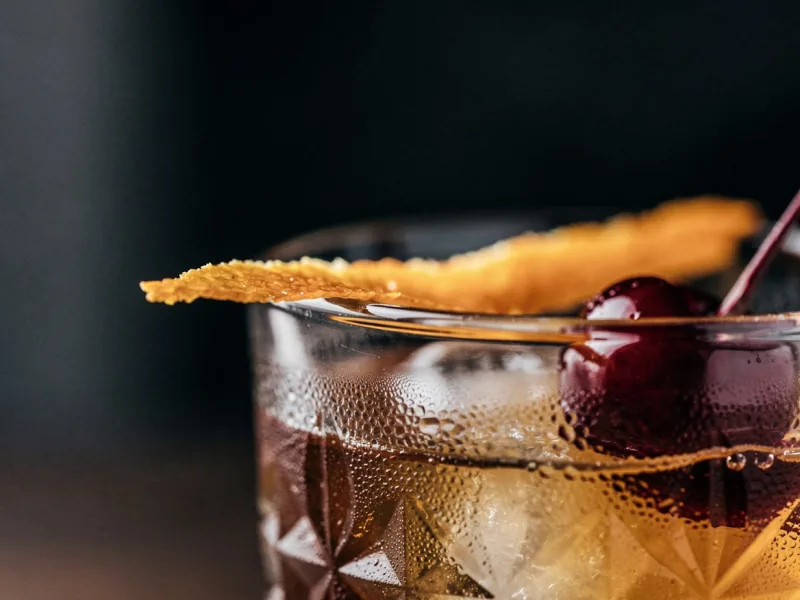
Where the drink comes from
It started with a simple formula: spirit, sugar, water, and bitters. That's what a cocktail looked like in the 19th century. Later, more and more ingredients found their way into the glass — liqueurs, juices, all sorts of extras. Anyone who wanted it simple would specifically order their whiskey cocktail the old-fashioned way. That's where the name comes from. Who used it first isn't entirely clear. Either way, the drink has stuck around, precisely because it needs so little. Whiskey, dilution, and bitters remain individually recognizable in the glass.