
Preparation
- Chill the serving glass. Add all the ingredients to a mixing glass with plenty of ice.
- Stir with a long spoon until the mixture is well chilled and slightly diluted — about 20–30 seconds as a starting point.
- Strain through a bar strainer into the chilled glass, leaving the stirring ice behind.
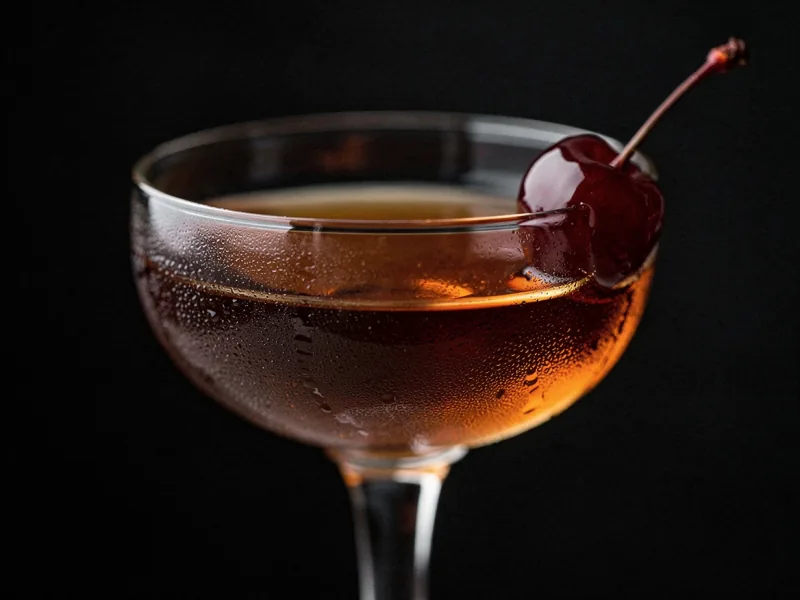
- Finish with a garnish: cocktail cherry.
What does it taste like?
The first sip tastes spicy and warm. That comes from the rye whiskey, which makes up 50 milliliters. The red vermouth adds sweetness and herbal notes, rounding out the drink. A dash of Angostura lays a bitter, spiced note over the top. There's no juice involved, so you taste the alcohol clearly. Still, the Manhattan doesn't come across as harsh: the vermouth softens the edges. Wood and spice linger in the aftertaste. The cherry at the end adds one last sweet touch.
When does it work best?
The Manhattan is an evening drink, whether enjoyed before dinner or savored slowly afterward. It's strong, so sip it slowly. If you like whiskey, you'll feel right at home with it right away. Newcomers will notice how the vermouth tames the whiskey's bite. Sweet cocktails loaded with juice are a different thing entirely, worth knowing beforehand. It doesn't pair well with food, as it's too spicy for that.
What matters
Use sweet red vermouth. It's a wine and spoils after opening, so keep the bottle in the fridge and use it up promptly. With dry vermouth, you get a different Manhattan variation. It's stirred, not shaken: 20 to 30 seconds with plenty of ice is enough. Chill the glass beforehand so the drink stays cold longer.
Where the drink comes from
The Manhattan is among the early cocktails that combine whiskey with vermouth. In writing, it appears by at least the 1880s. Who invented it is disputed. There are well-known stories about particular society gatherings, though none are confirmed. Something else matters more: here, a fortified wine meets the older structure of spirit and bitters. From this idea grew an entire family of stirred classics. So understanding the Manhattan also means understanding many of its relatives.