Preparation
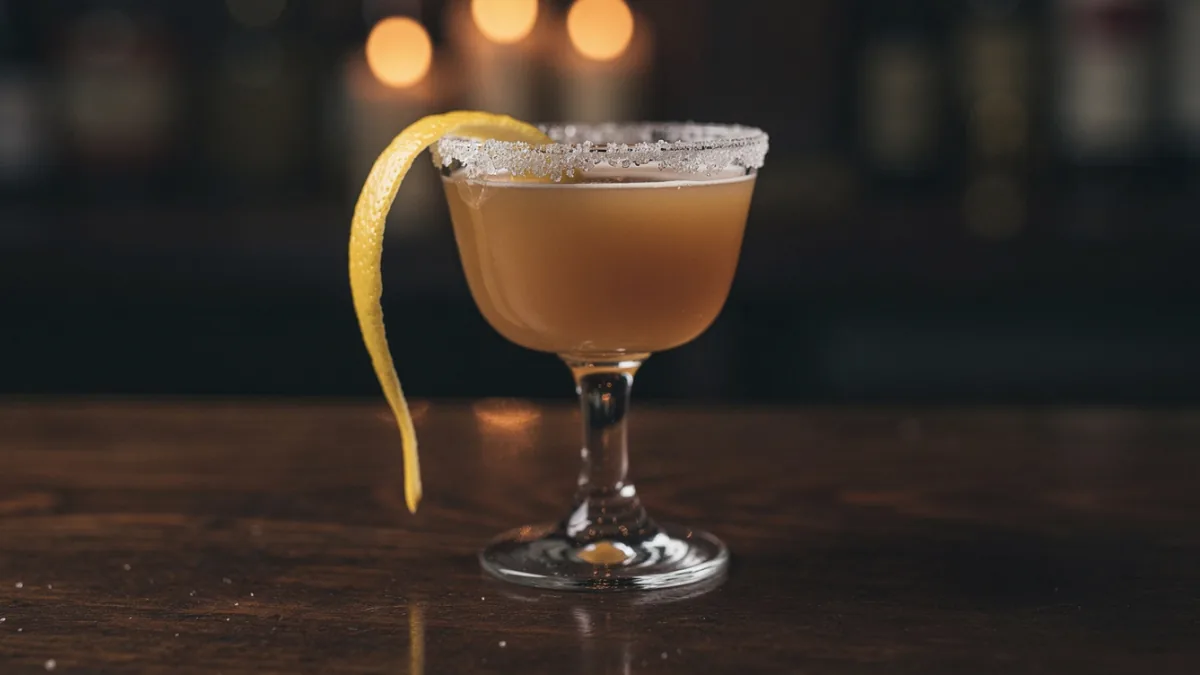
- Moisten the outer rim of the glass with citrus and dip it in fine sugar. Place a wide citrus peel inside against the rim.
- Stir all the liquid ingredients together with ice in a mixing glass until cold.
- Strain carefully into the prepared glass without ice, being careful not to wash off the sugar rim.
- Finish with garnish: sugar rim and a wide orange or lemon peel.
What does it taste like?
The brandy leads, tasting warm and woody. Lemon sets acidity against it, but only 15 milliliters, so the Crusta never becomes truly tart. The sweetness is spread across three ingredients: a spoonful of sugar syrup, a spoonful of orange liqueur, and a small dash of maraschino with its cherry-pit note. The bitters lay spice notes on top that you pick up in the background. Stirred and served without ice in the glass, everything stays tight and smooth. The drink is strong, yet the glass is small. When drinking, sugar from the rim hits your lips first, and the citrus peel keeps perfuming the whole time.
When does it work best?
The Brandy Crusta is a small drink for after dinner or for a slow evening. It suits people who know the Sidecar and other citrus classics and want to taste where it all began. Beginners are more put off by the preparation than by the taste. Sweet and strong at once: if you usually drink mild long drinks, take it slow.
What matters
Prepare the sugar rim before you mix, and let it dry briefly. To do this, moisten only the outside of the glass rim and dip it in fine sugar. If sugar gets inside, it slips into the drink and sweetens it further, throwing off the recipe. Finally, strain slowly and from the side so the rim stays dry.
Where the drink comes from
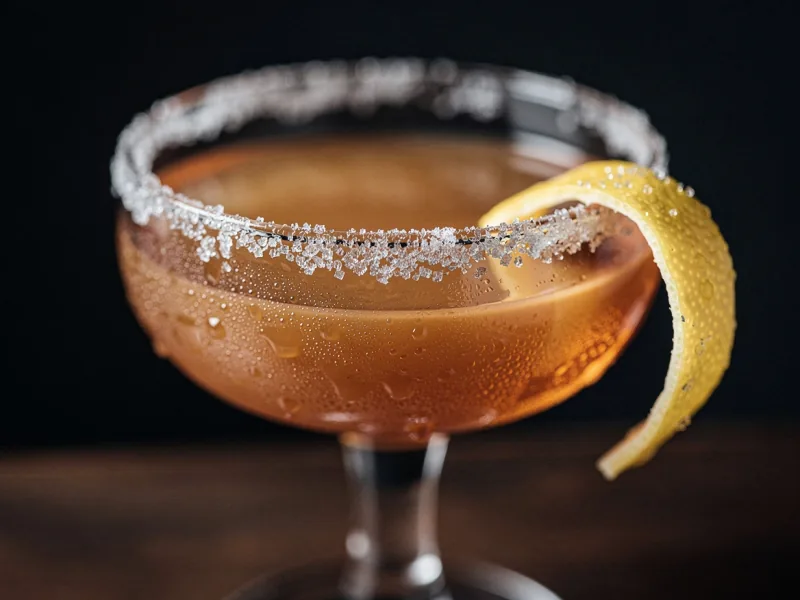
The Brandy Crusta is credited to Joseph Santini, who worked in New Orleans in the 1850s. Early cocktail books recorded the recipe. Crusta refers to the sugar crust on the rim of the glass, which is where the name comes from. The drink matters above all for its structure: brandy, citrus and liqueur are combined here in a way that later became the model for many Sour-style classics. Whether every detail of today's recipe matched the original exactly, however, can't be said for certain.