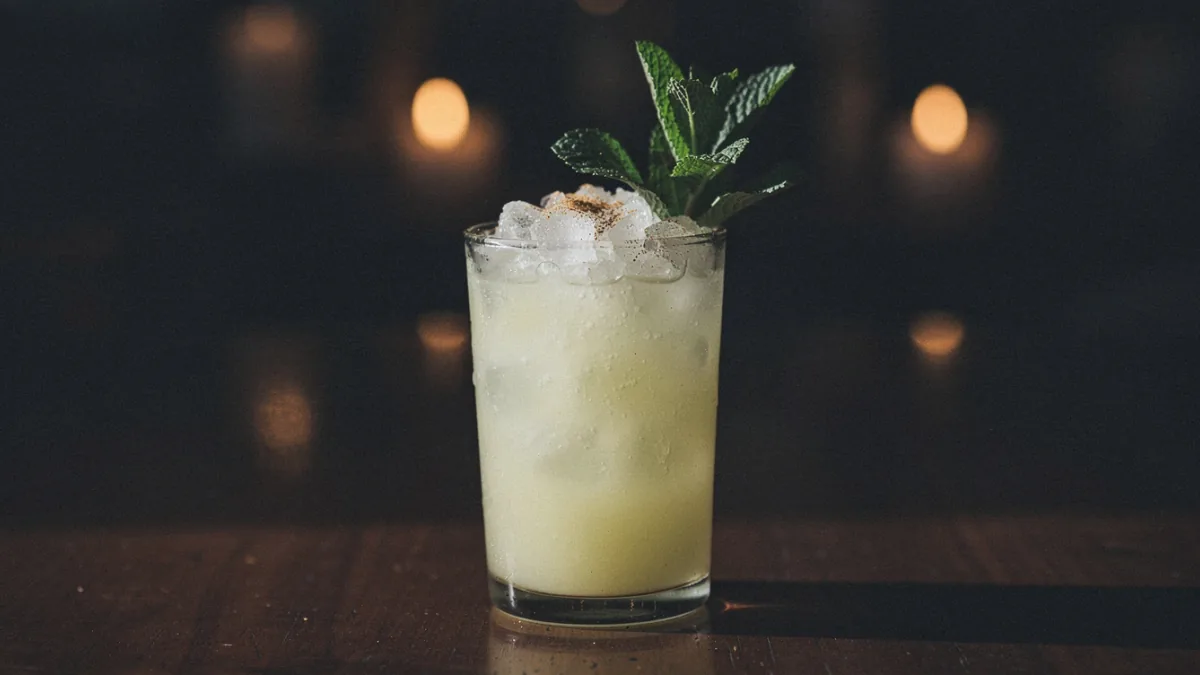
Preparation
- Add all the ingredients to the tall glass and fill it about halfway with crushed or small ice.
- Mix vigorously with a swizzle stick or a long spoon until the glass is very cold.
- Top up with more ice and serve immediately.
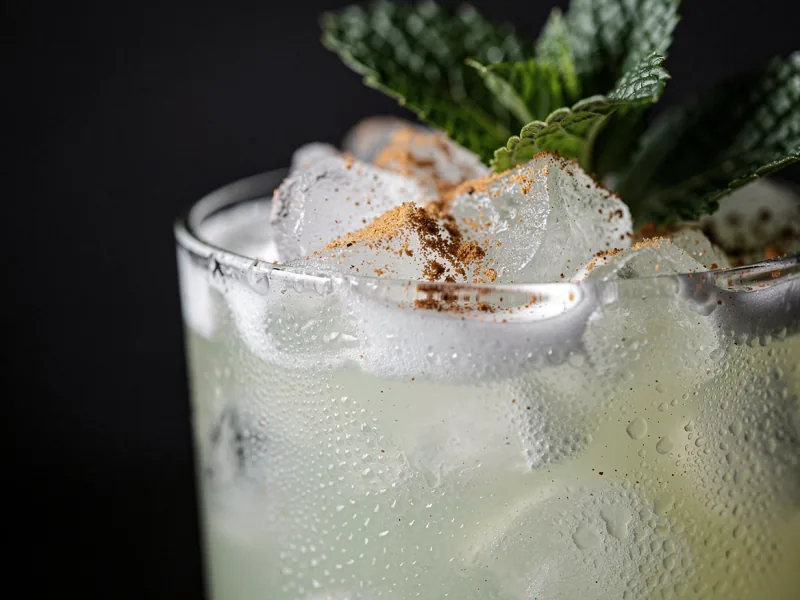
- Finish by garnishing with mint and grated nutmeg.
What does it taste like?
The herbal liqueur dominates everything. Green Chartreuse tastes intensely herbal, sweet and strong in alcohol, and at 45 millilitres it's the largest measure in the glass. The pineapple brings soft fruitiness, while the lime pushes back with clear acidity. Falernum adds spice and further sweetness. Crushed ice chills hard and dilutes quickly, so the whole drink feels long and easy to drink. Sweetness and acidity stay well balanced. The mint scents the first sip, while the grated nutmeg spices up the finish.
When does it work best?
The Swizzle suits summer and the terrace. It's made for the curious, since Chartreuse tastes distinctive and divides opinion. Anyone who only knows herbal liqueur as an after-dinner shot will discover a different side of it here. Beginners wary of bitterness may find it a challenge. Despite all the fruit, this remains a strong drink.
What matters
Use green Chartreuse, not yellow — the two taste quite different, and this recipe is built around the green. Also try your Falernum on its own beforehand. Brands vary a lot in sweetness and strength, and that shifts the whole balance. Keep swizzling until the outside of the glass frosts over. Only then has enough ice melted.
Where the drink comes from
This cocktail is a young one. Marco Dionysos created it in San Francisco in 2002. His idea was simple yet unusual: he put a bold herbal liqueur where rum would normally go. Everything else stayed true to the classic tropical Swizzle. Pineapple, lime, Falernum and plenty of crushed ice give the drink its shape, along with the old stirring technique using a swizzle stick. So a modern cocktail is visibly built on a much older method.