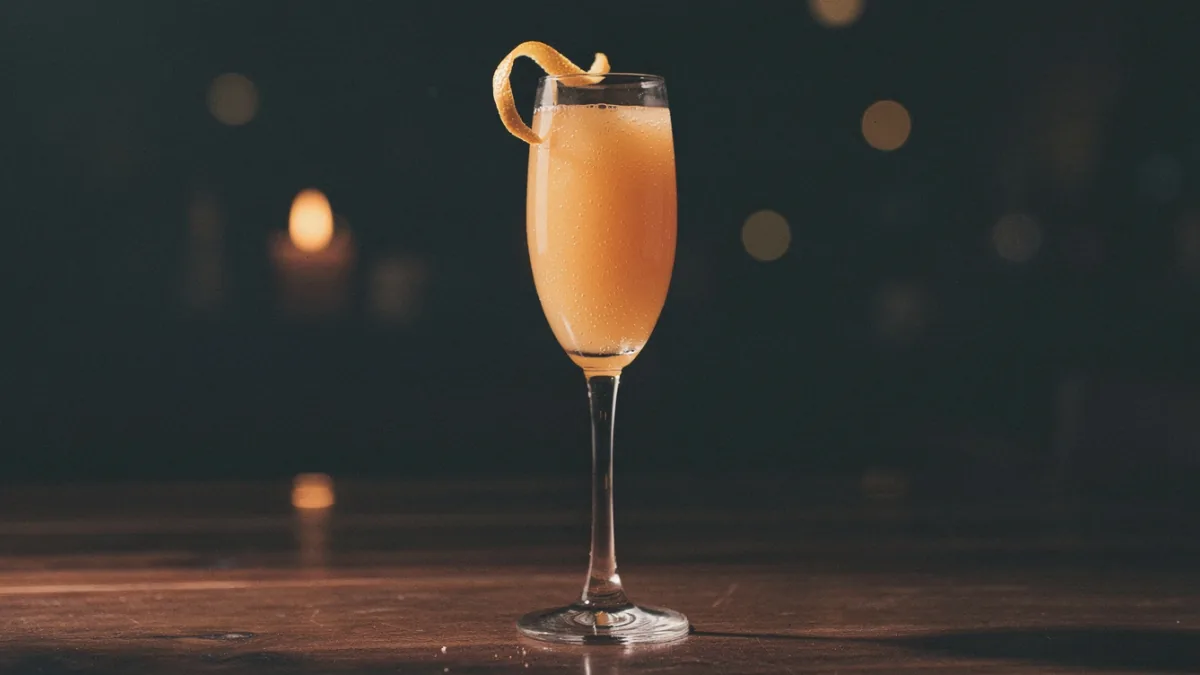
Preparation
- Chill the juice and Prosecco thoroughly beforehand.
- Pour the orange juice into the champagne flute and slowly add the Prosecco.
- Combine gently, without stirring out the carbonation.
- Finish with a garnish: orange zest, if desired.
What does it taste like?
Orange defines the flavor: sweet, juicy, with some acidity behind it. The Prosecco brings the carbonation, which makes the drink light and fizzy. Because both parts are equal in size, you taste the juice and sparkling wine equally well. The wine takes some of the sweetness away, otherwise everything would taste purely fruity. You barely notice the alcohol, since there's no spirit involved. Served cold, the Mimosa feels fresh and brief. Once it warms up, it quickly tastes like nothing more than juice.
When does it work best?
The Mimosa is the classic drink for a late breakfast or brunch. It's light, fruity, and easy for everyone to enjoy, even guests with no cocktail experience. If you're after bold or bitter drinks, you'll find it boring. It's practical for large groups too, since there's no shaking involved—just pour both into the glass.
What matters
Chill the juice and Prosecco well beforehand, ideally both overnight in the fridge. Warm ingredients foam over and lose their fizz. Pour the Prosecco slowly along the rim of the glass onto the juice. Stir only very gently afterward, or you'll lose the sparkle. Squeeze the oranges fresh—this recipe lives on just two ingredients.
Where the drink comes from
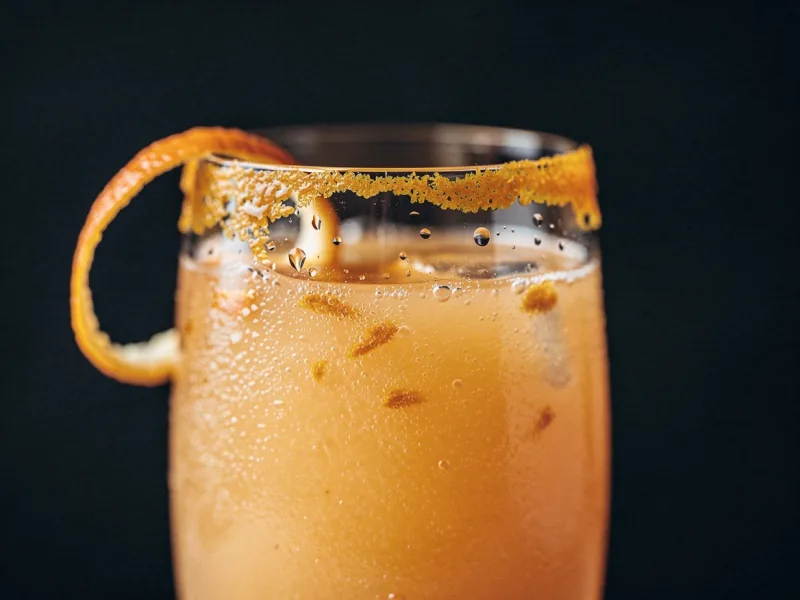
The Mimosa is often linked to Frank Meier and the Ritz in Paris. That's not entirely certain: mixing orange juice with sparkling wine can hardly be traced back to a single scene. The name refers to the mimosa flower. There are related drinks like the Buck's Fizz, which differ mainly in ratio. The names aren't strictly kept separate everywhere, though. So if you order a Mimosa, you won't always get exactly this ratio of juice to sparkling wine.